8 Best SerpAPI Alternatives in 2026 [Top Options Compared]
Explore the best SerpAPI alternatives & find tools with better pricing, richer data, and flexible workflows to power your search and automation needs.
Published
Written by
Chris P.
Reviewed by
Nithish A.
Read time
7
minutes
SerpAPI has been the go-to choice for developers who need structured SERP data without managing proxies, CAPTCHAs, or parsing logic themselves. For rank tracking, SEO tooling, and basic search result extraction, it does the job reliably.
But the use cases teams are building in 2026 have moved beyond what a pure SERP scraping tool was designed to handle. AI agents need enriched context, not just links and snippets. Sales and recruiting teams need real-time signals on companies and contacts, not search result pages. Also, developers building data pipelines need webhook-driven architecture, not manual polling.
This guide covers the best SerpAPI alternatives in 2026, including platforms that go further by combining SERP capabilities with live B2B intelligence, as well as simpler tools for teams that just need a cheaper or faster search scraper.
Why Users Are Considering SerpAPI Alternatives
SerpAPI remains a reliable tool for its core purpose. The limitations show up when teams try to use it for something it was not built for. Here are some of the reasons users are looking for alternatives:
Pricing does not flex for variable usage: Users often flag the monthly subscription model as a friction point, noting that usage is often sporadic rather than consistent, and a pay-as-you-go option is missing for smaller or irregular workloads.
Output is limited to search result fields: SerpAPI returns titles, URLs, and snippets. Teams building sales intelligence workflows, recruiting platforms, or AI agents need enriched B2B context alongside those results, and that layer does not exist within SerpAPI.
No event-driven signals: SerpAPI responds to requests but does not monitor for changes. There are no webhooks, no job change alerts, and no way to trigger a workflow when a tracked company or contact updates publicly visible information.
Single-purpose architecture limits workflow integration: SerpAPI is built around search result extraction. It does not offer people enrichment, company data APIs, or event-driven webhooks. Teams building multi-signal workflows end up stitching together several tools to cover what a more complete data platform handles natively.
8 Best SerpAPI Alternatives to Consider in 2026
The table below compares each SerpAPI alternative by use case, engine coverage, output type, and starting price. Use it for a quick side-by-side comparison before reading the detailed sections.
Tool | Best For | Sources | Output Format | Starting Price |
Crustdata | AI agents, GTM automation, live B2B intelligence | Web + B2B data | Structured JSON | Usage-based |
Serper.dev | Fast, budget SERP scraping | SERP | Structured JSON | From $50 |
DataForSEO | Large-scale SEO analytics | SERP + multi-engine | Structured JSON | Pay-as-you-go |
ScraperAPI | General web scraping with SERP support | SERP + web | Raw HTML + JSON | From $49 |
Oxylabs | Enterprise SERP monitoring, SEO platforms | SERP + multi-engine | Structured JSON | From $49 per month |
Bright Data SERP API | Enterprise geo-specific SERP data | SERP | Structured JSON | From $499 per month |
Scrapingdog | Budget SERP scraping | SERP | Structured JSON | From $40 |
Apify | Custom scraping workflows | SERP + web | JSON, CSV | From $29 |
1. Crustdata
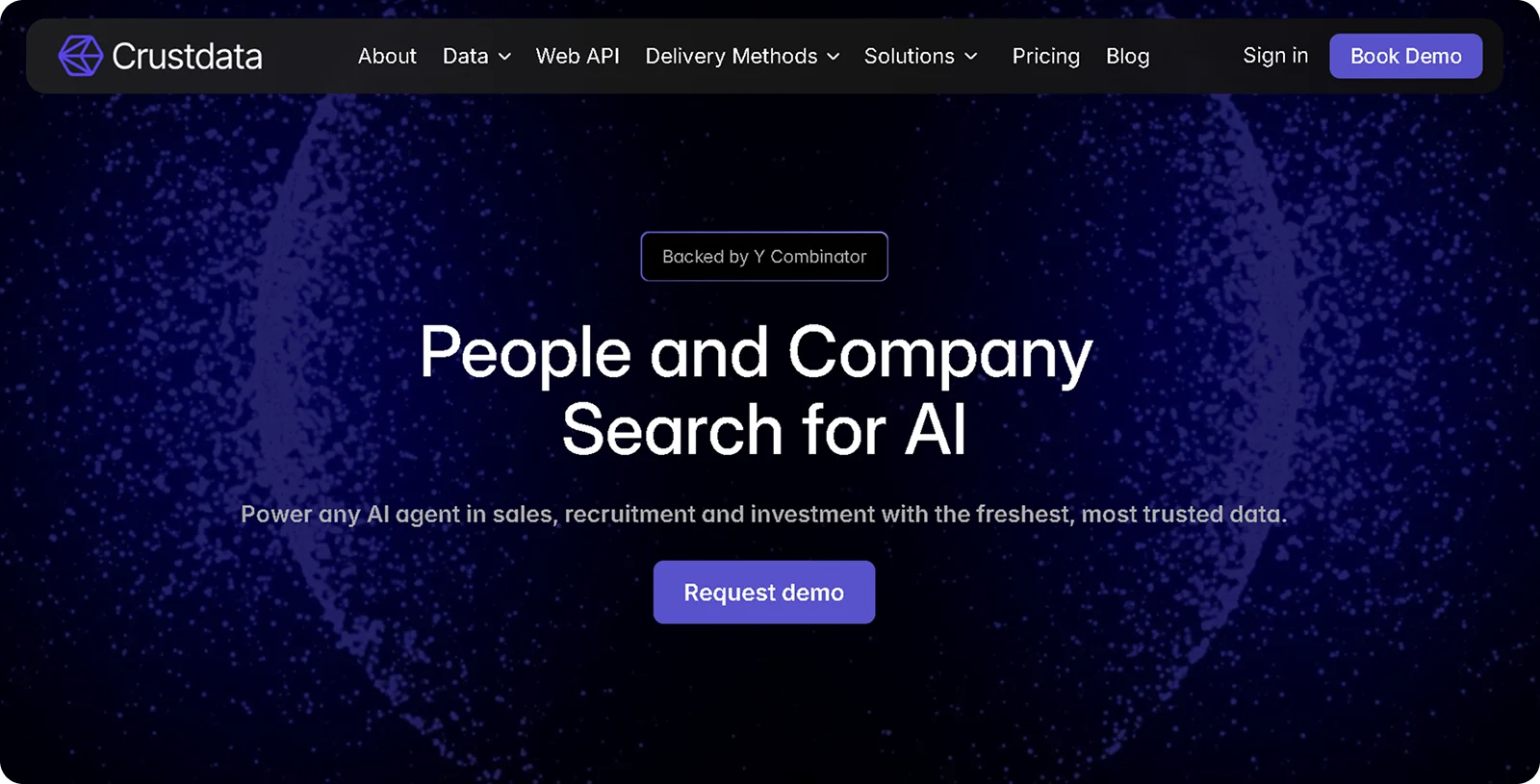
Crustdata combines a live websearch API with real-time B2B intelligence across company and people data, making it the only tool in this list that provides search results along with enriched prospect context. Sales and GTM teams use it to surface product features from company blogs, track founder interviews for investment signals, and ground AI agent outreach in what is publicly visible at the moment of the request.
Key Features
Real-time web search retrieval: Returns live search results at the moment of the request
Structured output for downstream systems: Delivers search results in consistent JSON with titles, URLs, snippets, rankings, and metadata that can feed directly into internal tools, agent workflows, and enrichment pipelines
Search plus company and people context: Extends search output beyond links by connecting results to live company and contact intelligence
Geo and language controls: Enables location and language parameters for region-specific search results, helping teams monitor different markets without building separate workflows for each
High-volume automation: Supports production use cases where search is one input inside a broader pipeline, including enrichment, monitoring, and event-based workflows
Pros
Combines data from the web with structured B2B contact and company intelligence through a single API provider
Grounds AI agent decisions in a live web context rather than static database snapshots
Fits directly into event-driven pipelines through Crustdata's broader data stack
Cons
Requires API integration to use beyond simple search lookup
Pricing
Crustdata uses a credit-based pricing model with self-serve access. Plans scale with usage, and custom pricing is available by contacting the sales team.
2. Serper.dev

Serper.dev is a speed-focused SERP API built around fast, low-cost access to search results. Developers use it to power SEO dashboards, rank trackers, and AI agent web search tools where response time and cost per query matter more than B2B context or multi-engine coverage.
Key Features
Real-time SERP retrieval: Returns search results in 1 to 2 seconds with no caching, serving results directly from live search index queries
Search type coverage: Supports web, images, news, maps, videos, shopping, and autocomplete results through dedicated endpoints
Localization controls: Allows country, language, and city-level targeting for region-specific results
High concurrency: Handles up to 300 queries per second on higher-tier plans, supporting large-scale production workloads
Credit rollover: Credits remain valid for 6 months, reducing waste from uneven usage patterns
Pros
Cuts costs significantly compared to SerpAPI at equivalent volumes
Delivers results fast enough for user-facing applications where latency directly affects product experience
Scales to high concurrency without infrastructure management on the developer's side
Cons
Covers only SERP output with no enrichment, B2B signals, or contact and company data layered on top
Focuses exclusively on one search engine, limiting usefulness for teams needing multi-engine coverage
Pricing
Serper.dev uses a pay-as-you-go credit model. Credits start at $50 for 50,000 queries ($1.00 per 1,000) and drop to $0.30 per 1,000 at higher volumes.
3. DataForSEO
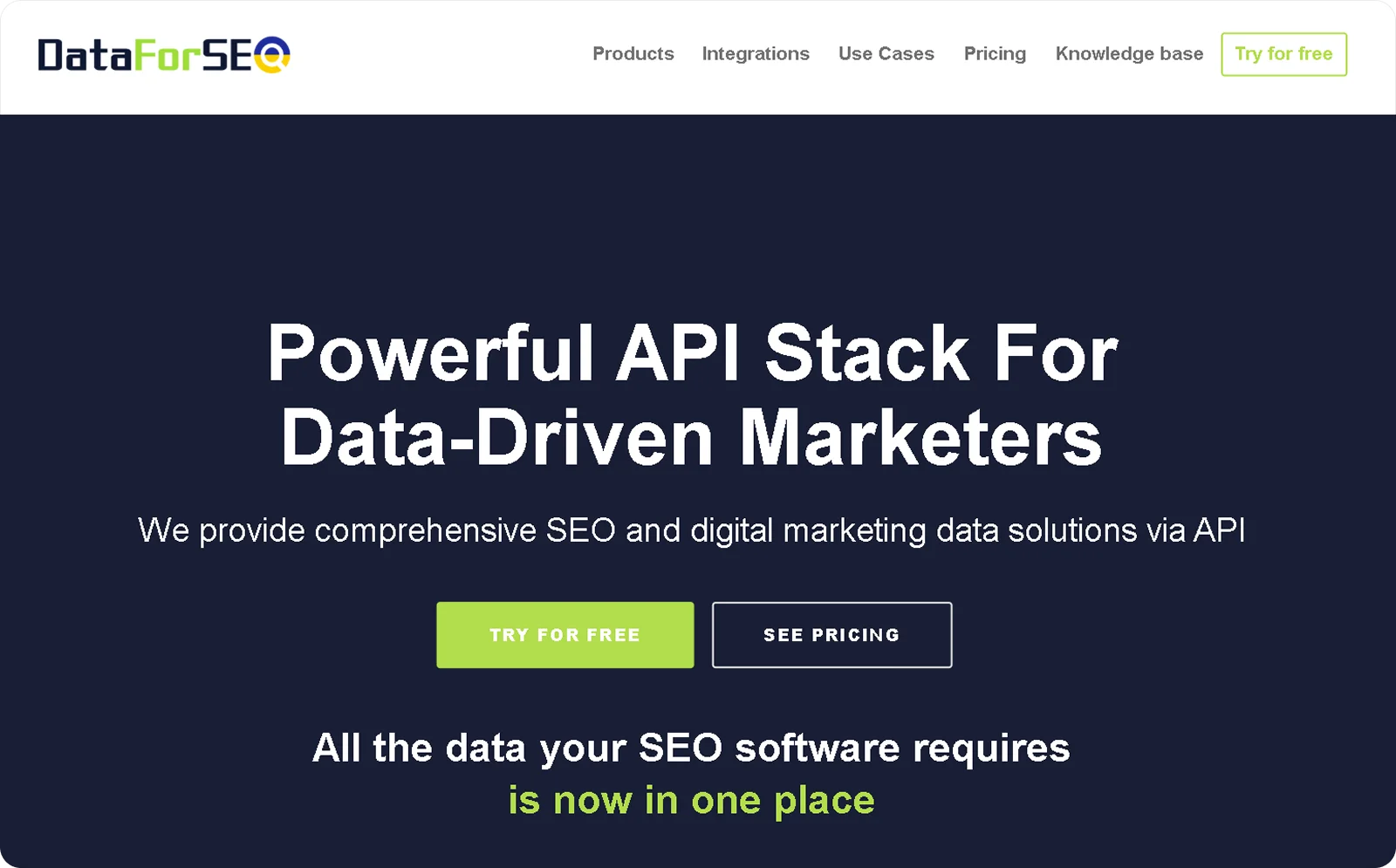
DataForSEO is a data platform built for teams that need structured search results across multiple engines and endpoints at scale. Analytics platforms, SEO tools, and competitive intelligence products use it to power rank tracking, keyword research, and SERP monitoring pipelines.
Key Features
Multi-engine access: Covers organic results, paid ads, featured snippets, local packs, and shopping results across more than 20 endpoint variations
Three speed tiers: Offers Live mode for real-time results, Priority mode for one-minute turnaround, and Standard queue for batch processing at the lowest cost per query
Batch task submission: Processes multiple queries in parallel through async job submission with webhook callbacks when results are ready
Broad endpoint coverage: Supports maps, news, images, autocomplete, and finance results from a single account without separate API keys
Pay-as-you-go model: Charges per query with no minimum monthly commitment beyond an initial account top-up
Pros
Reduces cost significantly for non-time-sensitive workflows by using the Standard queue at $0.60 per 1,000 queries
Covers 20+ search endpoint types from one account
Scales to high volumes through async batch processing without hitting rate limits that block synchronous request flows
Cons
Requires managing three separate speed tiers and their cost differences
Focuses on SEO data pipelines with no B2B enrichment, contact data, or event-driven signals beyond search results
Pricing
DataForSEO uses a pay-as-you-go credit model with no monthly subscription requirement. The cost of the SERP API varies by method and task priority. The minimum account top-up after the trial is $50.
4. ScraperAPI
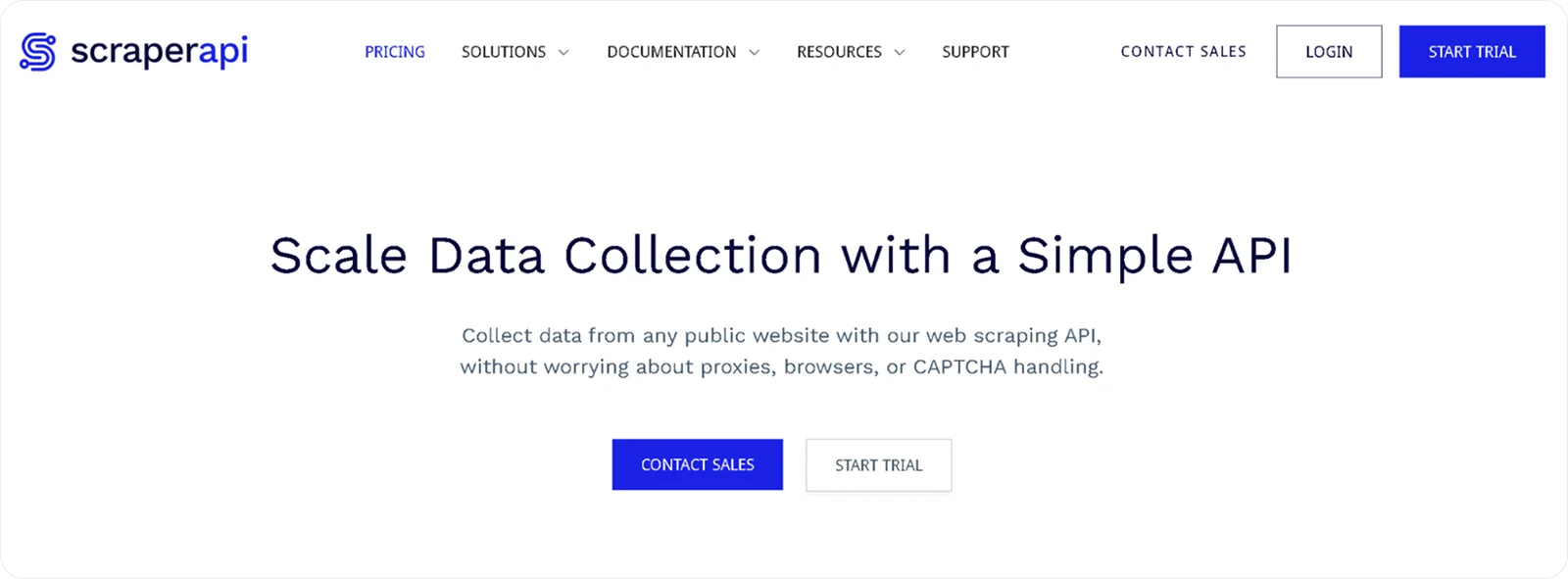
ScraperAPI is a general-purpose web scraping platform that handles proxy rotation, CAPTCHA solving, and JavaScript rendering behind a single endpoint. Teams use it when SERP data is one part of a broader scraping workflow that also covers e-commerce pages, job boards, and other structured web sources.
Key Features
Automatic proxy rotation: Rotates IPs and handles blocks without requiring proxy management on the developer side
JavaScript rendering: Executes JavaScript before returning page content, supporting dynamic sites that fail with basic HTTP requests
Pre-built structured endpoints: Offers ready-made scrapers for common targets including SERP results, Amazon, and Google Shopping that return parsed JSON without manual extraction
Async API support: Processes large batches of requests asynchronously, supporting high-volume pipelines with callback delivery
Geotargeting: Routes requests through locations matching a specified country or city for region-accurate results
Pros
Handles proxy management, CAPTCHAs, and rendering in one call
Covers SERP and general web scraping from a single API key
Charges only for successful requests
Cons
Delivers slower response times than dedicated search APIs
Returns higher costs per 1,000 requests at the entry level than purpose-built SERP alternatives
Pricing
ScraperAPI offers 5,000 free credits on signup with a 7-day free trial. Paid plans start at $49 per month and scale based on credit volume.
5. Oxylabs
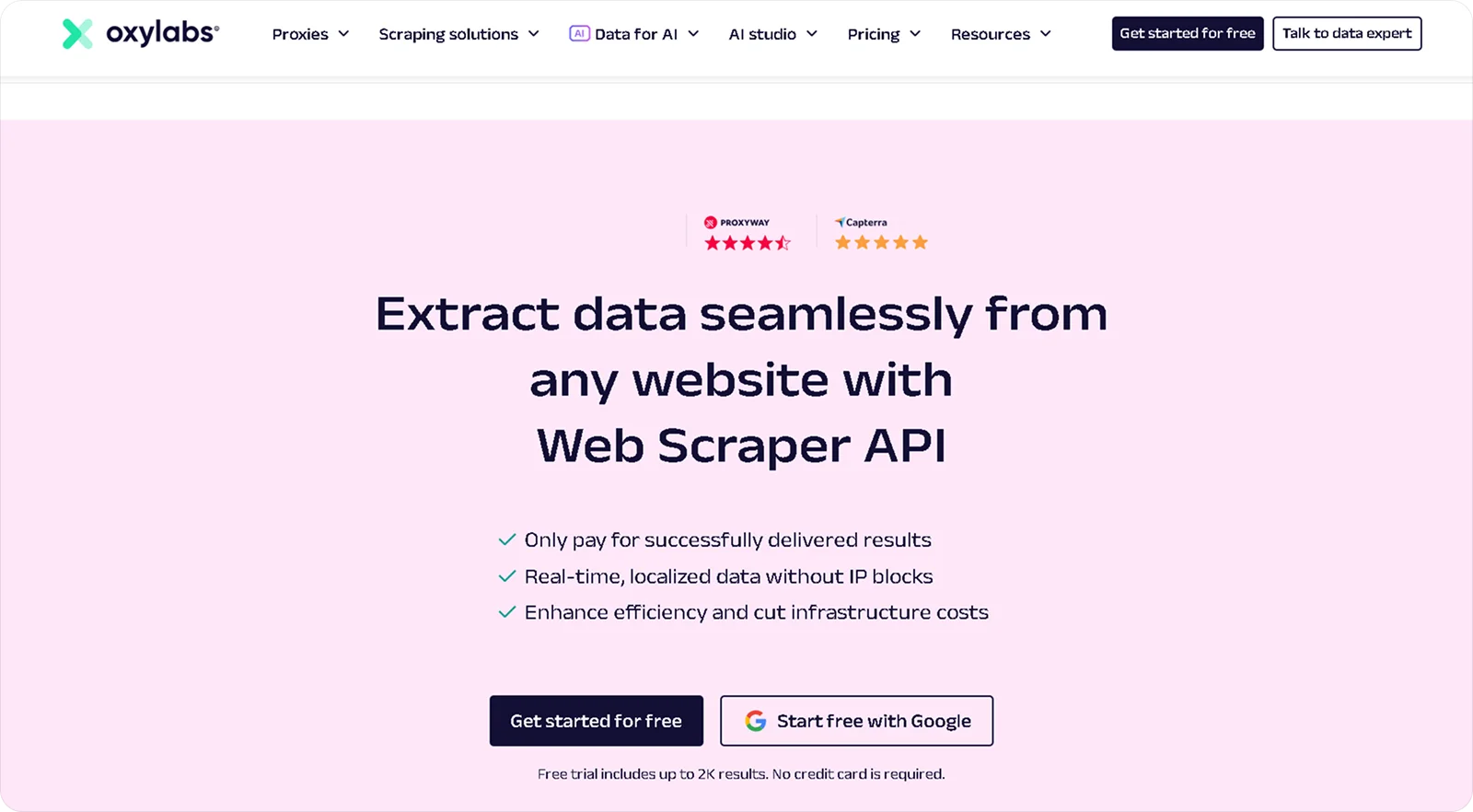
Oxylabs SERP Scraper API is built for teams that need reliable, high-volume search data extraction backed by enterprise proxy infrastructure. SEO agencies, market research platforms, and competitive intelligence tools use it when success rate and geographic precision matter more than cost per query.
Key Features
Multi-engine SERP support: Covers organic results, ads, shopping, maps, news, images, hotels, and jobs across major search engines from a single endpoint
Device and location targeting: Returns results as they appear on desktop, mobile, or tablet, with city-level and country-level geolocation parameters
ML-driven proxy rotation: Selects and rotates proxies from a pool covering 195 countries using machine learning to match the right IP to each target domain
JavaScript rendering: Executes dynamic page content using headless browser infrastructure with unique fingerprints to avoid detection
Cloud storage delivery: Sends results directly to Amazon S3, Google Cloud Storage, or other S3-compatible storage on a scheduled basis
Pros
Achieves consistent success rates on targets with advanced anti-bot protections through enterprise-grade proxy infrastructure
Covers a wide range of SERP result types from one account
Supports scheduled recurring jobs with cloud storage delivery
Cons
Requires setting up a dedicated SERP zone and configuring proxy parameters before making requests
Focuses primarily on batch-oriented and scheduled collection workflows, making it less suited for ad-hoc or event-driven querying that requires instant results on demand
Pricing
Oxylabs SERP Scraper API offers a free trial with up to 2,000 results. Plans start at $49 per month for approximately 98,000 results at $0.50 per 1,000 results.
6. Bright Data SERP API
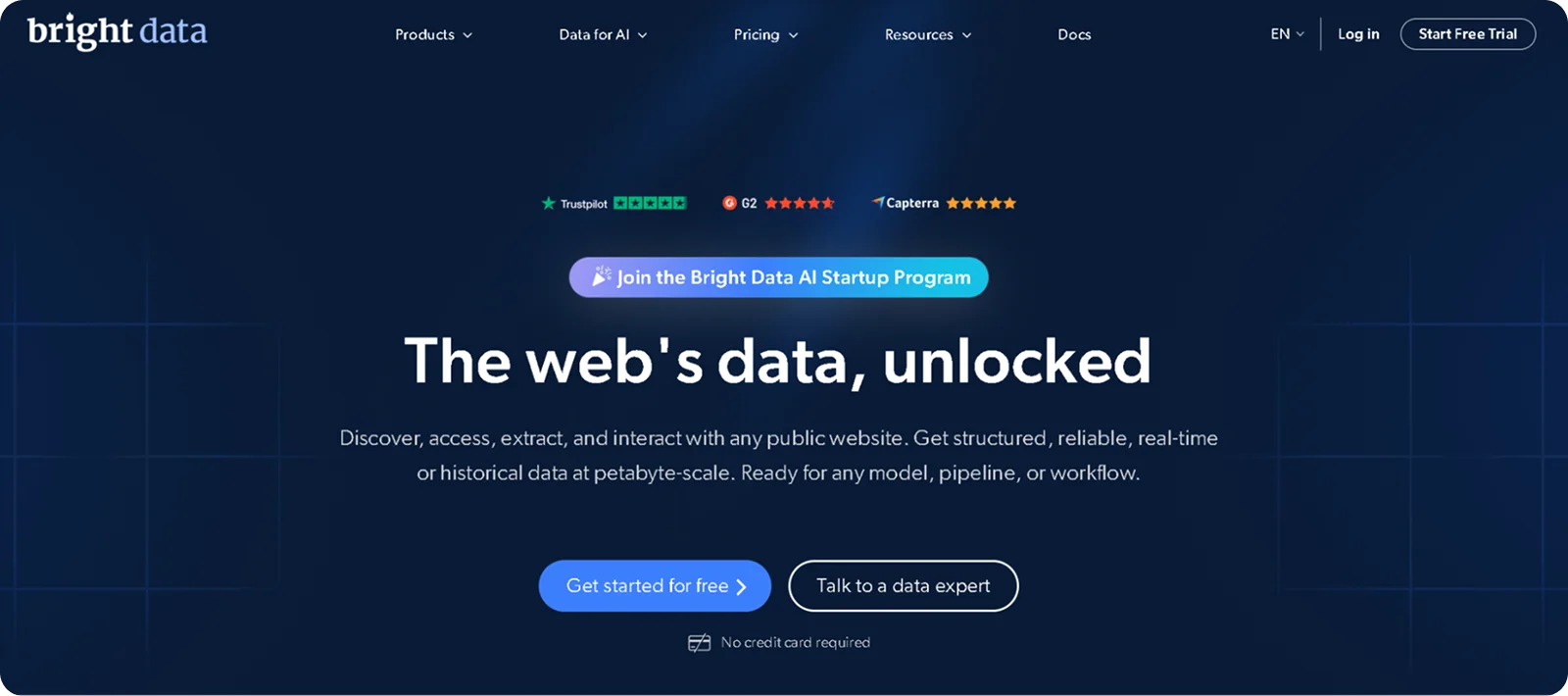
Bright Data's SERP API is backed by the company's residential and mobile proxy network, making it a fit for enterprise teams that need reliable SERP data at high volume across multiple regions. It suits operations where geographic precision and consistent uptime are non-negotiable.
Key Features
Multi-engine SERP support: Returns organic results, ads, knowledge panels, and People Also Ask boxes from major search engines
City-level geotargeting: Targets results by country, language, city, and postal code for precise local search data
Device targeting: Returns results as they appear on desktop, mobile, or tablet for device-specific SERP analysis
Pay-per-success billing: Charges only for successful responses, with retries handled automatically at no extra cost
Sync and async modes: Supports real-time synchronous requests and batch async job submission with webhook callbacks for large-scale collection
Pros
Delivers consistently high success rates on heavily protected search environments through enterprise proxy infrastructure
Covers multiple search engines and SERP result types from a single account
Scales to unlimited concurrent requests with no hard rate limits at the infrastructure level
Cons
Requires creating a dedicated SERP zone before making requests
Carries higher entry costs than purpose-built SERP tools
Pricing
Bright Data's SERP API uses a per-1,000-request pricing model. Pay-as-you-go starts at $ 1.50 per 1,000 requests, with no monthly commitment. Monthly plans start at $499 for 380,000 requests ($1.30 per 1,000).
7. Scrapingdog
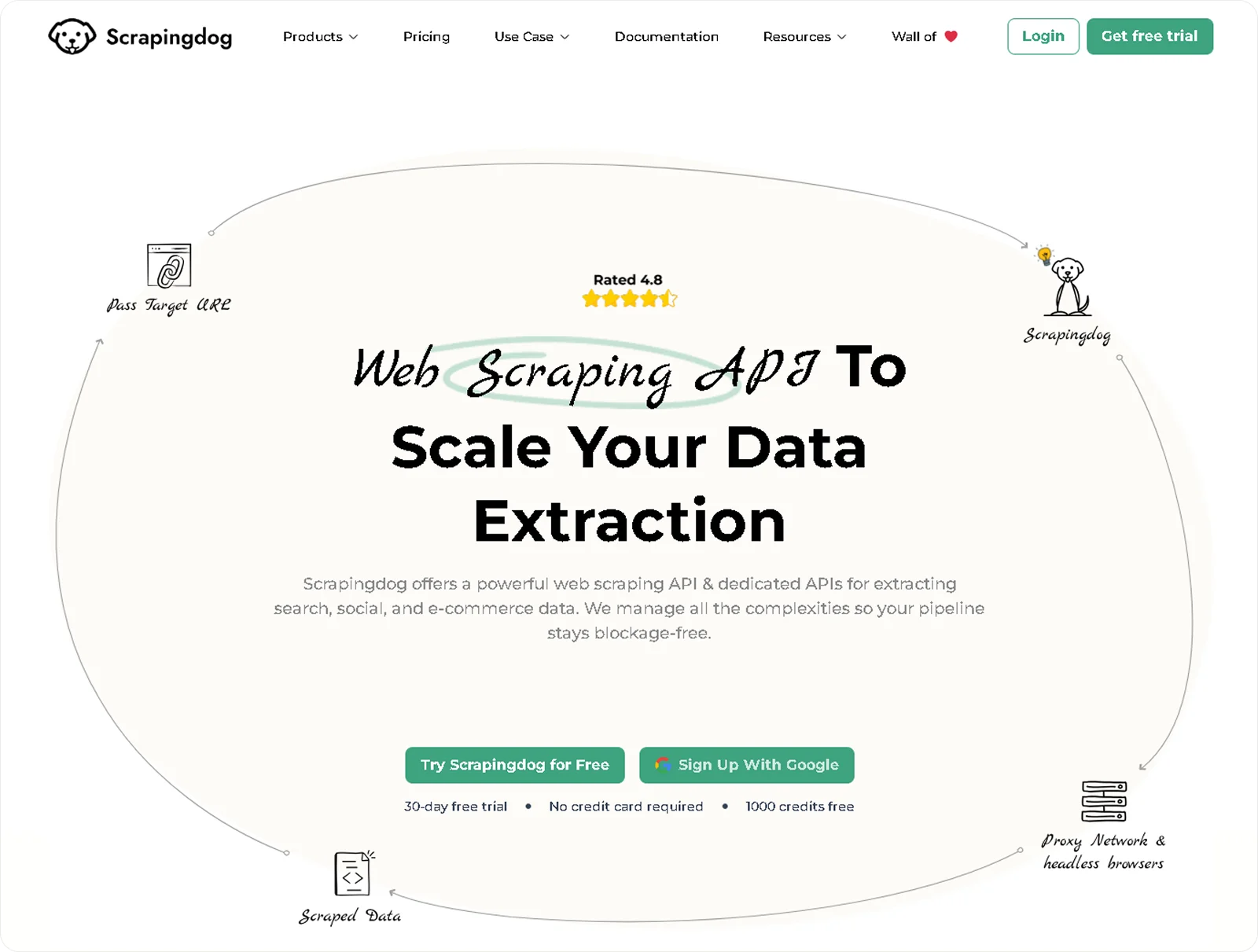
Scrapingdog is a developer-focused scraping API with dedicated endpoints for common data sources including SERP results, Amazon, and other high-demand platforms. Teams use it when they need fast, cost-effective extraction across multiple targets without managing separate APIs for each.
Key Features
Dedicated SERP endpoint: Returns structured JSON from search results with organic listings, ads, and featured snippets through a purpose-built endpoint
63+ dedicated scrapers: Covers major platforms through specialized endpoints that return pre-parsed JSON without custom extraction logic
JavaScript rendering: Executes dynamic page content using headless Chrome before returning results
Automatic proxy rotation: Rotates from a pool of 10 million IPs, selecting the appropriate proxy and header combination per target domain
Pay-for-success model: Charges credits only on successful responses, with no deduction for failed or blocked requests
Pros
Reduces cost per request significantly compared to general scraping alternatives
Covers SERP extraction and broader web scraping from one account
Returns results fast, averaging under 3 seconds on SERP queries in independent benchmarks
Cons
Focuses on dedicated endpoints for known platforms
Requires 5 credits per SERP API call rather than 1, so effective credit consumption is higher than base plan numbers suggest
Pricing
Scrapingdog offers 1,000 free credits on signup with no credit card required. Paid plans start at $40 per month for 200,000 credits.
8. Apify
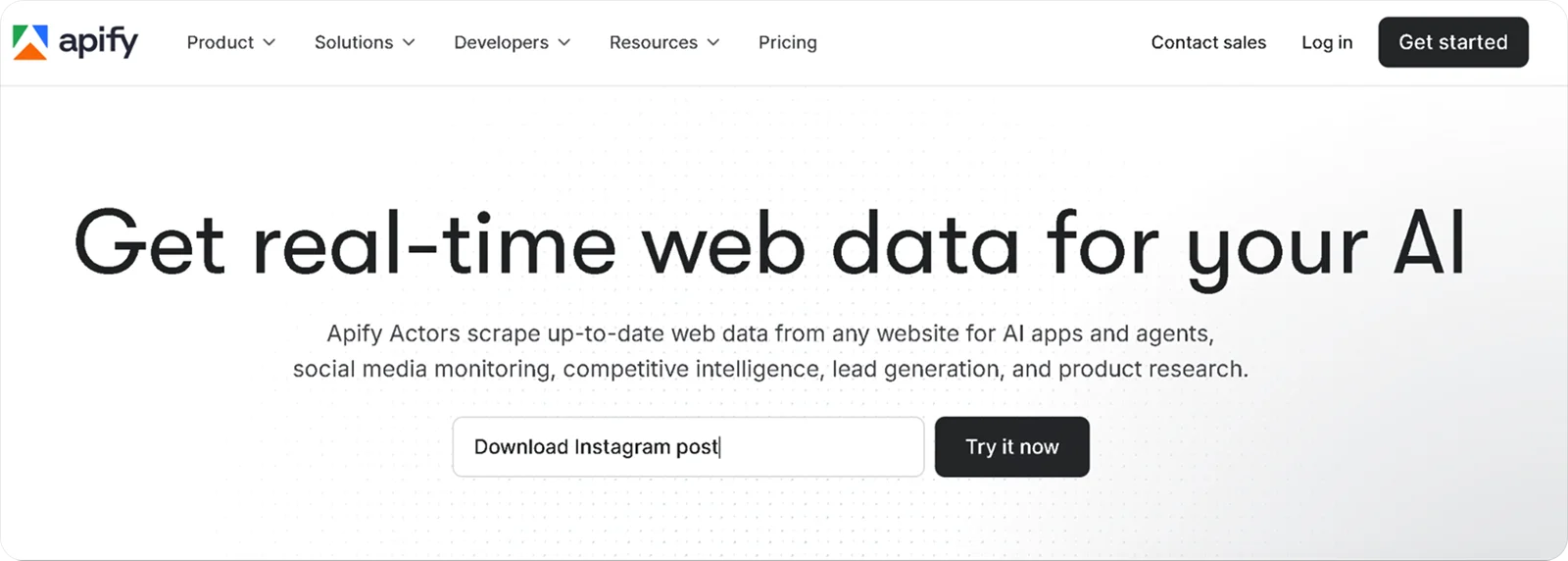
Apify is a cloud platform for building, deploying, and running web scraping and automation workflows. Teams use it when they need flexibility to customize extraction logic, run scheduled jobs, and access a library of pre-built scrapers rather than a fixed API endpoint.
Key Features
Actor-based architecture: Runs configurable scraping workflows called Actors, either from Apify's pre-built store or custom-built by your team
Search extraction Actor: Extracts organic results, ads, and snippets from search results through a dedicated pre-built Actor available in the Apify Store
Cloud execution and scheduling: Runs jobs asynchronously on Apify's infrastructure on a defined schedule without self-managed servers.
Multiple output formats: Exports data as JSON, CSV, Excel, or directly to Google Sheets and external databases
Proxy management: Includes datacenter proxies on all plans and residential proxies on paid tiers with automatic rotation
Pros
Enables customization of extraction logic for niche use cases where fixed API schemas do not fit
Handles scheduling, retries, error handling, and storage in one platform.
Supports integration with external tools, including Google Sheets, Zapier, and Slack, without custom middleware
Cons
Produces unpredictable costs on large runs because billing depends on compute units, memory, and run duration rather than a flat per-request rate.
Requires more configuration to achieve consistent SERP output than dedicated SERP APIs with fixed response schemas.
Pricing
Apify offers a free plan with $5 in monthly platform credits, renewable each cycle with no credit card required. Paid plans start at $29 per month.
How to Choose the Right SerpAPI Alternative
The right tool comes down to what you need search data to do after you receive it. For SEO rank tracking and reporting pipelines, a dedicated low-cost SERP scraper with fast response times and predictable per-query pricing is usually enough. For large async batch workflows, a pay-as-you-go model with tiered speed options gives more control over cost without sacrificing coverage. For scraping that goes beyond search results, a general-purpose API that handles both SERP and broader web extraction from a single account reduces the number of tools to manage.
For heavily protected targets where anti-bot reliability is the deciding factor, infrastructure-backed solutions with residential proxy networks handle what simpler APIs fail on. For custom extraction logic and scheduled jobs across varied data sources, actor-based platforms offer the flexibility to build what no fixed endpoint covers.
The question that separates the tools above is mostly one of scope and cost. But there is a different question worth asking: what happens after you get the search result? A link and a snippet tell you something is publicly visible. They do not tell you who is behind it, what company it represents, whether that company just raised funding, or whether the person who wrote it changed roles last week. For teams building AI agents, GTM workflows, or B2B sales tools, that gap is where the usefulness of raw SERP data runs out.
Why Crustdata Is the Best SerpAPI Alternative for B2B and AI Workflows
Most web search APIs are built around a single job: returning search results in structured JSON. That is exactly what the tools in this list do well. Crustdata starts there and goes further.
The websearch API feeds directly into Crustdata's broader real-time data stack, so search signals sit alongside live company data, contact intelligence, and event-driven alerts in the same pipeline. With Crustdata APIs, teams can connect a search result to the company behind it, enrich the contact who wrote the post, and pull recent signals on that account, all within the same data stack.
Crustdata's architecture is built for that complete picture:
Real-time B2B enrichment: Connects search output directly to contact and company intelligence, so search signals feed into enrichment pipelines without a separate data layer
Watcher API integration: Triggers job changes, funding rounds, and headcount events alongside search signals in a single event-driven pipeline
Live results at point of request: Returns data crawled at the moment of the API call with no cached records sitting between refreshes
250+ company and 90+ people datapoints: Delivers complete account context alongside search output, covering firmographics, headcount trends, funding history, and technology stacks
High-throughput infrastructure: Supports AI agents running thousands of queries in production without self-managed scraping infrastructure
Developer-first documentation: Includes code samples, error handling guidance, and webhook setup instructions for teams building internal tools and agentic pipelines
What would your AI agent do differently if every search result came with verified company data, live headcount signals, and real-time job change alerts attached?
Book a demo to see how Crustdata's SERP API fits into your production workflow.


Products
Popular Use Cases
Competitor Comparisons
95 Third Street, 2nd Floor, San Francisco,
California 94103, United States of America
© 2026 Crustdata Inc.
Products
Popular Use Cases
Competitor Comparisons
95 Third Street, 2nd Floor, San Francisco,
California 94103, United States of America
© 2026 CrustData Inc.
Products
Popular Use Cases
Competitor Comparisons
95 Third Street, 2nd Floor, San Francisco,
California 94103, United States of America
© 2026 Crustdata Inc.
🎉 We hit $10M ARR!
$600k to $10m in 1.5 years. Our entire GTM is powered by our own APIs.
🎉 We hit $10M ARR in 1.5 years!