Sales Intelligence Tools Ranked for B2B Teams
Compare sales intelligence tools by what they actually do. End-user platforms for reps vs data infrastructure for AI SDRs. Honest tradeoffs, not just features.
Published
Written by
Nithish A.
Reviewed by
Abhilash C.
Read time
7
minutes
According to Salesforce, the average seller uses eight tools to close deals. Most of those tools call themselves "sales intelligence," which makes the term almost meaningless when you're trying to evaluate what actually works.
This guide ranks the sales intelligence tools that matter for B2B teams, organized by what they actually do, whether it’s find contacts, track buying signals, analyze conversations, or power the data infrastructure underneath everything else. Some of these tools belong in the hands of your reps. Others belong in the stack behind your AI SDR. They are not interchangeable, and picking the wrong type is an expensive mistake.
We will be discussing accuracy benchmarks, data freshness, and GDPR compliance details, rather than "top picks" or marketing fluff. Our goal is to help you determine whether a tool fits your sales motion or fights against it.
What sales intelligence tools do and how to evaluate them
Sales intelligence tools are platforms or data providers that help B2B sales teams find, research, and connect with prospects through verified contact data, company insights, and buying signals. These platforms collect and deliver various types of B2B data (depending on the tool’s focus), including but not limited to firmographic data (company size, revenue, industry), technographic data (tech stack), verified emails, direct dials, and intent signals, so sellers reach the right person at the right time. Some tools package this into a browser-based interface for reps. Others deliver it through APIs and webhooks for engineering teams building AI SDRs and custom automation.
Let’s clarify a few definitions first.
Sales intelligence vs. CRM software
CRM software manages existing customer relationships. Sales intelligence discovers new prospects. The two serve different jobs, and one doesn't replace the other as sales intelligence feeds your CRM, enriching records and supplying fresh context.
CRM software | Sales intelligence | |
Primary job | Stores and manages existing customer relationships | Discovers new prospects and buying signals |
Data direction | Looks backward at historical interactions and deal stages | Looks forward to who's hiring, who just got funded, and who matches your ICP today |
Data type | Contact records, deal history, pipeline stages, activity logs | Firmographic data, technographic data, verified emails, direct dials, intent signals |
Updates | Updated by your reps as deals progress | Updated by the provider through data collection and enrichment |
Example tools | Salesforce, HubSpot CRM, Pipedrive | ZoomInfo, Apollo.io, Cognism, Crustdata |
How they work together | Receives enriched records and fresh context from sales intelligence tools | Feeds verified prospect data and buying signals into your CRM |
A related but separate category worth noting: revenue intelligence platforms analyze sales conversations to improve coaching, forecasting, and deal execution. They don't find prospects. If you're evaluating tools for discovering new accounts, revenue intelligence isn't the answer. We cover conversation intelligence tools in their own section below.
With definitions out of the way, here's what actually separates a useful tool from an expensive disappointment.
Data accuracy matters more than database size.
A database with 300 million contacts that refreshes quarterly is often just a larger collection of outdated information. B2B data decays around 22%-25% per year as people change jobs, companies restructure, and phone numbers rotate.
When you factor in all contact-level changes, such as emails, phone numbers, and job titles combined, that decay rate climbs even higher. Coverage and accuracy are separate problems, and size alone solves neither. When evaluating providers, ask for accuracy benchmarks by region and industry, not just a total contact count.
Data freshness is the question most buyers forget to ask.
Most vendors that claim "real-time" actually refresh their databases monthly or quarterly. The evaluation question worth asking every provider: what is your update cycle in hours? True real-time means data gathered at the moment of query, not served from a cache last refreshed 30 to 60 days ago. If your team acts on job changes or funding rounds, a monthly refresh means you're reaching out weeks after competitors who spotted the same signal earlier.
Integration capability determines whether the data reaches your reps.
Some providers offer built-in connectors for CRMs like HubSpot and Salesforce with bi-directional sync. Others deliver data through APIs or flat files, giving engineering teams more control but requiring development resources. If there's no native integration, evaluate how data reaches your workflows, through API, CSV export, webhook, or Zapier, and whether the schema maps cleanly to your existing fields without constant maintenance.
Ease of use is the real ROI gate.
A tool with perfect data is worthless if your reps won't open it. Evaluate how many clicks it takes to go from a search to an actionable contact and whether the interface fits into existing workflows or demands a separate login. API-first platforms offer maximum flexibility for technical teams but may need a lightweight internal UI layer for non-technical reps. Free tiers and trial periods let you test adoption before committing budget. The best tool for your company is the one your team will actually use every morning.
The best sales intelligence tools for B2B teams
There's no single "top-rated" sales intelligence tool because a contact database, an intent platform, a conversation intelligence tool, and a data infrastructure API solve fundamentally different problems.
We've organized the tools below into four functional categories that map to the use cases B2B buyers actually care about:
Contact data providers find verified emails, direct dials, and firmographic details for target accounts.
Intent data and buying signal platforms identify which accounts are actively researching solutions or experiencing trigger events like funding rounds and hiring surges.
Conversation intelligence and signal tracking tools analyze sales calls and track job changes to improve win rates on active deals.
Data infrastructure and enrichment APIs deliver real-time prospect data through APIs and webhooks for AI SDR platforms and custom automation.
Most effective sales operations use a combination of tools across these categories. A team might run a contact data provider for its reps, layer in intent signals to prioritize outreach, and pipe everything through a data infrastructure API that keeps its AI SDR fed with current information.
Contact data providers
Contact data providers are platforms that supply verified emails, direct dial phone numbers, and firmographic details for B2B prospects. This is the most crowded category in sales intelligence, and the one where "biggest database" claims fly hardest. The tools below all help your team find the right person's contact info, but they differ sharply in data accuracy, geographic coverage, pricing model, and refresh cycles.
ZoomInfo
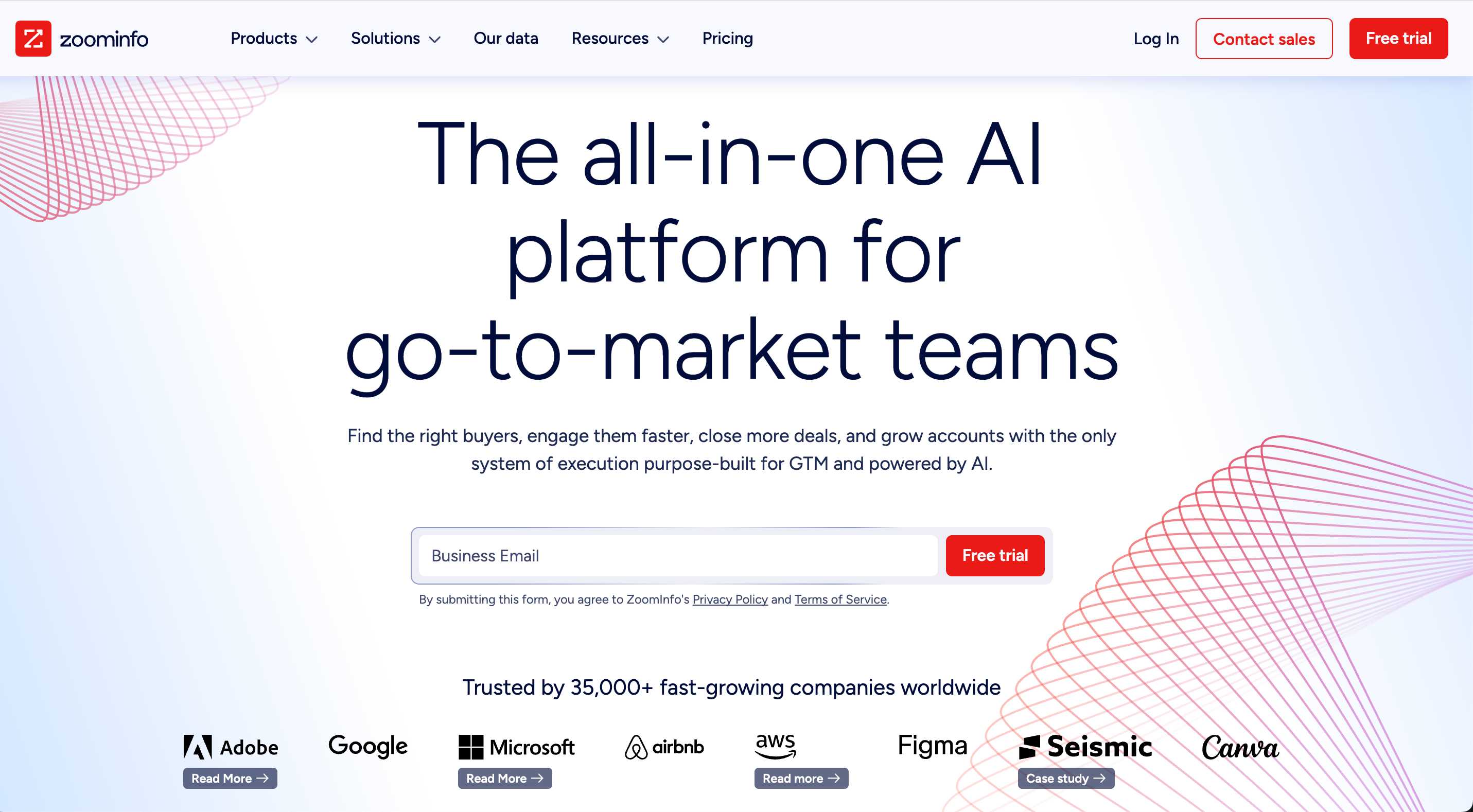
ZoomInfo is the largest proprietary B2B contact database, with roughly 320 million phone numbers and over 100 million company profiles. It fits enterprise teams that want a single platform for contact data, intent signals, conversation intelligence, and sales engagement bundled into its RevOS suite.
The platform's strength is sheer coverage, particularly in North America. ZoomInfo provides deep firmographic and technographic data alongside its contact records, and its native integrations with Salesforce, HubSpot, Outreach, and Salesloft slot into most enterprise RevOps stacks without heavy configuration work.
Limitations:
ZoomInfo refreshes its database on a monthly cycle, so contacts can be outdated within weeks of collection. Users on Reddit's sales communities report that mobile number accuracy is inconsistent, with some noting that a significant portion of phone numbers are disconnected or wrong by the time they dial.
Pricing is opaque as there's no public pricing page. That means you'll need to go through a full sales cycle before you even know the cost.
Best for: Mid-market to enterprise, US-centric sales teams that want an all-in-one platform and have a budget for a premium annual commitment.
Pricing: Not publicly listed.
Cognism
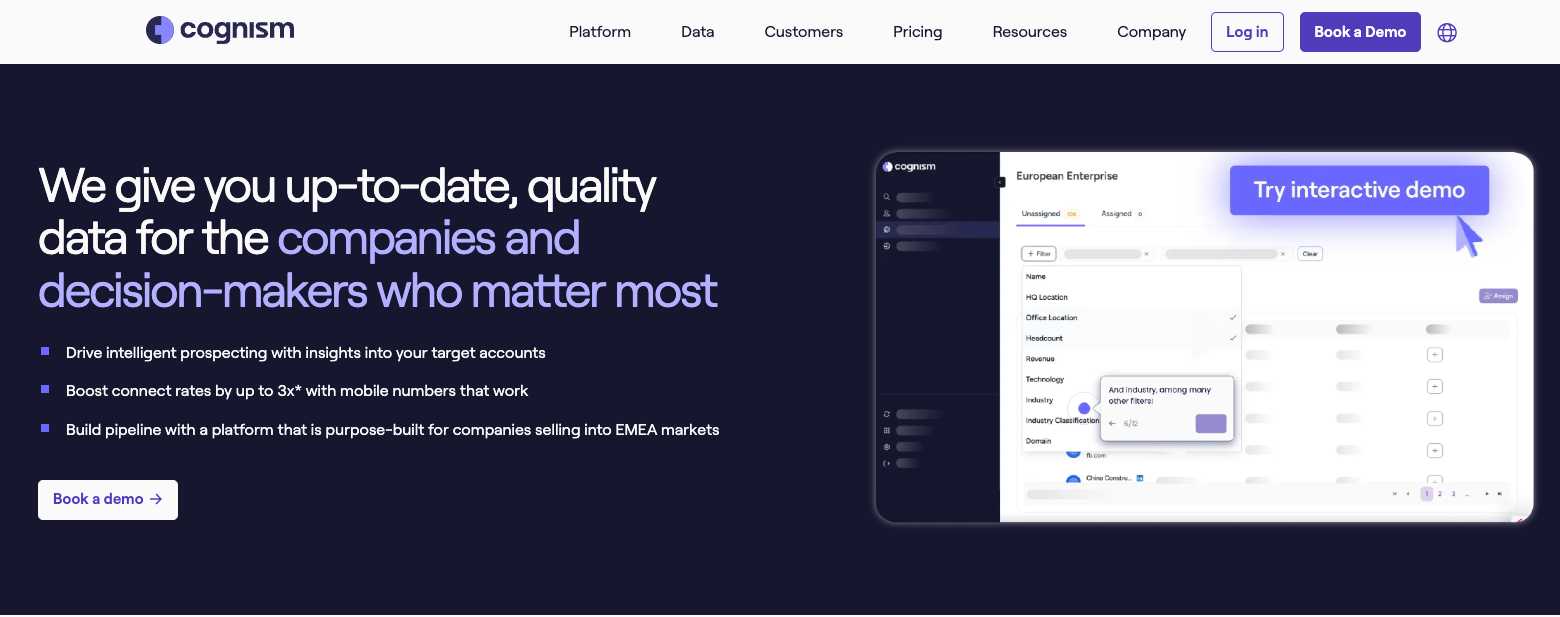
Cognism is a UK-headquartered contact data provider built around GDPR compliance and phone-verified mobile numbers. It fits teams selling into European markets who need verified direct dials and want to stay on the right side of data privacy regulations.
Cognism's standout feature is Diamond Data, a set of phone-verified mobile numbers that deliver up to 87% accuracy across EMEA, with particularly strong coverage in Germany and the broader DACH region. The platform checks numbers against 15 country-specific do-not-call lists, which matters for teams running phone-heavy outreach in regulated markets. Native integrations cover Salesforce, HubSpot, Pipedrive, Microsoft Dynamics, Outreach, and Salesloft.
Limitations:
Diamond Data is a paid add-on, not included in the base package, so the headline accuracy figure only applies if you pay for that upgrade.
Contacts refresh on a 30-day cycle, which means the data can age noticeably between updates.
Cognism uses seat-based licensing across its Grow and Elevate tiers, but doesn't publish pricing. You'll need a sales conversation to get a quote, and smaller teams may find themselves priced out.
Best for: Teams selling into Europe who need GDPR-compliant, phone-verified direct dials with strong EMEA coverage.
Pricing: Quote-based. Seat-based licensing with Grow and Elevate tiers.
Apollo.io
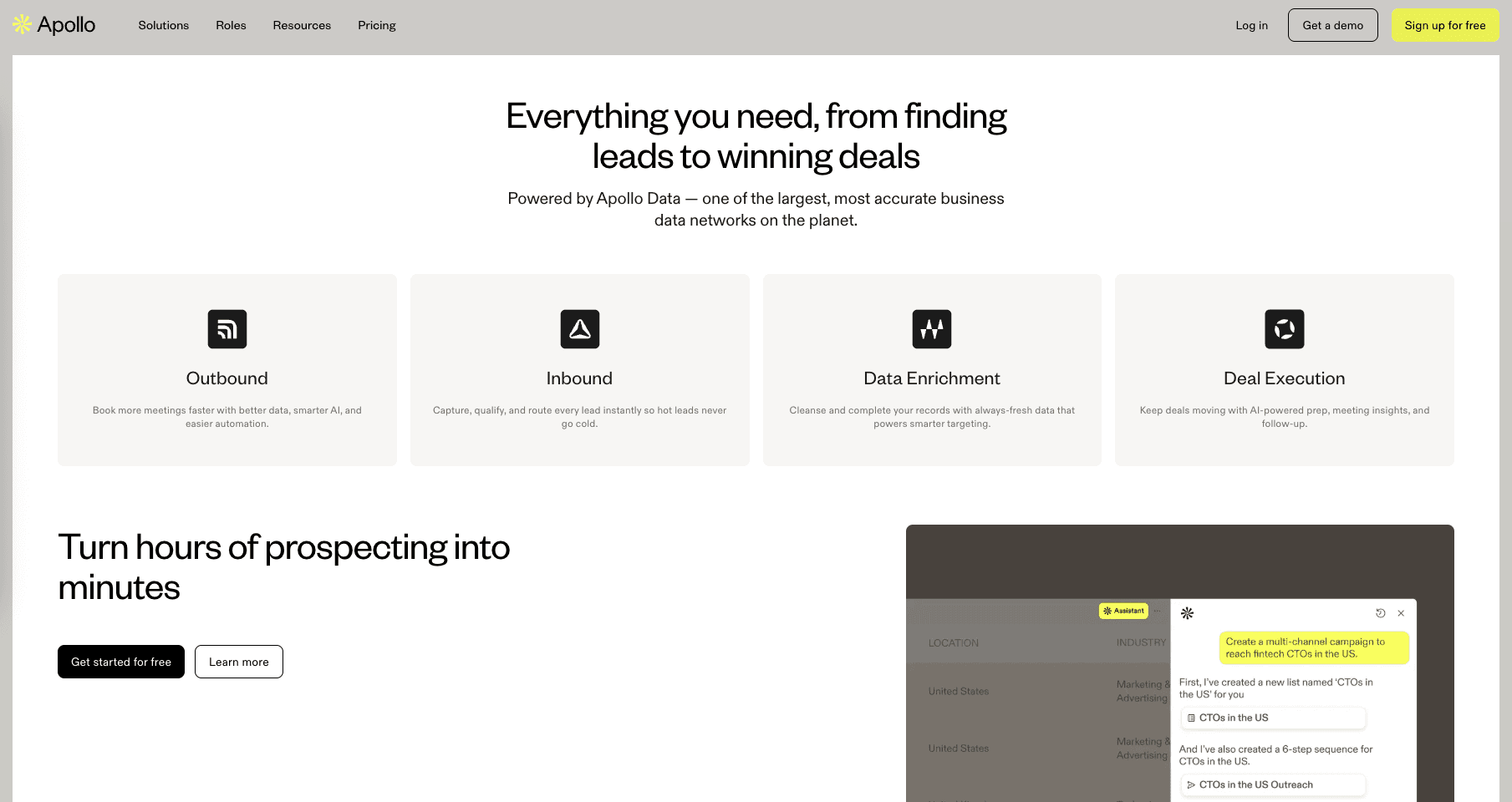
Apollo.io is an all-in-one sales platform with a database of 210 million contacts. It fits SMB and mid-market teams that want prospecting, email sequencing, a built-in dialer, and a meeting scheduler in one tool at a known price.
What sets Apollo apart from ZoomInfo and Cognism is pricing transparency. You know what you're paying before you sign anything. The platform also includes built-in outreach tools, including email sequences, phone dialer, and meeting booking, so teams can go from finding a contact to running a campaign without switching applications.
Limitations:
Apollo's database skews heavily toward US contacts, with weaker international coverage than Cognism.
Phone number accuracy trails behind dedicated phone-verification providers.
Actual user reviews put Apollo's email accuracy at roughly 80%, which means about one in five emails may bounce or reach the wrong inbox. For teams where deliverability and sender reputation matter (which is most teams), that gap adds up.
Best for: SMB to mid-market teams that want a single platform with transparent pricing and built-in outreach tools.
Pricing: Free (100 credits/month), Basic $49/user/month, Professional $79/user/month.
Lusha
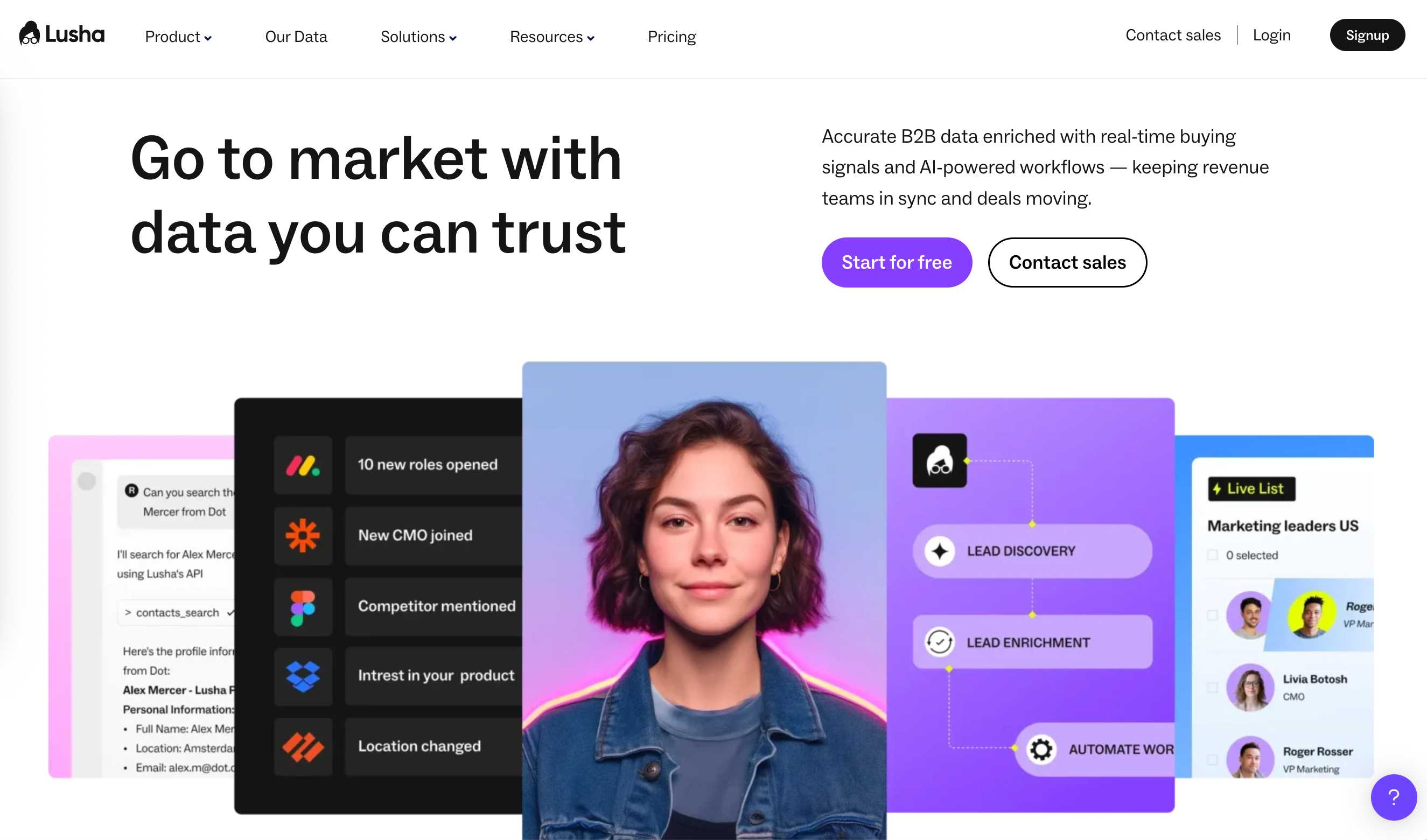
Lusha is a lightweight contact data tool built around a Chrome browser extension for quick prospect lookups. It fits mid-market teams that want simple, fast access to contact details without committing to a heavyweight platform.
Lusha's appeal is speed and simplicity. Install the Chrome extension, visit a prospect's profile on a professional network or company website, and pull their verified email and direct dial in a couple of clicks. The platform also partners with Bombora for intent data, giving users a basic view of which accounts are actively researching relevant topics. There's a free tier at 40 credits per month, making it accessible for individual reps or small teams testing the waters before scaling up.
Limitations:
Lusha is not an all-in-one platform. It won't sequence your emails or host your calling workflows.
Its database is smaller than ZoomInfo's or Apollo's, and deep firmographic or technographic data isn't the focus.
Best for: Mid-market teams wanting fast, easy contact lookups without a full platform commitment.
Pricing: Free tier (40 credits/month). Paid plans are available with additional credit allocations.
A note on professional network integrations
All four tools above offer native Salesforce and HubSpot integrations with bi-directional sync. Professional network data flows into these platforms through browser extensions and API connections.
The quality of that sync, real-time vs. batch, one-way vs. bidirectional, varies by vendor and pricing tier. Before you commit, confirm whether the integration tier you're purchasing includes the sync behavior your workflow requires.
Intent data and buying signal platforms
Intent data identifies which accounts are researching a solution right now. It does not confirm purchase readiness. An account showing a surge in content consumption around "sales automation software" could be a VP evaluating vendors, or it could be an analyst writing a report. That distinction matters because treating every intent signal as a hot lead is how teams burn through outreach credibility.
Most sales intelligence listicles lump intent data, trigger events, and buying signals into the same bucket. They're not the same. Topic-based intent tracks what accounts are reading across publisher networks. Trigger events track concrete, verifiable changes, such as a new funding round, a VP of Sales hire, or a 20% headcount increase. Both can indicate buying interest, but they carry very different false-positive rates.
Here's how the two main intent platforms work, followed by the trigger-event approach covered later in this guide.
Bombora
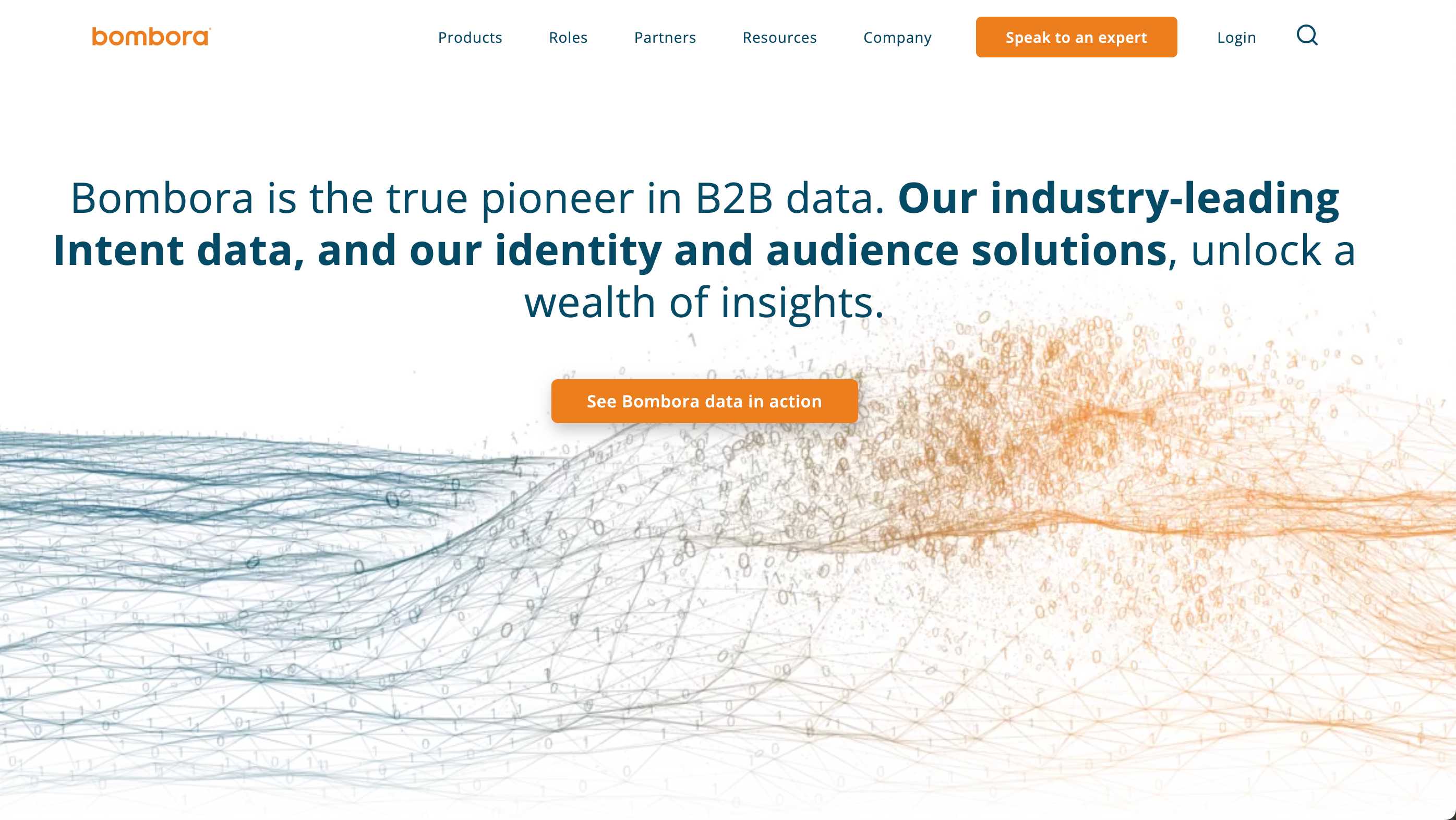
Bombora is a B2B intent data cooperative that pools content consumption signals from thousands of publisher websites. It detects topic "surges" when an account researches a subject above its historical baseline.
The cooperative model is Bombora's differentiator. Because it aggregates reading behavior across thousands of sites, it can spot research patterns that no single publisher could see alone. When a company's employees start consuming three times their normal volume of content about, say, "CRM migration," Bombora flags that account as showing surge intent for that topic.
Limitations:
Account-level data only, no individual contact identification. Bombora tells you which accounts are researching, but not who specifically within those accounts is doing the reading. You'll still need contact data from a separate provider to identify and reach the right person.
Surge scores require interpretation and can produce false positives.
Best for: Marketing and ABM teams that want account-level research signals to prioritize outreach and ad spend.
Pricing: Not publicly listed. Requires a sales conversation.
6sense
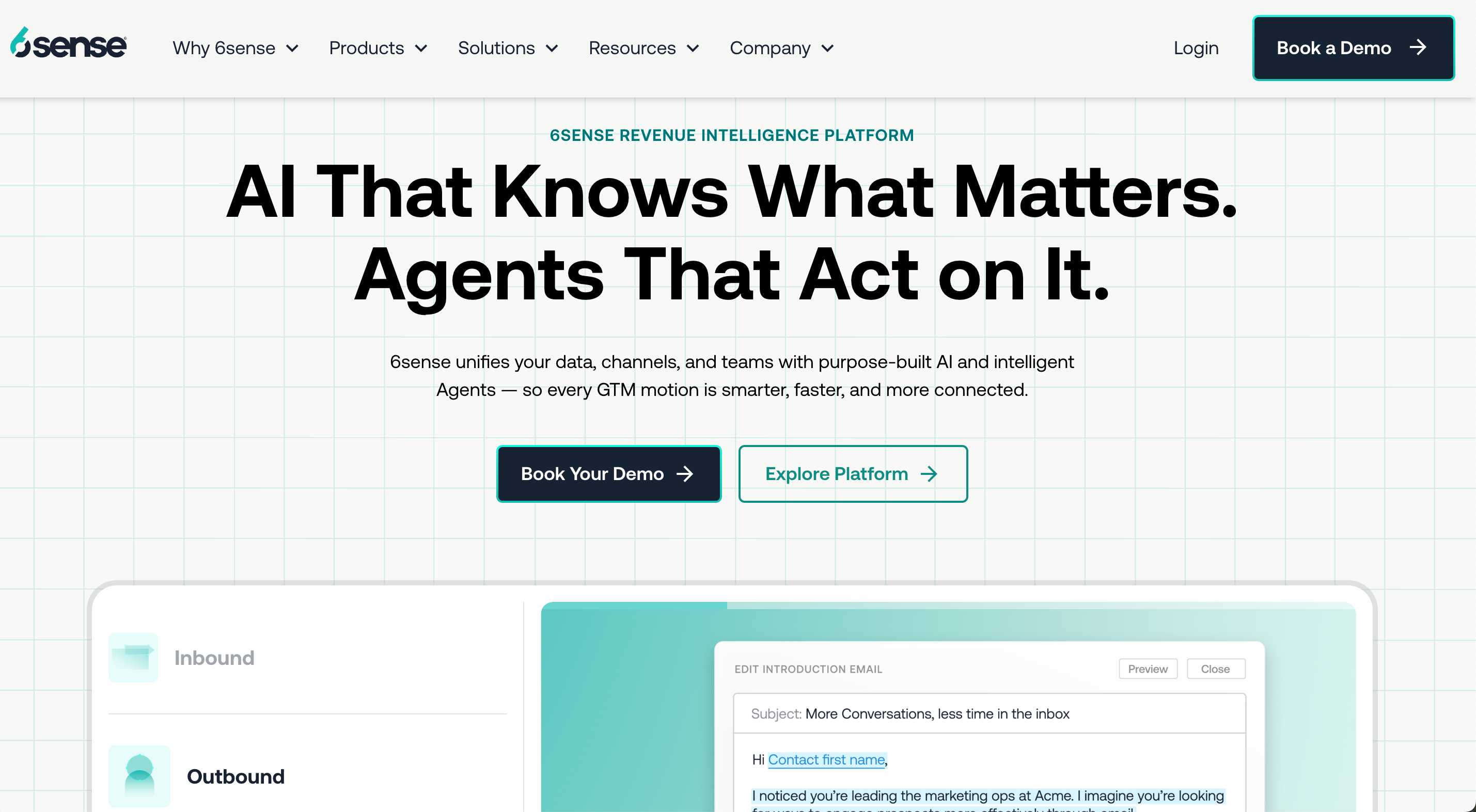
6sense is a predictive intelligence platform that combines third-party intent data with de-anonymized website visitor tracking. It estimates where accounts sit in the buying journey, from awareness through decision, and uses AI models to predict which accounts are most likely to convert.
The platform's pitch is moving beyond raw intent signals into predictive buying-stage identification. Instead of just telling you an account is researching a topic, 6sense attempts to tell you how far along that account is in its evaluation process. It also de-anonymizes some website traffic, connecting anonymous visits back to company-level identities.
Limitations:
Mixed practitioner reviews on signal accuracy.
Significant setup and tuning required. Five-figure annual pricing.
Best for: Enterprise marketing and revenue teams with the budget and patience to calibrate predictive models against their specific ICP.
Pricing: Enterprise-focused. Typically, five-figure annual contracts.
The third approach: trigger events
There's a third way to identify buying signals that produces fewer false positives than topic-level intent: tracking concrete, verifiable events. Job changes, funding rounds, hiring surges, and executive appointments are observable facts, not inferred behavior. A company that just raised a Series B and hired five new sales reps is showing intent through actions, not content consumption.
Trigger events carry less ambiguity because they're binary – they either happened or they didn't. The tradeoff is narrower coverage, as not every account in your pipeline will produce a trigger event on a useful timeline. But when they do, the signal-to-noise ratio is substantially higher than topic-based intent.
Conversation intelligence and signal tracking
These two tools solve different parts of the sales workflow than contact databases or intent platforms. Instead of identifying who to target, they focus on acting on what's already happening, such as analyzing live deals and tracking real-world events that create openings for outreach.
Gong
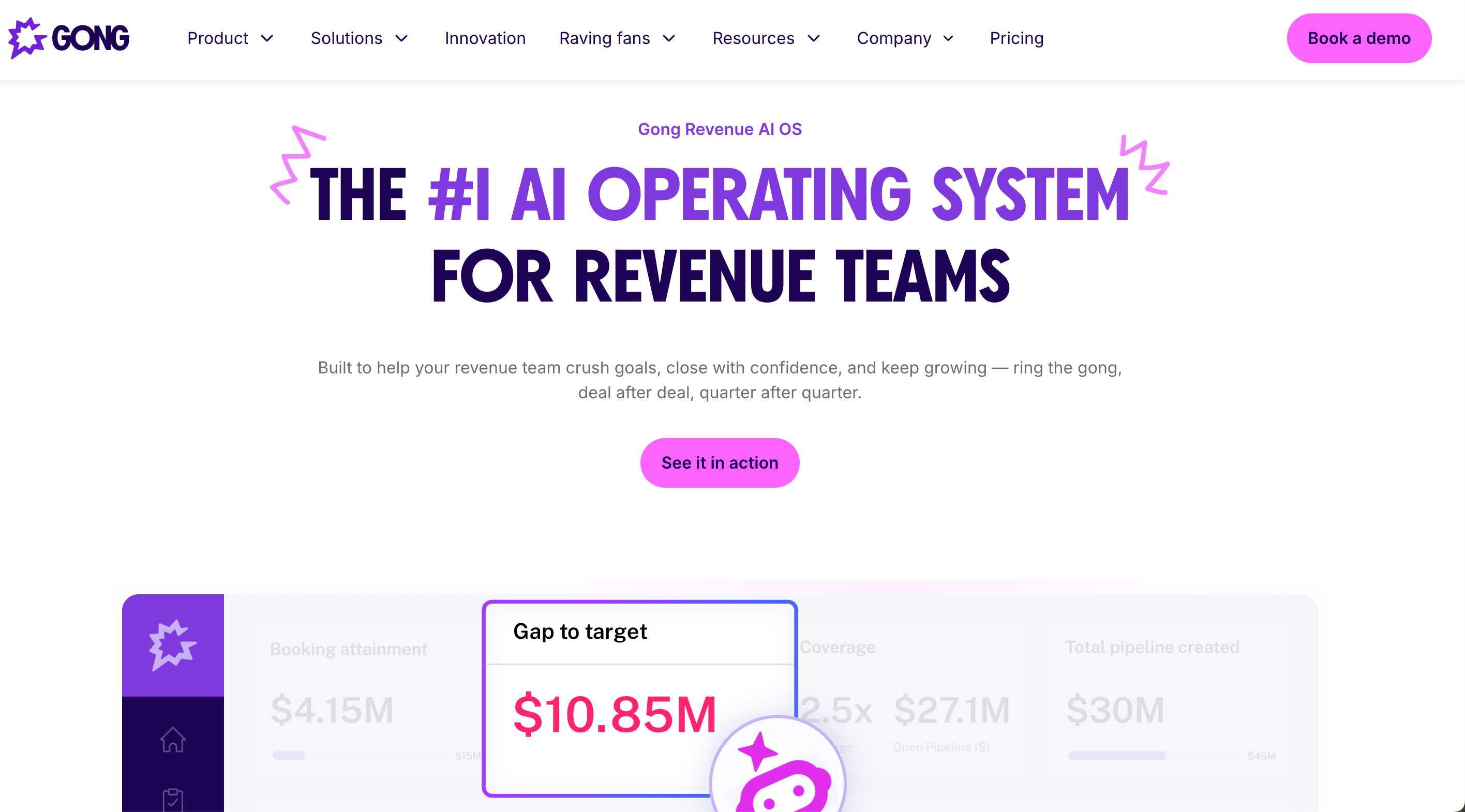
Gong is a conversation intelligence platform that records, transcribes, and analyzes sales calls and emails. It is not a prospecting or contact data tool.
Gong doesn't help you find new prospects. It helps you win deals you've already started. The platform captures every customer-facing interaction, including calls, video meetings, and emails, and uses AI to identify patterns across your team's conversations. Which talk tracks correlate with closed deals? Where are reps losing momentum in the pipeline? Which deals are at risk based on conversation sentiment and engagement patterns?
The output is coaching insights, deal forecasting, and execution analysis. Sales managers can use it to identify what top performers do differently and replicate those patterns across the team. Revenue leaders can use it to forecast with more confidence than gut feel and CRM stage data alone.
Limitations:
No prospecting, contact data, or lead generation capabilities.
Enterprise pricing without public rates.
Best for: Sales leaders and revenue teams focused on coaching, deal execution, and forecasting accuracy.
Pricing: Not publicly listed. Enterprise-focused.
UserGems
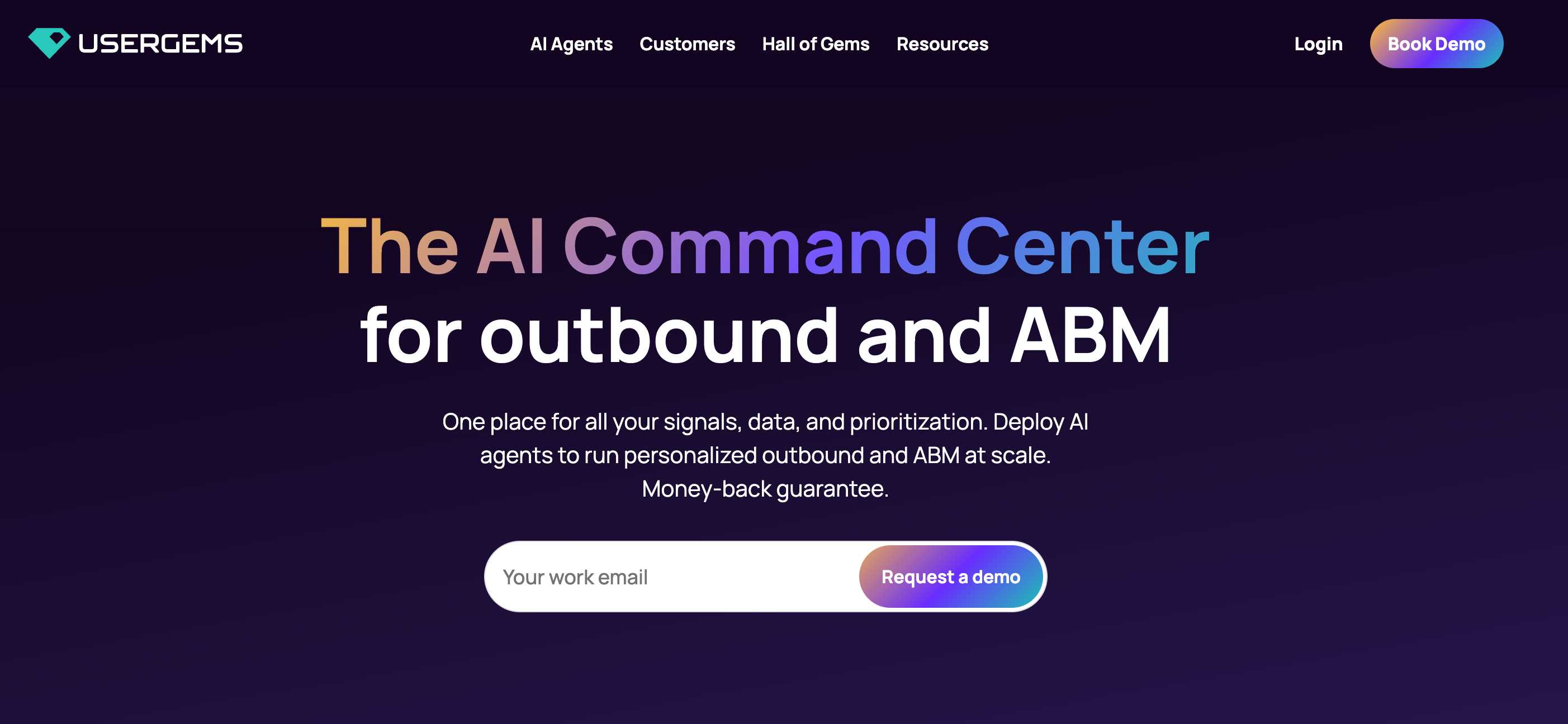
UserGems is a trigger-event tracking platform that specializes in job changes and relationship-based buying signals. It tracks over 600 signal types, including when past customers, champions, or engaged prospects change roles and land at new companies.
This is where the trigger-event approach from the previous section gets practical. When a former customer moves to a company that fits your ICP, UserGems auto-surfaces that warm lead with updated contact data directly into Salesforce and HubSpot. The rep gets a notification with context: who the person is, where they came from, and why they're worth reaching out to now.
Job changes are UserGems' primary use case, but the platform also tracks broader signals like promotions, company funding events, and new executive hires. The value is in the combination of signal detection and automated CRM delivery, so reps see the opportunity inside the tool they already work in rather than logging into yet another platform.
Limitations:
Most valuable when you have existing customer relationships to track. Less useful for teams starting from zero with no prior customer data.
Best for: Teams with an established customer base who want to turn past relationships into new pipeline through job-change tracking.
Pricing: Not publicly listed. Requires a sales conversation.
Data infrastructure and enrichment APIs
Data infrastructure APIs are not replacements for platforms like ZoomInfo or Cognism. They serve a fundamentally different use case. Platforms are built for sales reps doing manual prospecting through a browser interface. B2B data APIs are what technical teams use to build the automated systems that reps eventually work within. An AI SDR, a CRM enrichment workflow, or a real-time lead scoring engine can't run on a platform subscription – they need programmatic data access with consistent schemas, reliable uptime, and the ability to query at scale without human interaction.
If your team includes engineers building sales automation, this is your category.
Crustdata
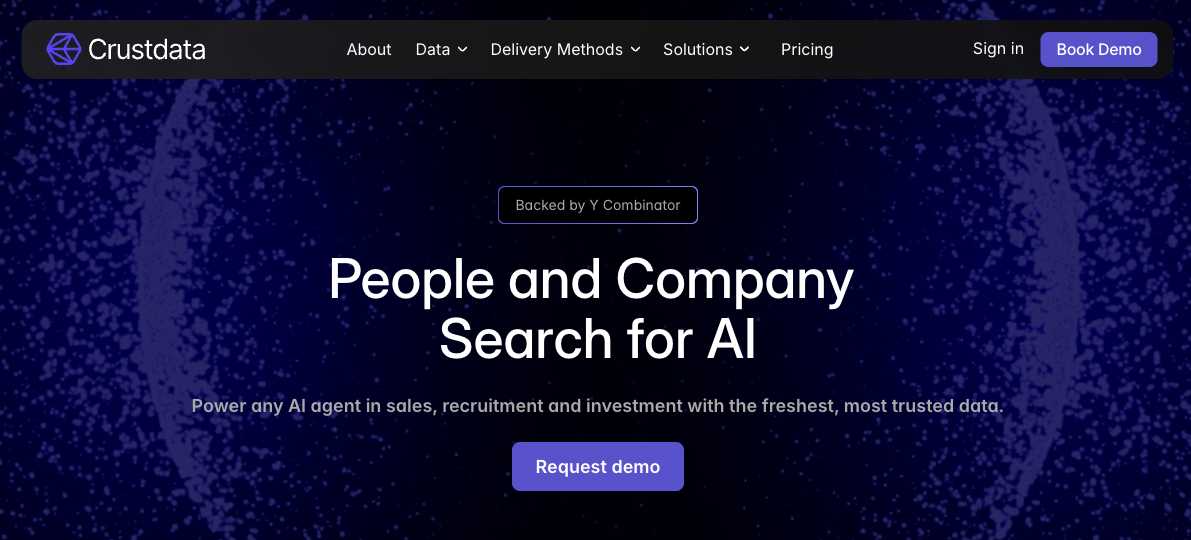
Crustdata is a real-time B2B data infrastructure provider that delivers person and company data through APIs and webhooks. It has a massive dataset of 1B+ person profiles and 60M+ companies and fits technical teams building AI SDRs, custom sales automation, and internal prospecting tools that need data gathered at the moment of request rather than pulled from a monthly snapshot.
Crustdata’s most significant advantage is data freshness. When you query Crustdata's enrichment API, the system can pull data from the web in real time, not from a pre-compiled database last updated weeks ago. This matters a lot for trigger-based outreach, where acting on a job change or funding round within hours produces meaningfully higher response rates than reaching out weeks later.
The Watcher API takes this further by pushing trigger events, such as job changes, funding rounds, hiring surges, and social media posts, directly to your system via webhooks. Instead of polling a database for changes, your AI SDR or automation workflow receives a notification the moment something relevant happens.
Crustdata aggregates data from over 10 sources into a single, consistent JSON schema with intelligent entity resolution (so "OpenAI" and "Open AI" map to the same company record). The platform offers 60+ search filters with nesting, enabling highly specific queries like "VP of Sales at Series B SaaS companies in Austin that hired 5+ sales reps in the past 30 days."
Pricing is transparent and credit-based, with no seat licenses. You pay for what you use, and costs scale with API consumption rather than headcount.
Limitations:
No user interface for manual prospecting.
No phone number data.
Requires engineering resources to integrate. Crustdata is built for developers and technical teams who are writing code, not clicking through dashboards.
Best for: AI SDR platforms, engineering teams building sales automation, and companies that need real-time data infrastructure with webhook-based signal monitoring.
Pricing: Transparent, credit-based. No seat licenses.
People Data Labs
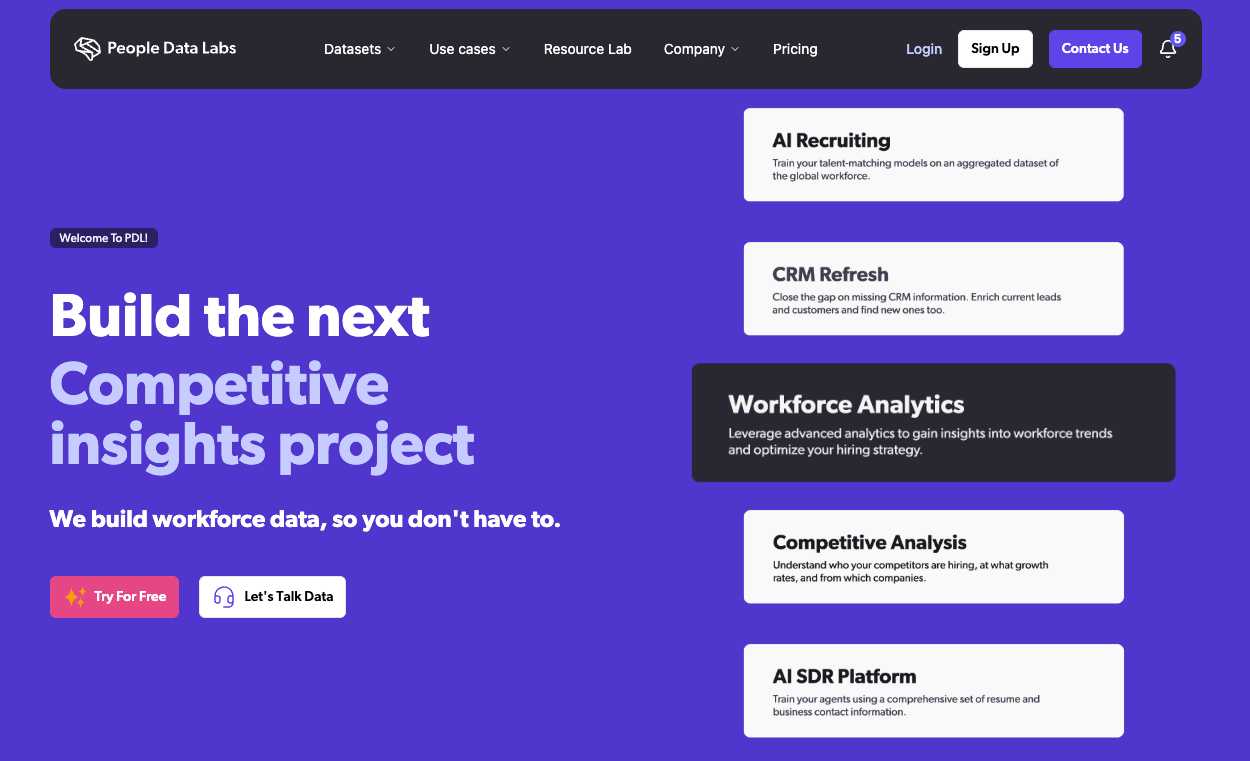
People Data Labs is a large-scale, API-first data provider focused on historical depth and breadth across person and company records. It fits teams running batch enrichment where work history completeness matters more than real-time freshness. PDL maintains one of the largest B2B data sets available through an API.
PDL's developer experience is genuinely strong, and it ships SDKs in Python, JavaScript, and Ruby, with an API dashboard for key management and rate-limit visibility. The API also exposes likelihood scores on enrichment results, letting teams configure match strictness to tune precision versus coverage for a specific ICP. That said, webhook support is gated to enterprise customers only.
Limitations:
PDL operates on monthly batch processing cycles, so contact records can be two to four weeks behind real-world changes at any given time.
Less suited for time-sensitive trigger-based outreach, as data lag creates accuracy problems.
Best for: Batch enrichment scenarios, CRM data population, workforce analytics, and applications where historical depth across millions of records matters more than real-time freshness.
Pricing: Credit-based with a free tier (100 records/month). Transparent pricing with volume discounts.
RocketReach
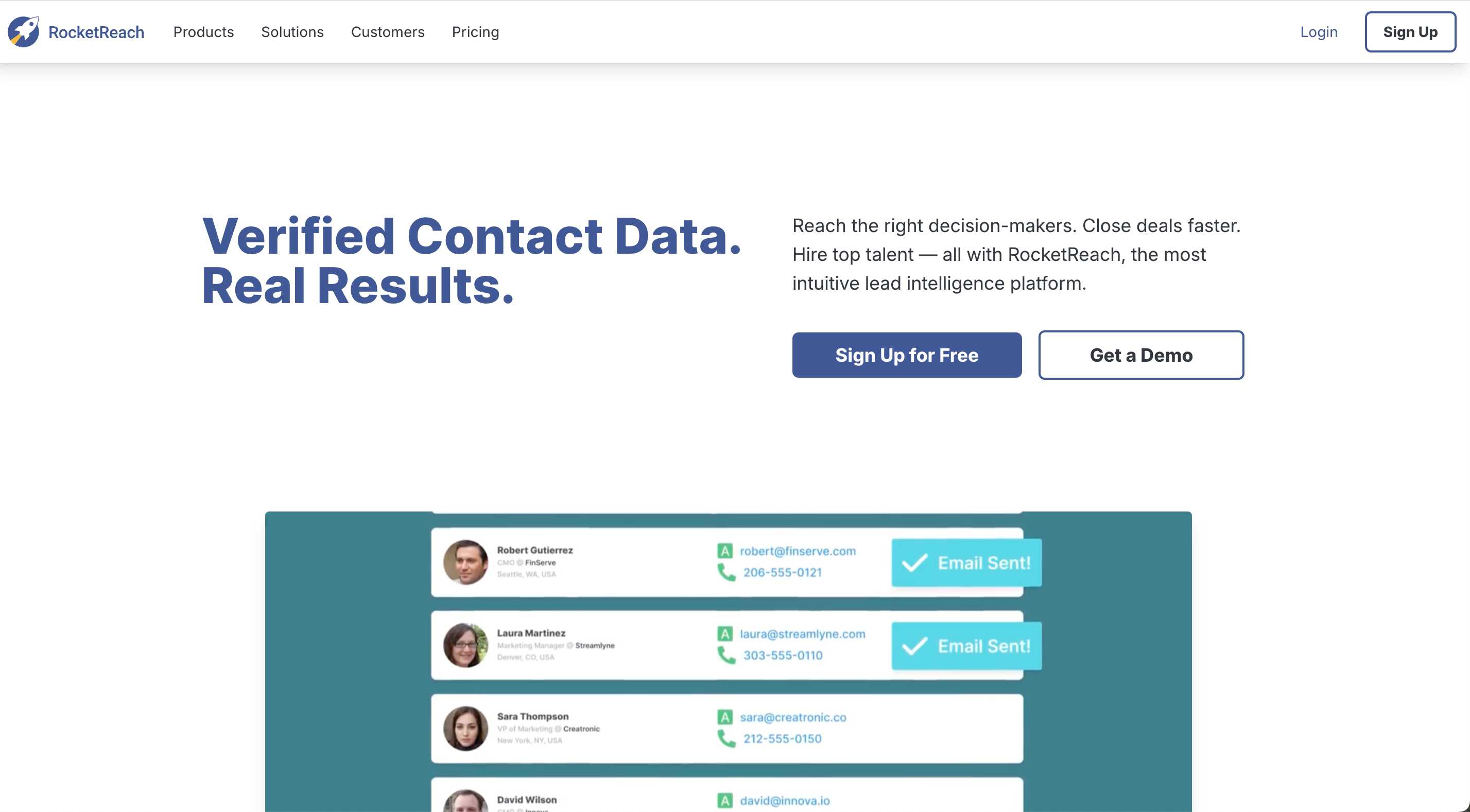
RocketReach is a contact data provider with 700 million contacts and over 60 million companies, offering both a prospecting UI and an API. It fits mid-market teams wanting straightforward contact lookups at a moderate price point with transparent pricing.
RocketReach includes a browser-based prospecting interface and a Chrome extension alongside its API access. This hybrid approach lets sales reps search for contacts manually, while engineering teams can also pull data programmatically.
Pricing is seat-based and competitive: Essentials at $19 per month (email only) and Pro at $52 per month (email and phone), billed annually. That transparency is a plus for teams budgeting without a sales cycle.
Limitations:
User-reported concerns regarding accuracy and freshness.
CRM integrations are locked behind higher-tier plans, so the entry-level price doesn't include the workflows most teams actually need.
Best for: Mid-market teams wanting a hybrid of prospecting UI and API access at a known price point.
Pricing: Essentials $19/month (email only), Pro $52/month (email + phone), billed annually.
How Crustdata powers real-time sales intelligence
Every tool ranked above is only as good as the data feeding it. Sellers with AI tools are 3.7x more likely to meet quota, but that number assumes the data is current at the moment of outreach, not cached from a refresh cycle that ran weeks ago.
Crustdata's API is built around this need for data freshness. The enrichment engine gathers data at the moment of query, pulling from 10+ sources into a single JSON response with the prospect's current role, company details, and recent activity.
The Watcher API pushes trigger events, such as job changes, funding rounds, and hiring surges, via webhooks directly into your system, so your AI SDR or automation workflow acts on signals within hours instead of waiting for a monthly database rebuild.
If you're building an AI SDR, a CRM enrichment pipeline, or a custom lead scoring engine, and you need data infrastructure that keeps pace with what you're automating,book a demo with Crustdata to see how real-time data works in your stack.


Products
Popular Use Cases
Competitor Comparisons
95 Third Street, 2nd Floor, San Francisco,
California 94103, United States of America
© 2026 Crustdata Inc.
Products
Popular Use Cases
Competitor Comparisons
95 Third Street, 2nd Floor, San Francisco,
California 94103, United States of America
© 2026 CrustData Inc.
Products
Popular Use Cases
Competitor Comparisons
95 Third Street, 2nd Floor, San Francisco,
California 94103, United States of America
© 2026 Crustdata Inc.
🎉 We hit $10M ARR!
$600k to $10m in 1.5 years. Our entire GTM is powered by our own APIs.
🎉 We hit $10M ARR in 1.5 years!