AI Tools for Venture Capital: Why Top Funds Build Proprietary Pipelines
Published
Written by
Chris P.
Reviewed by
Nithish A.
Read time
7
minutes
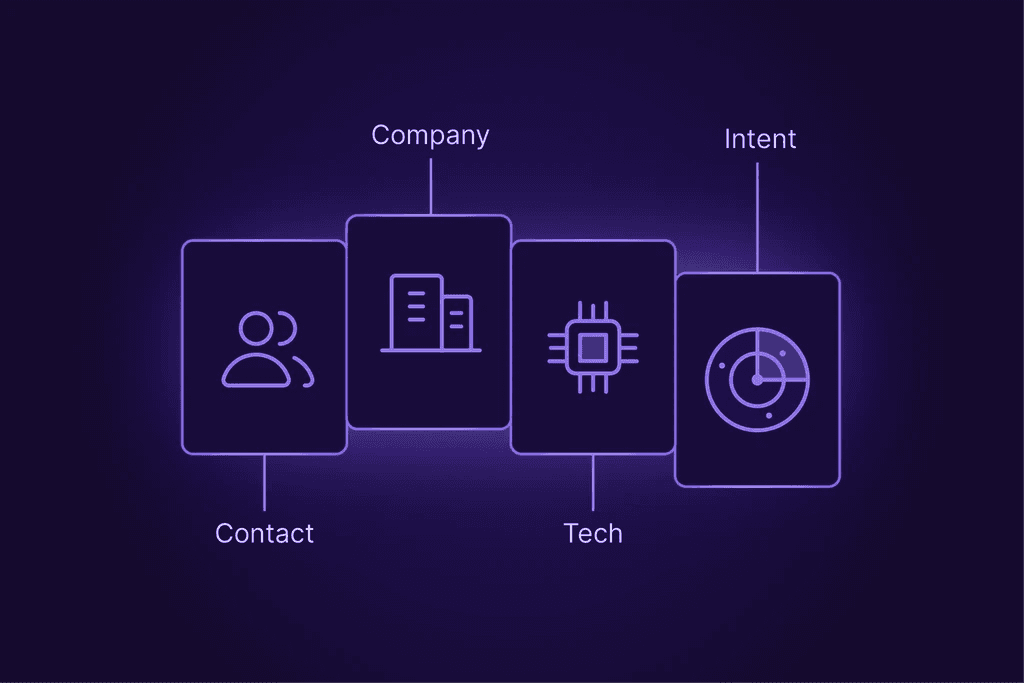
When one of our customers joined their VC fund seven months ago, his title was Data & AI Operations Lead. His mandate wasn't to run Harmonic searches faster or get the team onto a better CRM. It was to build internal infrastructure that generates deal flow signals the fund's competitors can't access. His exact framing for why off-the-shelf tools weren't enough: generalized signals lack differentiation. When every fund on the market runs the same screen, the screen stops being an edge.
That thinking is spreading. EQT Ventures built Motherbrain, SignalFire built Beacon, Alpaca VC built Gordon, InReach Ventures built DIG, Thrive Capital built Puck. All of these are bets that proprietary data access is the next durable competitive advantage in venture capital, the way proprietary networks were in the previous decade.
This article makes the case for why, explains what these systems are actually built on, and provides a technical blueprint for building your own, whether you're a $50M fund adding your first API integration or a $500M fund standing up a full internal pipeline.
The Commodity Signal Problem
Picture what happens when a company you've been loosely tracking shows up in Harmonic with a "funding signal": their employee count jumped from 22 to 38 in a month. That signal goes to every fund subscribed to Harmonic at the same time. By the time you log in, send the company an intro email, and schedule a call, the founder already has 11 meetings on the calendar from the same alert firing for everyone else.
The deeper problem is where PitchBook, Harmonic, and Tracxn get their data. All three draw heavily from overlapping sources: Public headcount data, Crunchbase funding records, press announcements, SEC filings. The freshness varies but the underlying provenance is similar. You're running slightly different UIs over largely the same data pool. Differentiation at the UI level doesn't change the signal asymmetry problem.
There's a timing dimension here that's easy to understate. Most SaaS platforms batch-update company data on weekly or monthly cycles. If a company grew from 20 to 35 employees last month and Harmonic refreshes monthly, you're seeing that growth signal 30 days after it happened. In a competitive deal market, 30 days means three to five funds have already had a first call.
The funds winning on sourcing aren't doing it with better SaaS subscriptions. EQT Ventures' Motherbrain [sources companies an average of 14 months before their funding round closes]. That lead time comes from tracking raw signals at higher frequency than what any shared tool refreshes.
There's academic backing for this pattern. A 2024 SSRN study, found that after adopting ML-based sourcing, funds became significantly more likely to invest outside traditional startup hubs, and those outside-hub investments were more likely to IPO or become unicorns than typical deals sourced through the standard network. Beyond the speed advantage, proprietary signal access systematically surfaces companies the shared-data stack was structurally unlikely to find.
Why the Best Funds Chose to Build
Each of the major proprietary VC AI systems was built in response to a specific failure of off-the-shelf tools. Understanding the failure mode is more useful than cataloging the systems.
EQT Ventures, Motherbrain
EQT's sourcing problem was scale: they were trying to track a European startup ecosystem of hundreds of thousands of companies with a team that couldn't manually research more than a few hundred in any given period. The decision wasn't "let's build an AI system", it was "we're missing companies that should be in our funnel because we don't have a way to surface them before they're on everyone's radar." Motherbrain ingests headcount growth, web traffic trends, founder social activity, hiring pattern composition, and news signals, scores companies against EQT's thesis continuously, and surfaces candidates for human review. EQT's Henrik Landgren (former head of analytics at Spotify) describes Motherbrain as "a new associate on the team", one that flags companies partners would have otherwise missed.
The outcomes back that framing. Motherbrain surfaced Finnish mobile studio Small Giant Games early; EQT invested, and Zynga acquired Small Giant for $700M, EQT's first major fund exit. The system also identified German remote-desktop company AnyDesk before the founders had sought any funding, giving EQT time to build a relationship and invest ahead of the market. In Dublin, Motherbrain flagged AR gaming startup WarDucks before it had begun fundraising, the company's CEO later noted publicly that being found by a VC's AI before starting a raise was unexpected. The 14-month average lead time before close is the output of catching companies during the signal accumulation phase, instead of the announcement phase.
SignalFire, Beacon
SignalFire was founded with the thesis that company trajectory is legible in public behavioral data well before a company raises. CEO Chris Farmer describes Beacon as "a mini-Google for venture", it tracks over 10 million data sources in real time, monitoring signals that standard databases don't surface: GitHub commit activity, app store ranking changes, engineering team growth rate by function, job posting velocity and composition, and domain registration patterns. A 12-person company whose engineers are committing to a public repo at an accelerating rate, while the company registers two new domain variants, is probably building something worth a conversation, months before they'd show up in any funding database.
The results are specific. Beacon identified Grammarly at seed-stage by analyzing user growth and hiring trends; SignalFire invested early, and Grammarly reached a $13B valuation by 2021. The platform flagged health-tech startup Grow Therapy before it was widely known, leading to an early bet that was later validated when Sequoia led an $88M Series C. Beacon also powers the firm's portfolio support: when portfolio company EvenUp needed to hire a product designer, SignalFire used the platform to surface 100 qualified candidates, including passive talent not actively searching, from which EvenUp made a key hire. That's a use case no off-the-shelf sourcing tool replicates: a proprietary pipeline that serves both deal flow and portfolio company building.
InReach Ventures, DIG
InReach became the first European VC fund to run fully automated sourcing. Their problem was geographic coverage: European startup ecosystems outside London and Berlin are fragmented and undermonitored by US-centric data tools. InReach invested €3M building DIG and today employs more software engineers than investors, an organizational structure that signals where they believe the leverage actually sits. DIG monitors company signals across European markets continuously and surfaces founders fitting InReach's thesis before those founders are actively fundraising. The LP community noticed: InReach closed an oversubscribed €53M fund, a signal that institutional investors viewed the model as credible. The automation isn't replacing judgment; it's expanding the geographic surface area of what their team can monitor from dozens of companies to thousands.
Alpaca VC, Gordon
Alpaca's problem was inbound noise. As the fund grew, more deal flow came in, but the ratio of signal to noise got worse, not better. Gordon scores both inbound deal flow and outbound prospects against Alpaca's thesis filters automatically, reducing first-pass screening time. The goal isn't to automate the investment decision, it's to ensure the partners' time goes to the highest-signal meetings, not to filtering out mismatched companies that shouldn't have been on the list in the first place.
The common thread
None of these systems were built because someone wanted to use AI. They were built because a specific operational problem, missed sourcing windows, limited geographic coverage, inbound noise, scale constraints, couldn't be solved within the constraints of shared SaaS tools. The tools constrain you to searching within the data they've already collected, on the refresh cycle they've already chosen. A proprietary pipeline removes both constraints.
A secondary benefit: fewer blind spots in who gets funded
There's a less-discussed advantage of signal-based sourcing that the data increasingly supports. A California Management Review analysis comparing 20 data-driven VCs against traditional peers found that data-driven funds invested in roughly 30% more female-led startups (13% of investments vs. 10%) and were less concentrated on elite-pedigree founders (59% of portfolio company CEOs from top universities vs. 66% at traditional funds). When sourcing is driven by traction signals, headcount growth, web traffic, GitHub activity, hiring patterns, it isn't influenced by the same pattern-matching that leads a human investor to back "the Stanford CS founder who looks like my last winner." As Wharton professor Laura Huang, who researches bias in VC investment decisions, has put it: "gut feelings might just be a cover for our bias." A proprietary pipeline built on behavioral signals doesn't eliminate judgment, it removes one layer of filter that most funds don't realize they're running.
What a Proprietary Pipeline Is Actually Made Of
Motherbrain, Beacon, DIG, Gordon all have different names, but the underlying problem each one solves is the same: how do you get structured signals about companies and people faster, and with more specificity, than what any shared platform provides?
Every proprietary pipeline has the same three layers under the hood.
Layer 1: Company Signals
Funding announcements are lagging indicators. By the time a round shows up in Crunchbase, the founder has already had 20 conversations, picked a lead, and is about to close. What you want are the signals that precede the raise, often by 9 to 18 months.
Headcount growth rate is useful, but total headcount growth is noisier than it looks. The more specific version is growth by function. A 20-person company that added 4 engineers and 1 designer in 60 days is building product. The same company adding 1 engineer, 1 SDR, and 1 BDR in the same window is scaling go-to-market, a meaningfully different stage signal. You don't hire GTM at seed scale to run more efficiently. You hire it because you have something to sell and you're preparing to grow revenue fast enough to justify a larger round.
Job posting composition works the same way. Postings for Head of Finance, RevOps, or CFO at a 40-person company mean the founders are building organizational infrastructure for a raise. Nobody hires a CFO to run a 40-person company. They hire a CFO because someone told them to get their books in order.
Web traffic acceleration is a softer signal but a useful one. A company growing 40–60% quarter-over-quarter in traffic while still small by headcount is often in early PMF. Founders typically wait for 2-3 more quarters of that curve before running a formal process, which means you have a window.
Funding gap timing is underused. A company that raised seed 18 months ago, hasn't announced a Series A, but shows meaningful headcount growth and GTM hiring activity is probably 3-6 months from a raise.
Layer 2: People Signals
This layer gets less attention in most "AI for VC" discussions, which is exactly why it's more differentiated.
At Acton Ventures, Partner Michael Silton's problem was practical: manual LinkedIn monitoring of founders and portfolio companies at any meaningful scale is untenable. Once you have 30 portfolio companies and a watchlist of 200 additional founders you're tracking, checking each of their LinkedIn profiles weekly isn't a workflow, it's a full-time job. The consequence of not doing it is missing the founder who just posted about crossing 500 paying customers, or the portfolio company where a key executive just quietly left.
The people signals that matter most for sourcing start with serial founder movement. When a founder with a prior exit leaves their current company, they could be looking to start a new venture. A people search filtering for individuals with a prior Series B+ exit, with a recent employer change, surfaces pre-formation opportunities before any company record exists to search.
Related: key engineer clustering. When three or four engineers from the same large tech company all change jobs within a 6-month window, and their new employer is a company you don't recognize, that's a talent signal. Engineers don't leave Google or Stripe for a no-name company unless something is compelling about what's being built.
Founder social activity patterns are more predictable than most funds realize. Founders build public narrative before running a process; they want investors to have seen their thinking before the first email arrives. Monitoring founder post activity is like reading the publicly published timeline of a company's fundraising preparation.
Warm path identification is harder to automate but solvable. A VC fund discovered Crustdata while trying to solve a manual research problem: senior partners were spending significant time tracing connection paths to founders they wanted to meet. The problem is finding a credible warm introduction path that actually gets a response from the founders. The people enrichment layer, specifically the ability to identify who is engaging with a founder's content, maps introduction paths from signals the founders are already broadcasting publicly.
Layer 3: The Freshness Problem
Here's the issue most funds don't fully reckon with until they're building: the value of a signal degrades fast.
An investment banker we spoke to put this precisely when describing his monitoring workflow: the threshold he watches for is 10+ hires at a target company within a tight time window. Not 10 hires over a year, 10 hires in 6-8 weeks. That velocity is the signal. A monthly data refresh makes that signal invisible; you'd see headcount go from 20 to 30 at some point between your last check and this one, with no visibility into the rate.
Proprietary pipelines built on real-time enrichment APIs capture signals within hours of changes happening. A company posts a VP of Finance role on a Tuesday morning, you know about it Tuesday afternoon, before the role is indexed by tools running weekly scrapes. That's the difference between sourcing and reacting.
How to Build a Proprietary VC Sourcing Pipeline
A working MVP can be assembled in 2–5 days by one engineer. The architecture has four components: a discovery layer, a signals-and-scoring layer, a monitoring layer, and a delivery layer.
Component 1: Company Discovery
The discovery layer answers the question: which companies currently fit our thesis? This is a query that runs continuously as companies grow into and out of your filter criteria.
Start by translating your investment thesis into specific filter parameters. "Early-stage B2B SaaS" isn't specific enough to build a screen. The filters you actually need look like this:
Stage: Last funding round type is seed, angel, or pre-seed
Size: 40-150 employees
Growth: 6-month headcount growth above 20% (growing meaningfully)
Geography: HQ in United States (or your target markets)
Sector: Industry contains "software" or your specific vertical
Using Crustdata's Company Search API, this translates into a query you can run programmatically:
curl --request POST \

--url https://api. crustdata. com/screener/companydb/search \

--header 'Authorization: Token YOUR_API_TOKEN' \

--header 'Content-Type: application/json' \

--data '{

"filters": {

"op": "and",

"conditions": [

{"filter_type": "last_funding_round_type", "type": "in", "value": ["seed", "angel", "pre_seed"]},

{"filter_type": "employee_metrics. latest_count", "type": ">", "value": 40},

{"filter_type": "employee_metrics. latest_count", "type": "<", "value": 150},

{"filter_type": "employee_metrics. growth_6m_percent", "type": ">", "value": 20},

{"filter_type": "hq_country", "type": "=", "value": "USA"},

{"filter_type": "industries", "type": "(.)", "value": "software"}

]

},

"sorts": [{"column": "employee_metrics. growth_6m_percent", "order": "desc"}],

"limit": 200

}'
curl --request POST \

--url https://api. crustdata. com/screener/companydb/search \

--header 'Authorization: Token YOUR_API_TOKEN' \

--header 'Content-Type: application/json' \

--data '{

"filters": {

"op": "and",

"conditions": [

{"filter_type": "last_funding_round_type", "type": "in", "value": ["seed", "angel", "pre_seed"]},

{"filter_type": "employee_metrics. latest_count", "type": ">", "value": 40},

{"filter_type": "employee_metrics. latest_count", "type": "<", "value": 150},

{"filter_type": "employee_metrics. growth_6m_percent", "type": ">", "value": 20},

{"filter_type": "hq_country", "type": "=", "value": "USA"},

{"filter_type": "industries", "type": "(.)", "value": "software"}

]

},

"sorts": [{"column": "employee_metrics. growth_6m_percent", "order": "desc"}],

"limit": 200

}'
curl --request POST \

--url https://api. crustdata. com/screener/companydb/search \

--header 'Authorization: Token YOUR_API_TOKEN' \

--header 'Content-Type: application/json' \

--data '{

"filters": {

"op": "and",

"conditions": [

{"filter_type": "last_funding_round_type", "type": "in", "value": ["seed", "angel", "pre_seed"]},

{"filter_type": "employee_metrics. latest_count", "type": ">", "value": 40},

{"filter_type": "employee_metrics. latest_count", "type": "<", "value": 150},

{"filter_type": "employee_metrics. growth_6m_percent", "type": ">", "value": 20},

{"filter_type": "hq_country", "type": "=", "value": "USA"},

{"filter_type": "industries", "type": "(.)", "value": "software"}

]

},

"sorts": [{"column": "employee_metrics. growth_6m_percent", "order": "desc"}],

"limit": 200

}'
This returns a ranked list of companies sorted by growth rate, updated from live data, not a static export. Run it weekly and diff the results against your existing pipeline to surface companies that newly entered your filter criteria.
The response for each company includes 250+ datapoints: headcount by function, web traffic trends, funding history, job posting count, investor names, follower growth, and more. That's the enrichment layer built into the discovery step, you're not making two calls (one to find companies, one to enrich them), you're getting everything in one response.
Component 2: People Discovery for Pre-Formation Sourcing
Company search is limited to companies that already exist and have enough of a public profile to be indexed. The most valuable sourcing, finding serial founders before they've announced their new company, requires a people search layer.
The query logic here is: find people who have previously founded or held a leadership role at a company that raised a Series B or later, who changed employer in the past 12 months, and whose current employer is a small or unrecognized company. That profile describes "experienced operator who recently started something new."
curl --request POST \

--url https://api. crustdata. com/screener/people/search \

--header 'Authorization: Token YOUR_API_TOKEN' \

--header 'Content-Type: application/json' \

--data '{

"filters": {

"op": "and",

"conditions": [

{"column": "current_title", "type": "(.)", "value": "founder OR co-founder OR CEO"},

{"column": "years_at_current_company", "type": "<", "value": 1},

{"column": "current_employers. employee_count", "type": "<", "value": 20},

{"column": "all_employers. company_funding_total", "type": ">", "value": 10000000}

]

},

"limit": 100

}'
curl --request POST \

--url https://api. crustdata. com/screener/people/search \

--header 'Authorization: Token YOUR_API_TOKEN' \

--header 'Content-Type: application/json' \

--data '{

"filters": {

"op": "and",

"conditions": [

{"column": "current_title", "type": "(.)", "value": "founder OR co-founder OR CEO"},

{"column": "years_at_current_company", "type": "<", "value": 1},

{"column": "current_employers. employee_count", "type": "<", "value": 20},

{"column": "all_employers. company_funding_total", "type": ">", "value": 10000000}

]

},

"limit": 100

}'
curl --request POST \

--url https://api. crustdata. com/screener/people/search \

--header 'Authorization: Token YOUR_API_TOKEN' \

--header 'Content-Type: application/json' \

--data '{

"filters": {

"op": "and",

"conditions": [

{"column": "current_title", "type": "(.)", "value": "founder OR co-founder OR CEO"},

{"column": "years_at_current_company", "type": "<", "value": 1},

{"column": "current_employers. employee_count", "type": "<", "value": 20},

{"column": "all_employers. company_funding_total", "type": ">", "value": 10000000}

]

},

"limit": 100

}'
This surfaces founders at very early-stage companies who have previously been associated with well-funded organizations, a proxy for "experienced founder, new company, pre-visibility window." These are conversations worth having 12–18 months before any database knows the company exists.
Component 3: Signal Scoring
Without scoring, you're handing 200 companies a week to a partner team to figure out which ones matter. That doesn't scale, and it puts you no further ahead than a PitchBook export.
A simple scoring model assigns weights to signals based on their predictive value for your specific thesis. For an early-stage B2B SaaS fund, a reasonable initial weighting:
Signal | Weight | Why |
6-month headcount growth >30% | 25 | Strong momentum, likely approaching fundraise |
VP Sales / Head of Finance job posting active | 20 | GTM build = pre-raise organizational prep |
Web traffic growth >40% QoQ | 20 | PMF indicator, 9-12 month precursor to raise |
Seed round 15-24 months ago | 15 | Timing window, too early for A, approaching it |
Founder posted in past 14 days | 10 | Active narrative building |
Investor overlap with portfolio companies | 10 | Warm path signal |
Each company gets a score from 0-100. Your team reviews the top 20 each week instead of the top 200. The model gets refined over time as you track which signals at what thresholds actually preceded the companies you ended up investing in.
This is the part no SaaS product can do for you. The weighting is specific to your thesis, your portfolio history, and your definition of a high-signal company. Harmonic doesn't know that for your fund specifically, a founder who previously worked at Stripe is 3x more likely to be worth a call than the average. Your proprietary model can encode that.
Component 4: Continuous Monitoring with Webhooks
Discovery and scoring answer "which companies should we be talking to?" Monitoring answers "what just changed at a company we're already tracking?"
The manual version of this is checking public profiles of founders and portfolio companies on a regular cycle, looking for changes worth noting. At 30 portfolio companies and 200 watchlist companies, that's a full-time job. And manual checking has a structural problem, you only see changes if you happen to look at the right time.
The automated version uses webhook-based monitoring: you define conditions, and receive a push notification the moment one is met, without any polling or manual checking.
Crustdata's Watcher API handles this. You create a watch, specifying a company, a person, or a set of filter conditions, and receive a webhook payload when the monitored condition fires.
Setting up a company watch for a job posting signal:
curl --request POST \

--url https://api. crustdata. com/watcher/ \

--header 'Authorization: Token YOUR_API_TOKEN' \

--header 'Content-Type: application/json' \

--data '{

"name": "Pre-raise org build signal",

"entity_type": "company",

"company_id": 12345,

"trigger": "job_posting",

"conditions": {

"title_keywords": ["VP Finance", "Head of Finance", "CFO", "VP Sales", "Revenue Operations"],

"location": "United States"

},

"webhook_url": "https://your-fund. com/webhooks/crustdata"

}'
curl --request POST \

--url https://api. crustdata. com/watcher/ \

--header 'Authorization: Token YOUR_API_TOKEN' \

--header 'Content-Type: application/json' \

--data '{

"name": "Pre-raise org build signal",

"entity_type": "company",

"company_id": 12345,

"trigger": "job_posting",

"conditions": {

"title_keywords": ["VP Finance", "Head of Finance", "CFO", "VP Sales", "Revenue Operations"],

"location": "United States"

},

"webhook_url": "https://your-fund. com/webhooks/crustdata"

}'
curl --request POST \

--url https://api. crustdata. com/watcher/ \

--header 'Authorization: Token YOUR_API_TOKEN' \

--header 'Content-Type: application/json' \

--data '{

"name": "Pre-raise org build signal",

"entity_type": "company",

"company_id": 12345,

"trigger": "job_posting",

"conditions": {

"title_keywords": ["VP Finance", "Head of Finance", "CFO", "VP Sales", "Revenue Operations"],

"location": "United States"

},

"webhook_url": "https://your-fund. com/webhooks/crustdata"

}'
When the condition fires, you receive a structured JSON payload with the company details, the triggering signal, and the relevant job posting data. That payload can be written directly into your CRM as an activity record, sent as a Slack notification to the relevant partner, or routed into a deal review queue.
The practical effect: instead of your team manually monitoring 500 companies on a watchlist, you receive a notification the moment something material happens. The problems - 'cannot see posts at scale,' 'can't automate competitive analysis', gets solved at the infrastructure level rather than the analyst workflow level.
You can stack watchers for different signal types on the same company: headcount crossing a threshold (say, 100 employees), a VP Finance or GTM leadership role going live, the founder posting after 30+ days of silence, a funding mention in press or Crunchbase, or known Series A investors engaging with the founder's content.
When multiple watchers fire within a 30-day window for the same company, treat it as a convergence signal and weight it heavily in your review queue.
Component 5: CRM Delivery
The output of the pipeline should arrive in your team's existing workflow, not in a separate tool they have to check. Deals discovered and enriched in a system no one opens are worse than useless, they create false confidence that the pipeline is working.
Most fund CRMs accept incoming records via webhook or API. The architecture:
Company discovered by weekly discovery query - create CRM record with enriched company data
Company score computed - write score as a CRM field, triggering placement in the right review queue
Watcher event fires - append to CRM company record as an activity note, trigger Slack notification to relevant partner
Partner logs meeting - mark in CRM, keep watcher active for ongoing monitoring
At this point your team's CRM view of a company includes: original discovery date, the signal that triggered discovery, the score at discovery, all subsequent signal events (job postings, founder activity, traffic changes), meeting notes, and current status, all without a single manual data entry step.
The Signals That Consistently Precede a Fundable Company
Not all signals carry equal predictive weight. Based on the patterns that appear before Series A rounds across multiple datasets, these rank highest for pre-raise lead time:
The most reliable pre-raise combination: VP of Finance posting + headcount above 60 + seed round from 12+ months ago, all appearing at the same company within a 60-day window. The VP of Finance hire is the tell. You don't make that hire to run a 60-person company; you make it because someone in the room (often an existing investor) told the founders to get their books in order before running a process.
Engineering team growth above 25% in 6 months, with GTM headcount still near zero, marks the post-product-launch, pre-go-to-market window. The company is still in heads-down building mode, which means they're not in a fundraising process and most investors haven't looked at them recently. That's the optimal conversation window: early enough that you're not in an auction, late enough that there's something real to evaluate.
Founder departure from a Series B+ company, where the new employer isn't publicly known, is the lowest-competition window there is for outreach. The first 3-6 months after an experienced operator starts something new: no AngelList listing, no Crunchbase record, no Harmonic signal. The only way to know about it is through a people monitoring layer.
Then there's social engagement from known Series A investors on founder content. When three or four recognizable Series A investors start engaging with a founder's posts, they've already had some level of contact. You're not the first mover, but you're likely still early. This signal requires monitoring who is engaging with content, not just whether a founder is posting.
For a deeper look at the ML layer beneath these signals, including lead scoring classifiers, NLP on founder communications, and clustering algorithms for market mapping, Nikhil Uppal's Data Science in Venture Capital is a thorough breakdown of how full data science stacks are built at funds like EQT and SignalFire.
"Build" Is No Longer a Large-Fund Privilege
The old framing of build vs. buy assumed that building required engineering resources, a dedicated data ops hire, months of scoping, a budget for infrastructure. That assumption is no longer accurate.
AI coding tools like Claude Code have changed what "building" means for a small fund. A principal who can describe their thesis in plain English can now prompt their way through an API integration that would have taken an engineer two weeks to scope and build. The five-step pipeline described above, discovery query, people search, scoring model, watcher setup, CRM delivery, is buildable in a weekend by someone who has never written a production API integration before, as long as they're working with an AI coding assistant and a well-documented data API.
This matters because the old tier system, "small funds use SaaS, large funds build", was based on an access gap that no longer exists. A $30M fund with no technical staff can now build a thesis-specific sourcing screen that Harmonic's other 500 customers aren't running. The constraint isn't engineering capacity. It's the decision to build at all.
What this means practically: any fund can now have a proprietary discovery layer. You need some hours with Claude Code, a Crustdata API key, and a clear description of what your thesis actually looks like as filter parameters. The result is a working script that runs your screen weekly and outputs a ranked company list, something no SaaS subscription delivers.
Maintenance is low-lift for the same reason. Updating a scoring model to reflect new thesis criteria, adding a watcher for a new signal type, adjusting headcount growth thresholds. These are single-session tasks with an AI coding assistant. The pipeline doesn't require ongoing engineering support to stay current.
The moat is in the model, not the code. Two funds could use identical API infrastructure and produce completely different output, because the thesis filters, signal weights, and watchlist criteria encode that fund's specific investment judgment. A generic company search is no more differentiated than Harmonic. A search tuned to your exact thesis, with watchers calibrated to the signals that have historically preceded your best investments, is something no competitor can replicate by subscribing to the same tool.
The funds that will look back on this period as a missed opportunity are the ones that assumed "building" was still a large-fund activity. The infrastructure access gap closed. What remains is the question of whether you use it.
Conclusion
Most VC firms are still in the "subscribe to more SaaS tools" phase of this transition. The tools are genuinely useful; they've made manual research faster and due diligence more thorough. Useful and differentiated are two different things, though. When every fund on a cap table discovered the same company through the same Harmonic alert at the same time, no one sourced ahead of the market. They just got there simultaneously.
The funds building proprietary pipelines made a different calculation: the competitive window that matters isn't who can run the best screen on shared data, it's who knows about a company 12 months before that company is in any screen. That lead time comes from tracking raw signals, at real-time frequency, through a data layer you control and your competitors aren't running.
The infrastructure to build that is available now, at a cost accessible to funds well below $500M AUM. The decision is whether you want to still be running the same SaaS screens in three years that every other fund is running, or whether you want to have compounded a data and signal advantage that took three years to build.
EQT's Henrik Landgren put the right framing on it: "Everyone will get better as we get more data back… We can see how we can completely automate a lot of the work we do, and spend our time as humans on the things we should be focusing on, like relationship building." That's the outcome a proprietary pipeline is actually building toward: not replacing the investor, but concentrating their time on the work no algorithm will do.
See how Crustdata powers VC deal sourcing pipelines, or book a demo to walk through the API capabilities against your specific thesis.

Products
Popular Use Cases
Competitor Comparisons
95 Third Street, 2nd Floor, San Francisco,
California 94103, United States of America
© 2026 Crustdata Inc.
Products
Popular Use Cases
Competitor Comparisons
95 Third Street, 2nd Floor, San Francisco,
California 94103, United States of America
© 2026 Crustdata Inc.
Products
Popular Use Cases
Competitor Comparisons
95 Third Street, 2nd Floor, San Francisco,
California 94103, United States of America
© 2026 CrustData Inc.
🎉 We hit $10M ARR!
$600k to $10m in 1.5 years. Our entire GTM is powered by our own APIs.
🎉 We hit $10M ARR in 1.5 years!