8 Best B2B Contact Database Companies [2026 Comparison]
Explore the best B2B contact database companies and learn how you can choose the right tool based on data accuracy, features, and your team needs.
Published
Written by
Chris P.
Reviewed by
Nithish A.
Read time
7
minutes
The best B2B contact database companies vary significantly in how they verify data, which regions they cover well, and whether they are built for a sales rep or an engineer. According to the US Bureau of Labor Statistics, the median job tenure for workers aged 25 to 34 is 2.7 years, meaning a significant share of any contact list turns over within a single sales cycle, long before most databases register the change.
This article covers the top eight B2B contact database companies. It answers which B2B contact database companies are worth evaluating in 2026, and how to match the right one to your team.
Key Takeaways
Verification method determines real-world accuracy more than database size; human re-verification and live web indexing consistently outperform batch AI sourcing
Geography narrows the shortlist before anything else; European pipelines require compliance-native tools that US-first databases cannot replicate
API quality is a separate evaluation from data quality; some tools deliver full programmatic access, others limit it to higher tiers
Waterfall enrichment tools often outperform single-source providers on match rate but work as an enrichment layer only, not a discovery database
How We Selected These 8 B2B Contact Database Companies
Every tool on this list was chosen for a specific reason, and not because it ranks well on review sites. The selection criteria are:
Verifiable credibility: Each tool has documented product reviews, a production user base, or verified third-party coverage.
Transparent verification: Tools with documented verification methods were prioritized over those relying on community-sourced or algorithmically generated records
Geographic depth: Data quality was assessed in each tool's primary region, not just claimed database size
API access: Programmatic access was evaluated independently from the GUI experience, since many tools offer strong dashboards but weak or gated APIs
Here is how all eight tools compare at a glance:
Tool | Best For | Ideal Team Size |
Crustdata | Real-time API enrichment, AI SDR and recruiting stacks | SMB to enterprise |
Amplemarket | All-in-one outbound with AI deliverability | SMB to mid-market |
Lead411 | Triple-verified US contacts plus intent triggers | SMB to mid-market |
FullEnrich | Waterfall email enrichment across 20+ providers | SMB to mid-market |
Dealfront | European company intelligence from official registries | Mid-market to enterprise |
Prospeo | High-accuracy email enrichment with weekly refresh | SMB to mid-market |
SalesIntel | Human-verified US direct dials | Mid-market sales teams |
Coresignal | Developer-grade company and people datasets | SMB to enterprise |
8 Best B2B Contact Database Companies: Full Breakdown
Not every tool here solves the same problem. Some are built for live API enrichment. Others are purpose-built for European compliance or US phone verification. The breakdowns cover what each tool does well, where it fits, and where it falls short.
Tool | Data Verification | Enrichment Depth | CRM Integration | Real-time Signals |
Crustdata | Live web indexing, 10+ sources | 250+ company fields, 90 people fields | Any CRM via API | Funding, headcount, job changes, social posts via webhooks |
Amplemarket | AI-scored, less than 3% bounce rate claimed | Emails, direct dials, basic firmographics | Native CRM integrations | Job-change and intent triggers |
Lead411 | Triple AI, ML, and human confirmation | Emails, direct dials, firmographics, intent | Native Salesforce, HubSpot | Bombora intent, funding and hiring alerts |
FullEnrich | Multi-provider sequential validation | Email-focused, 85%+ match rate | API and CSV | None |
Dealfront | Government trade register sourcing | Company data, contacts, visitor ID | Native CRM integrations | Reverse IP visitor identification |
Prospeo | Waterfall, under 2% bounce rate claimed | Email-focused, weekly refresh | API and CSV | None |
SalesIntel | Human re-verified every 90 days | Emails, direct dials, US-deep | Native Salesforce, HubSpot | Signal360 intent data |
Coresignal | Web crawl from 200+ public sources | 692M+ profiles, headcount trends | API and bulk file only | Per-record crawl timestamps |
1. Crustdata
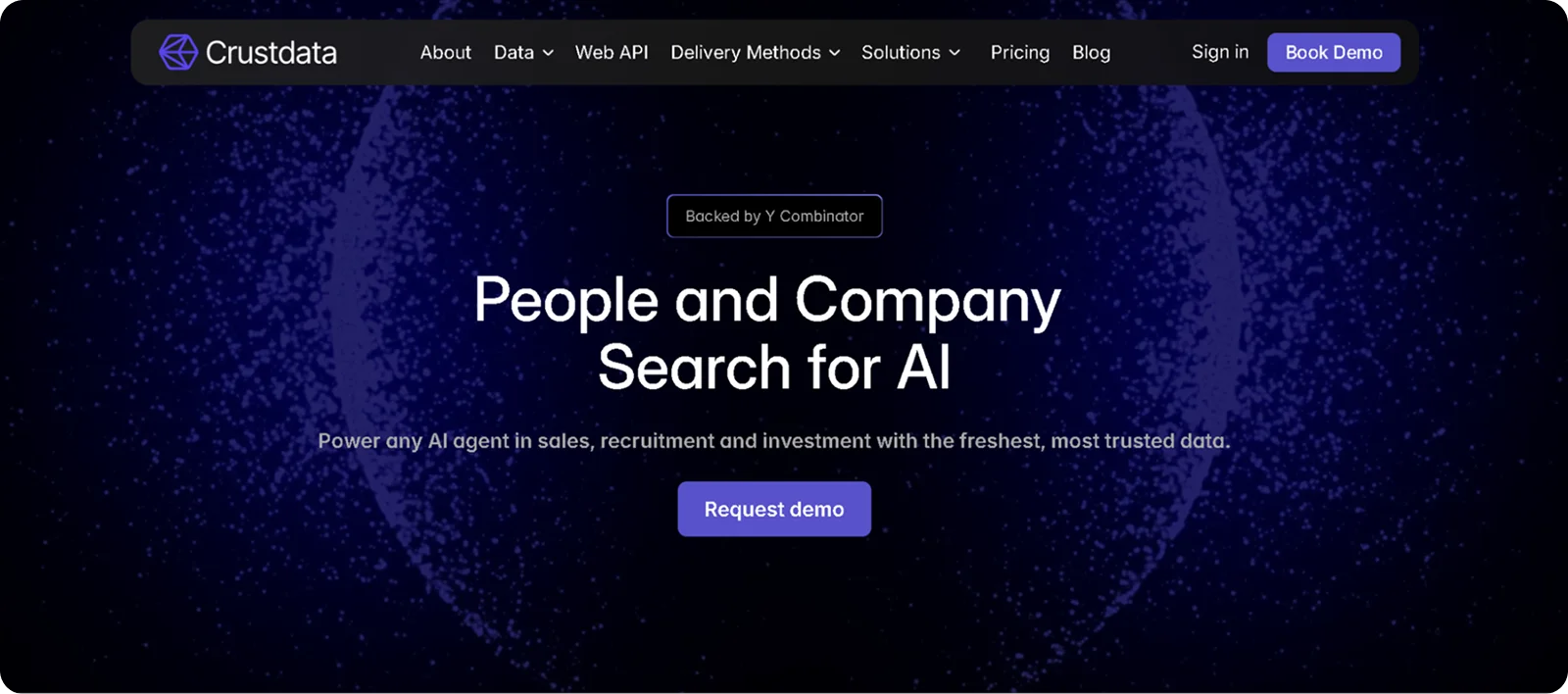
Crustdata is a real-time B2B contact data infrastructure platform built for GTM and RevOps teams running API-first workflows. Rather than storing records in a cache and refreshing them on a schedule, it indexes the web continuously, so every request returns live data.
Best For: Technical teams building AI SDRs, custom enrichment pipelines, signal-driven outbound workflows, or investment platforms that need real-time company signals for deal sourcing and portfolio monitoring.
Key Features
Company Discovery API with 95+ filters: Matches companies by headcount growth rate, job listing velocity, tech stack, and funding recency, not just industry and size
People Enrichment API: Returns 250+ company fields and 90 people fields, covering funding history, employer reviews, and decision-maker contact data
Watcher API: Fires webhook alerts to any endpoint the moment a tracked company triggers a funding round, headcount spike, or leadership change
People Discovery with 60+ filters: Finds profiles by title, location, past companies, skills, and tenure, with real-time web search extending beyond the pre-indexed database
Pros
Delivers live data at the moment of request, removing the outdated record problem at the architecture level
Connects to any CRM, ATS, or sales tool via API
Provides dedicated engineering support per account, making onboarding faster for technical teams building on the API
Cons
Requires engineering resources to extract value; non-technical teams cannot onboard without developer support
Pricing
Crustdata offers a free trial. Paid plans are available on request.
When NOT to use: Crustdata is not the right fit if your team has no developer capacity or needs a self-serve prospecting interface with built-in outreach.
2. Amplemarket
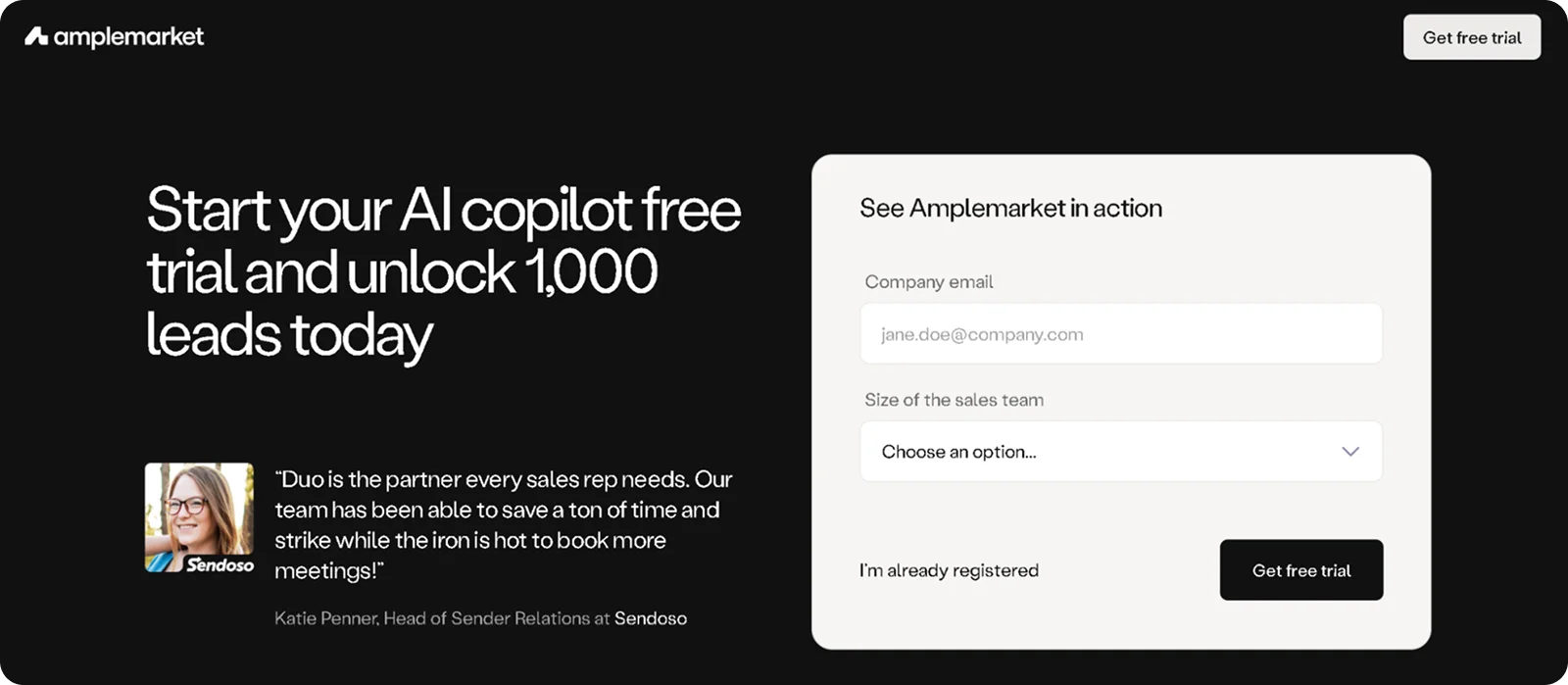
Amplemarket is an all-in-one outbound platform built for SMB to mid-market teams. It built the data layer and the engagement layer together, so deliverability signals from sends feed back into how the database scores contacts over time.
Best For: SMB to mid-market outbound teams that want data, AI send-time optimization, and sequences under one subscription.
Key Features
200M+ contact database with AI quality scoring: Scores contacts using deliverability feedback signals from across the platform, not just record recency
AI send-time and subject-line optimization: Adjusts outreach variables based on reply-rate signals across the platform's user base
Dual email and social prospecting sequences: Runs multi-channel outreach from a single workflow without switching platforms
Intent and job-change triggers: Flags contacts with live role changes or research behavior for priority outreach
Pros
Consolidates database, sequences, and deliverability into one subscription, removing the need for a separate inbox warming tool
Covers social outreach alongside email and phone, reducing platform fragmentation for multi-channel SDR teams
Cons
Adds less value as a data-only layer; the subscription is difficult to justify without using the full outbound stack
Introduced new leadership in early 2026, which adds an element of platform direction uncertainty for teams on longer evaluation cycles
Pricing
Amplemarket offers a 14-day free-trial. Paid plans start at $300/month, billed annually.
When NOT to use: Avoid Amplemarket if your team only needs a data enrichment layer for an existing stack, or if your pipeline is primarily European and requires GDPR-verified phone data.
3. Lead411
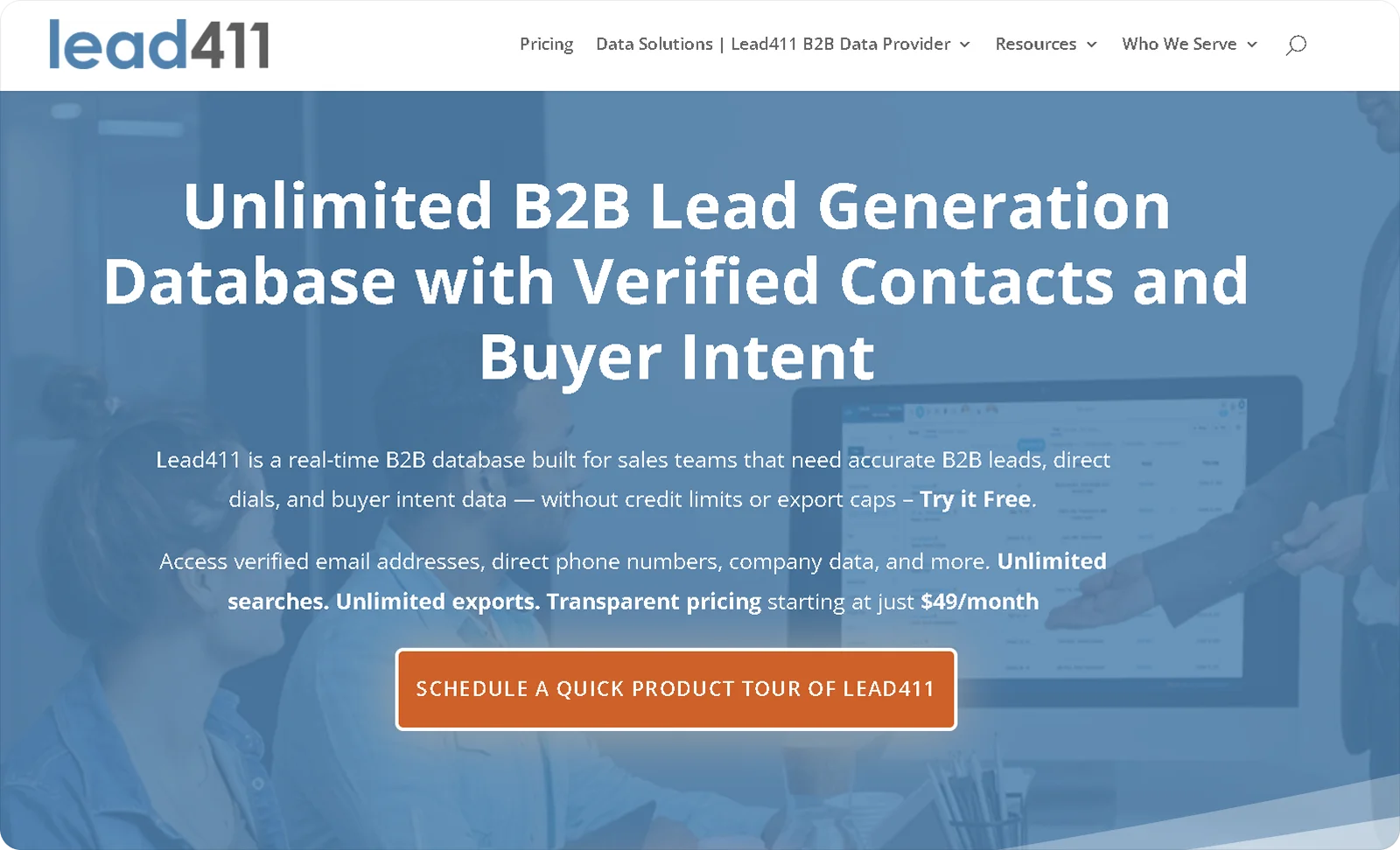
Lead411 is a US-focused B2B contact database built for SMB to mid-market sales teams. The meaningful difference from most US databases is when verification happens: it runs a three-step confirmation combining AI, ML, and a human check before any record enters the database, not after a bounce is detected.
Best For: US-focused sales teams that need accurate direct dials, intent triggers, and unlimited exports without unpredictable per-lookup spend.
Key Features
Triple-verified contact data: Runs AI, ML, and human confirmation before any record enters the database, catching bad data at the source rather than flagging it after delivery failure
Bombora intent data on Pro plans: Surfaces accounts actively researching relevant topics so outreach lands when interest is highest, not after the decision is made
Unlimited exports on paid plans: Removes credit caps entirely on paid tiers, keeping monthly spend predictable regardless of prospecting volume
Trigger-based alerts: Notifies reps when target accounts receive funding, post new roles, or change leadership, giving outreach a timely, relevant hook
Pros
Removes per-lookup cost unpredictability through unlimited exports on paid plans, a model uncommon in a credit-dominated market
Bundles Bombora intent data at the Pro tier without requiring a separate intent data contract
Cons
Loses coverage depth sharply beyond North America, making it a weak fit for teams with European or APAC pipeline
Takes longer to onboard than comparable single-purpose lookup tools, particularly for SDR hires without prior database experience
Pricing
Lead411 has a 7-day free trial. Paid plans start at $49/month or $490 per year.
When NOT to use: Look elsewhere if your pipeline extends beyond North America or your team requires GDPR-compliant data for regulated European markets.
4. FullEnrich
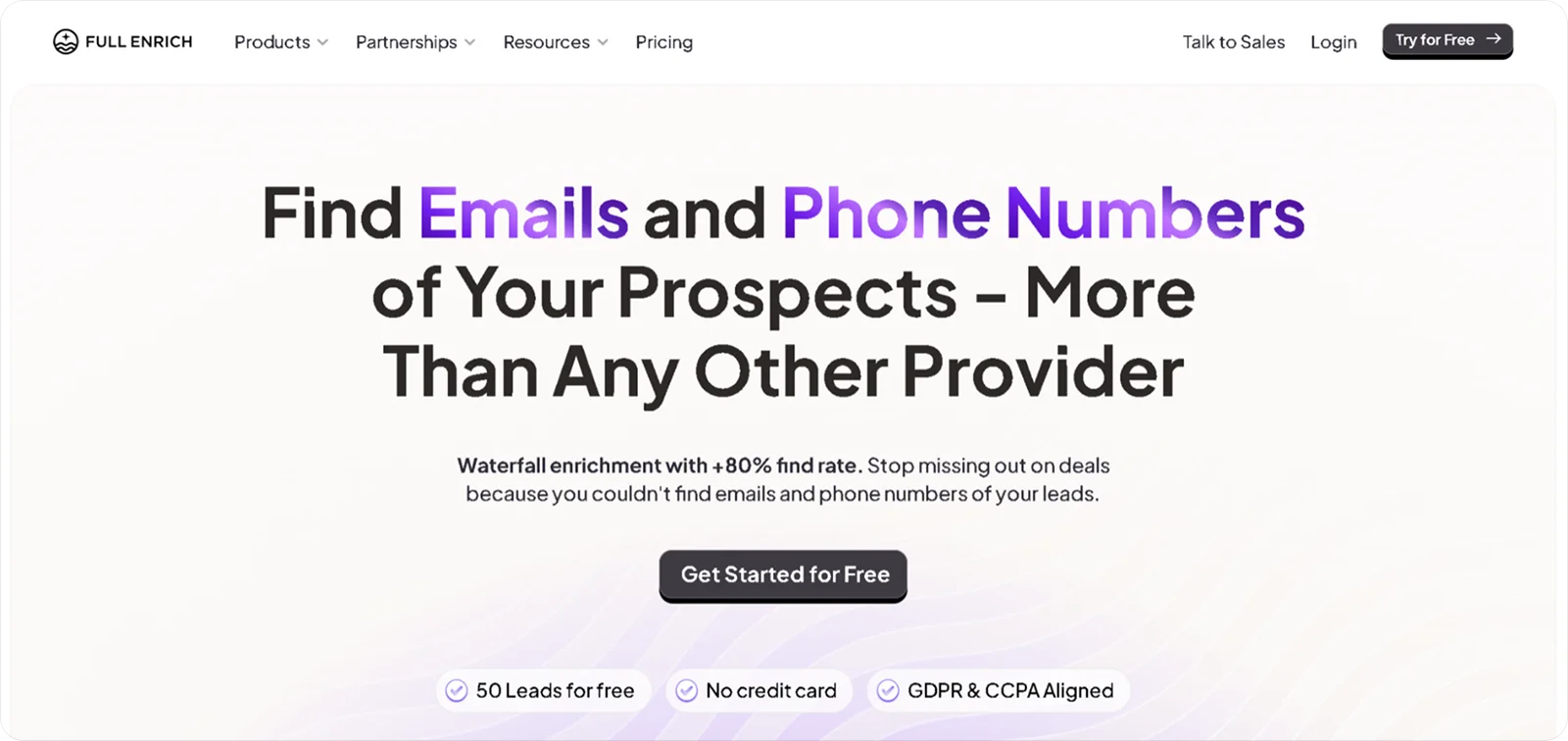
FullEnrich is a waterfall email enrichment platform built for RevOps and growth teams. It holds no proprietary database; it sequences enrichment requests across 20+ providers, stopping when it gets a verified result, so the providers that miss one contact are unlikely to miss the next one the same way.
Best For: RevOps teams and growth engineers who need maximum email match rates at low cost per enriched contact.
Key Features
Waterfall enrichment across 20+ providers: Queries sources in sequence and returns the first verified match, reaching 85%+ match rates that single-source tools cannot replicate
3-month credit rollover: Rolls unused credits forward for 90 days, removing the budget waste common in tools with hard monthly resets
Sales Navigator email finder: Extracts verified emails from Sales Navigator profiles, covering contacts that standard domain-based tools miss
Bulk CSV enrichment: Processes large prospect lists in bulk, returning enriched records without contact-by-contact manual lookup
Pros
Achieves match rates that structurally exceed single-source providers, not by having a larger dataset but by querying multiple ones
Retains unused credits for three months, making it predictable for teams whose enrichment volume varies month to month
Cons
Works as an enrichment layer only; teams that need to build prospect lists from scratch require a separate discovery tool
Varies in coverage by geography since match quality inherits from whichever providers have depth in a given region
Pricing
FullEnrich offers a free trial with 50 credits. Paid plans start at $29/month or $26/month when paid annually. They also offer a one-time payment of $299.
When NOT to use: Choose a discovery database instead if you need to build prospect lists from scratch, or a dedicated phone data provider if your primary channel is cold calling.
5. Dealfront
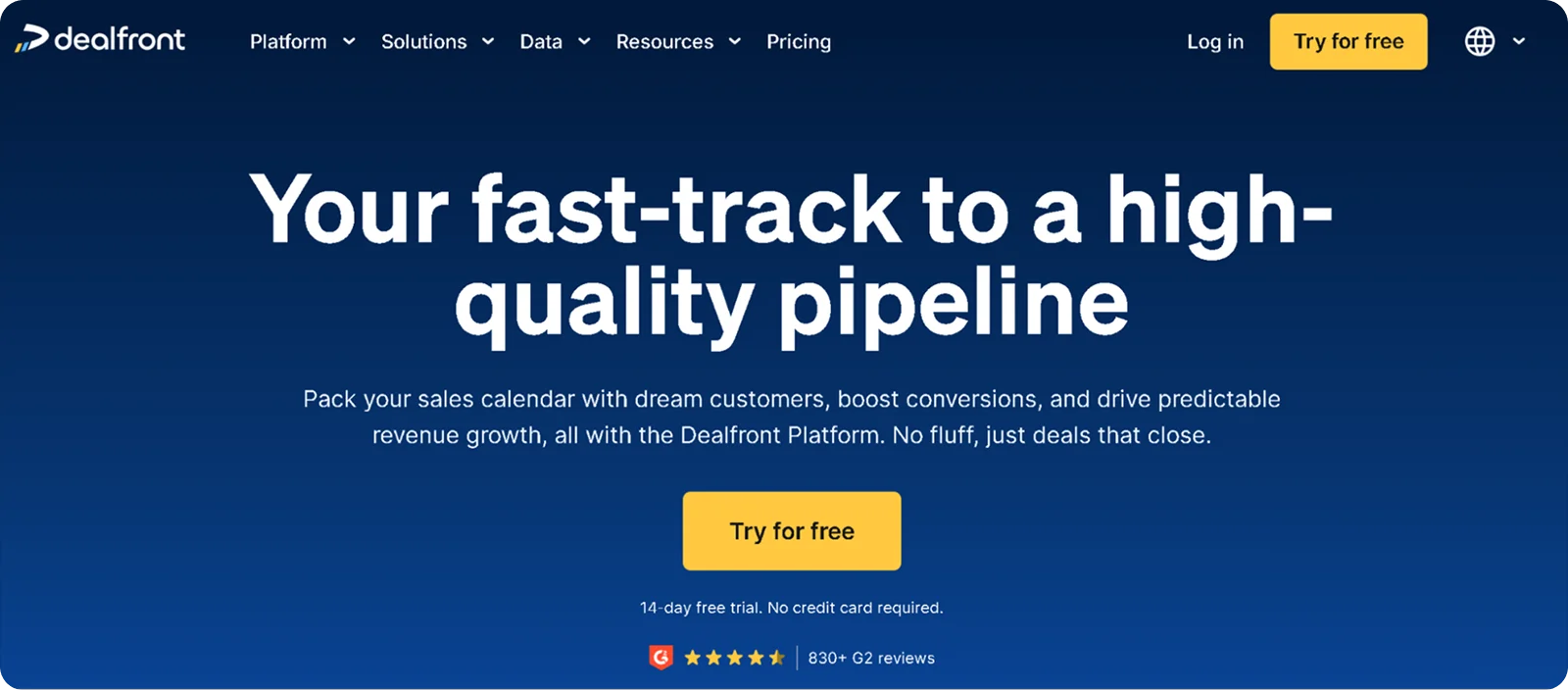
Dealfront is a European B2B intelligence platform formed by the 2023 merger of Echobot and Leadfeeder. It sources company records from official trade registers and government databases, giving DACH and Nordic data legal traceability that scraping-based tools cannot offer in regulated procurement contexts.
Best For: Mid-market to enterprise teams selling into German-speaking markets, Scandinavia, or European regions where official registry data outperforms scraped records.
Key Features
Official registry data sourcing: Pulls company records directly from trade registers and government databases across Europe, producing data that is legally sourced and defensible in regulated procurement contexts
34M+ companies and 106M+ contacts with DACH and Nordic depth: Reaches coverage in German-speaking markets and Scandinavia at a depth that US-centric databases do not match for mid-market companies
Reverse IP visitor identification via Leadfeeder: Identifies companies visiting your website by IP address, converting anonymous traffic into named accounts before they submit a form
ICP-based prospecting filters: Builds target account lists from official financial and firmographic signals rather than profile data inferred from scraped sources
Pros
Sources data from official trade registries, giving European teams a legally defensible dataset that standard scraping-based tools cannot replicate
Combines outbound prospecting data with inbound website visitor identification, covering both motions in one platform
Cons
Loses coverage depth sharply outside Europe, making it a poor fit for teams with significant North American pipeline
Lacks a self-serve trial, meaning evaluation requires initiating a sales conversation before testing the data
Pricing
Dealfront offers a 14-day free trial. Paid plans are custom on request, depending on your needs.
When NOT to use: Consider a US-first database instead if your pipeline is primarily North American, or a phone verification provider if direct dials matter more than company intelligence.
6. Prospeo
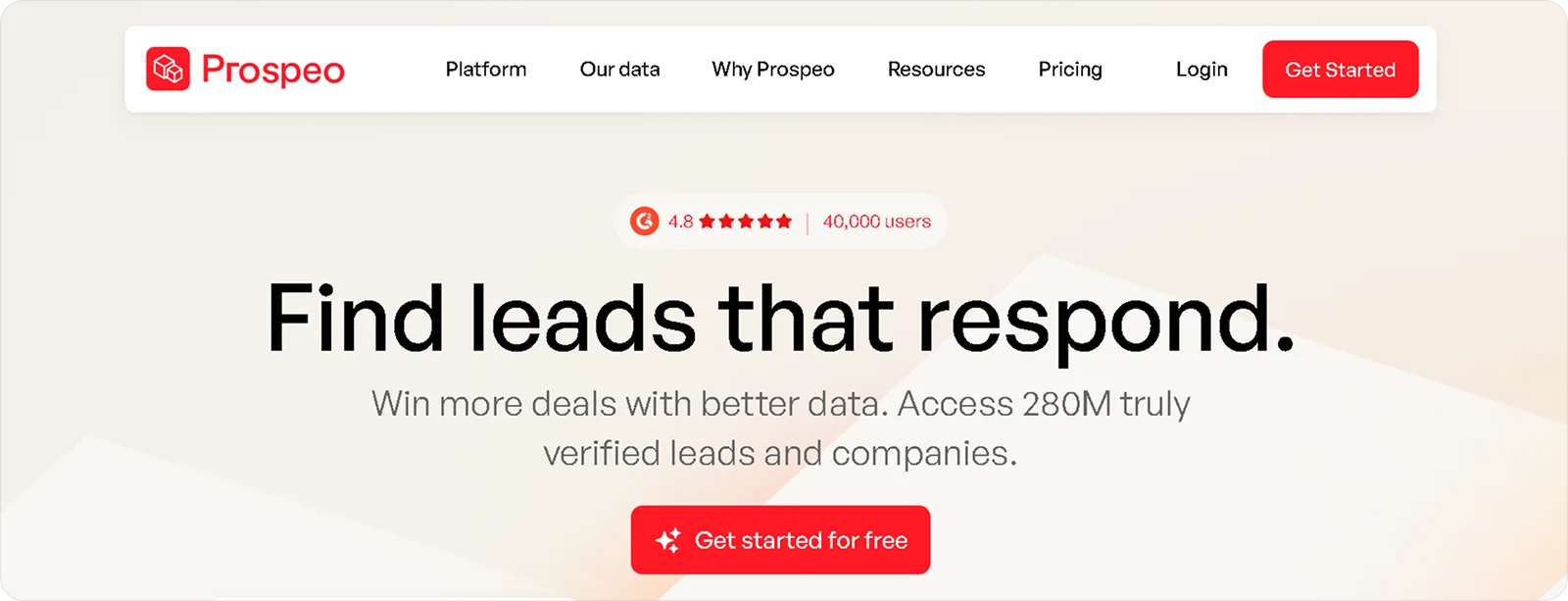
Prospeo is an email enrichment and discovery platform built for startups and growth teams. It is not the most well-known tool on this list, but the gap between when a contact moves and when your database reflects it is a real problem that most tools at this price point do not address.
Best For: Startups and growth teams that need accurate email enrichment with fast refresh cycles and Sales Navigator integration on a mid-market budget.
Key Features
98% accuracy claim with waterfall enrichment: Queries multiple sources and verifies deliverability before export, targeting a sub-2% bounce rate
Weekly data refresh: Cuts the outdated window from 30 days to seven, catching role changes that monthly-refresh tools carry forward as valid for weeks
Sales Navigator email finder: Extracts verified emails from Sales Navigator searches and profiles, surfacing contacts that standard domain-based tools miss without a profile URL
Bulk CSV enrichment: Processes uploaded prospect lists and returns enriched records in bulk without contact-by-contact manual lookup
Pros
Catches role transitions that monthly-refresh tools miss by updating records weekly instead of monthly
Handles large prospect lists through bulk CSV enrichment, removing manual lookup work at scale
Cons
Covers email addresses only; teams running phone-heavy outbound need a separate direct-dial tool alongside it
Relies on a self-reported 98% accuracy claim; independent testing against your specific ICP is advisable before committing at scale
Pricing
Prospeo offers a free plan with 100 credits per month. Paid plans start at $49/user/month with 2,000 credits.
When NOT to use: A phone-focused provider is a better fit if your outbound strategy relies on cold calling, or if firmographic depth matters as much as email accuracy.
7. SalesIntel
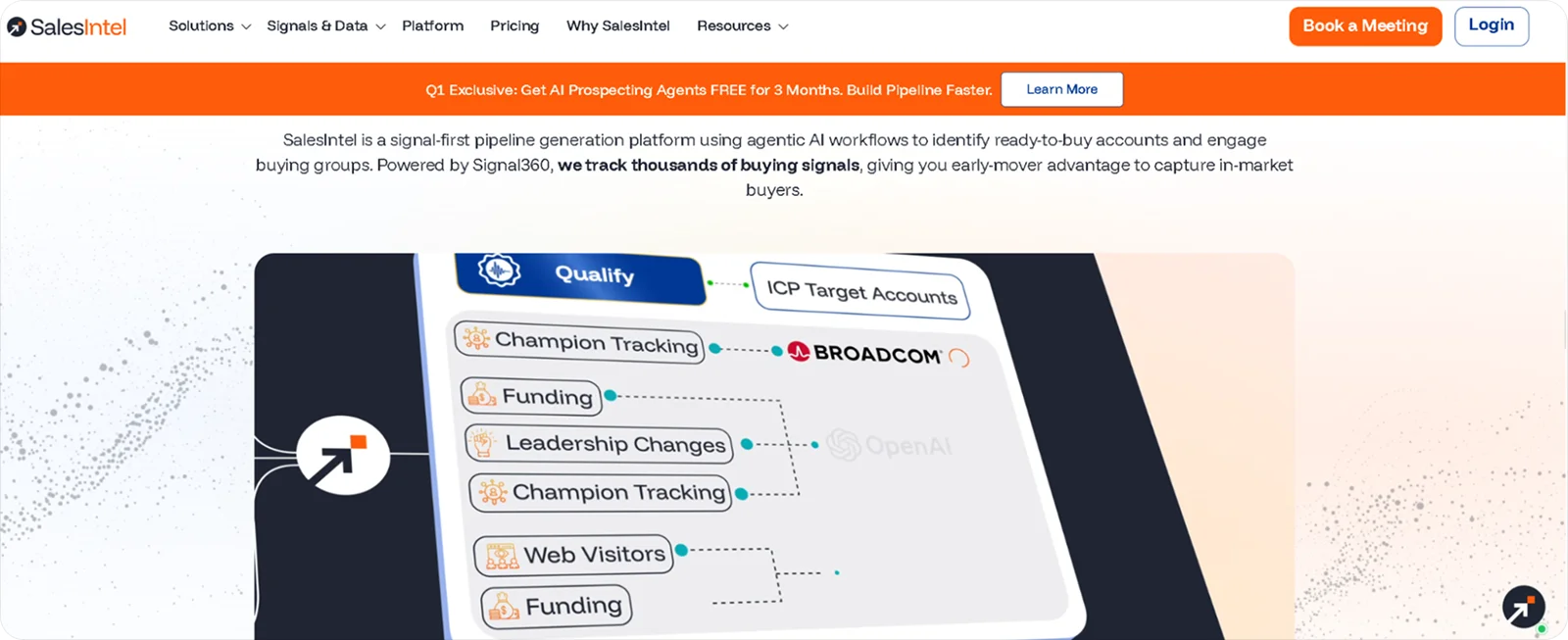
SalesIntel is a US-focused B2B contact data provider built for mid-market sales teams running phone-heavy outbound. Human verification catches what AI sourcing misses: number reassignments, where a direct dial transferred to a new person at a different company still connects but belongs to the wrong contact entirely.
Best For: US-focused mid-market sales teams where human-verified direct dial accuracy directly impacts connect rates.
Key Features
Human re-verification every 90 days: Re-confirms every direct dial and email through a dedicated research team on a 90-day cycle, catching number reassignments and role changes that automated systems carry forward as valid
Research on Demand within 48 hours: Fulfills custom contact requests for niche segments through human researchers within two business days, covering gaps that standard database filters cannot reach
Signal360 intent data: Tracks content consumption across third-party publisher networks to surface accounts actively researching relevant topics
Unlimited data access on team plans: Removes per-contact overage charges entirely on team subscriptions, keeping spend predictable for high-volume prospecting teams
Pros
Catches number reassignments through human re-verification, producing more reliable US connect rates than databases that rely on algorithmic validation alone
Removes per-contact overage charges on team plans, giving high-volume prospecting teams predictable monthly spend
Cons
Loses coverage depth quickly for UK and non-English-speaking markets, making it a weak fit for teams with international pipeline
Suits teams targeting a defined US market; struggles to scale coverage across multiple verticals or geographies simultaneously
Pricing
SalesIntel pricing is custom on request. A free trial is available with no credit card required.
When NOT to use: Opt for a larger-database provider if your pipeline extends beyond North America or if you need high-volume coverage across many verticals simultaneously.
8. Coresignal
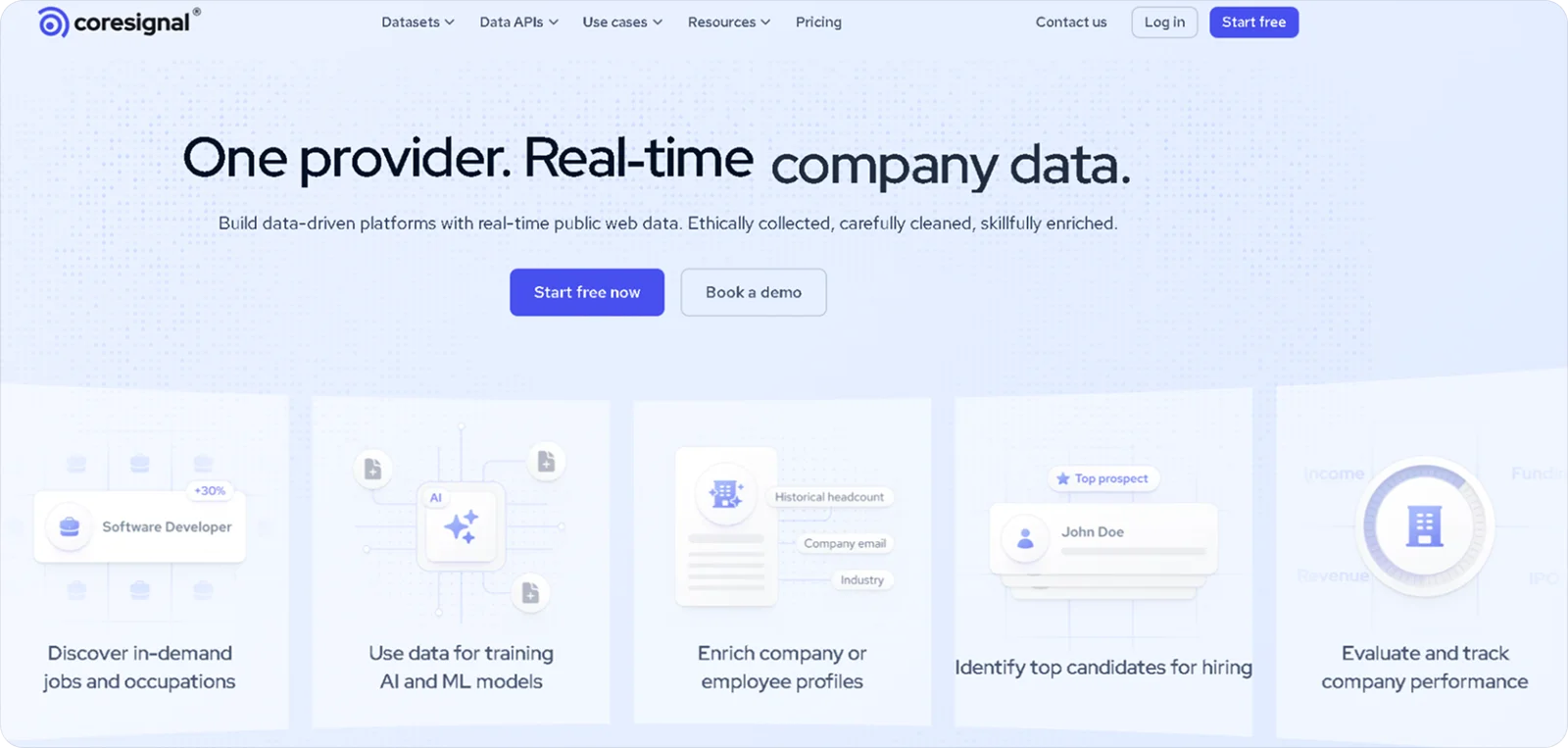
Coresignal is a developer-grade B2B contact data platform built for engineering teams, data vendors, and investment platforms. Where most B2B contact databases are built around a sales rep's dashboard, Coresignal is built around an engineer's endpoint.
Best For: Engineering teams, data vendors, and investment platforms building custom models, market intelligence tools, or AI training pipelines on raw B2B datasets.
Key Features
692M+ professional profiles from 200+ public sources: Crawls public data continuously across professional networks, company websites, and job boards, returning structured records rather than vendor-curated entries
Headcount and hiring trend datasets: Tracks employee count changes and job posting patterns over time, useful for market sizing, competitive intelligence, and company health signals
API and bulk data delivery: Delivers structured datasets via REST API or bulk file download, giving engineering teams full control over how data is ingested, stored, and processed
Freshness timestamps per record: Attaches a crawl timestamp to each data point so downstream applications can filter or weight records by recency rather than relying on a single database-wide refresh date
Pros
Delivers raw data via API and bulk file, giving engineering teams full control without any vendor UI dependency
Includes per-record freshness timestamps so downstream models can weight data by recency rather than a global refresh date
Cons
Requires building a prospecting workflow on top of the raw data; the platform ships no point-and-click interface for sales teams
Returns some outdated or incomplete records from public source crawling that manually verified databases would filter before delivery
Pricing
Coresignal offers a free plan with 400 search credits. Paid plans start at $49/month.
When NOT to use: Coresignal is not the right choice if your team needs a sales-ready contact lookup tool with built-in verification workflows and no engineering lift.
Which B2B Contact Database Is Right for Your Team?
No single database works for every team, and the right starting point is geography. European pipelines, particularly DACH and the Nordics, need registry-sourced data with legal traceability, which points to Dealfront. US phone-heavy outbound where a wrong number costs a rep's morning points to SalesIntel, or Lead411 if intent triggers and unlimited exports matter alongside verified dials.
If your team has engineering resources and is building AI agents, automated enrichment, or signal-driven outreach, Crustdata is the infrastructure layer worth anchoring to. It indexes the web continuously and returns data at the moment of request, which compounds fast in high-velocity workflows where accuracy cannot wait for a monthly refresh.
Teams without technical resources who need data and execution together will find Amplemarket more practical. For pure email enrichment, FullEnrich covers most use cases at a price point that does not require a procurement process.
Prospeo is the better fit if weekly refresh cycles and Sales Navigator extraction are the deciding factors. If you are building proprietary data models or investment intelligence tools on raw datasets, that is Coresignal's category, and nothing else on this list competes with it there.
Why Crustdata Is the Best B2B Contact Database for AI-Powered GTM Teams
Most B2B contact databases are built around the assumption that data collected last month is good enough for outreach this week. For teams doing low-volume, relationship-driven sales, that is often fine. For teams running AI agents, signal-triggered workflows, or real-time enrichment pipelines, it is not.
Crustdata is built for the second group. A few things set it apart from every other tool on this list:
Live indexing at request time: Returns data fetched at the moment of the API call, not from a periodically refreshed cache
250+ company fields and 90 people fields: Covers headcount by department, tech stack, job listing velocity, funding history, and decision-maker profiles via API
Watcher API: Monitors target companies continuously and fires webhook alerts the moment a funding round closes, headcount shifts, or a leadership change is detected
Websearch API: Searches the web in real time for qualitative data on any person or company and returns information such as recent news, funding announcements, product launches and more
Teams that have moved from periodic database refreshes to live API enrichment consistently find that the data-quality difference positively impacts connect and reply rates almost immediately.
Book a demo with Crustdata to see what live data looks like with your specific use case.
Frequently Asked Questions
What are the B2B trends in 2026?
The biggest shift is the move from manual SDR workflows to AI-powered prospecting systems that act on live signals like funding rounds and leadership changes rather than quarterly list refreshes.
Alongside that, intent data is consolidating into the contact database layer itself; teams now expect buying signals and contact records to come from the same platform rather than separate subscriptions.
What are the 4 types of B2B?
The four types are producer-to-producer, producer-to-reseller, producer-to-government, and producer-to-institutional. For contact database evaluation, the more useful distinction is between transactional B2B, where a single decision-maker drives a short cycle, and complex B2B, where buying committees of five or more stakeholders drive a long cycle.
The first works fine with a simple lookup tool. The second needs org chart mapping, intent data, and multi-stakeholder enrichment.
How often do B2B contact databases update their data?
It depends entirely on the provider. Crustdata returns data at the moment of request. Prospeo refreshes weekly. SalesIntel re-verifies every 90 days through a human research team.
Most other platforms run monthly or quarterly batch updates, which means a contact who changed roles in January may still show their old title in March. For high-volume outbound teams, that window is where reply rates drop and sender reputation takes damage.


Products
Popular Use Cases
Competitor Comparisons
95 Third Street, 2nd Floor, San Francisco,
California 94103, United States of America
© 2026 Crustdata Inc.
Products
Popular Use Cases
Competitor Comparisons
95 Third Street, 2nd Floor, San Francisco,
California 94103, United States of America
© 2026 CrustData Inc.
Products
Popular Use Cases
Competitor Comparisons
95 Third Street, 2nd Floor, San Francisco,
California 94103, United States of America
© 2026 Crustdata Inc.
🎉 We hit $10M ARR!
$600k to $10m in 1.5 years. Our entire GTM is powered by our own APIs.
🎉 We hit $10M ARR in 1.5 years!