AI Lead Generation Software: What It Does and What to Look For
Published
Written by
Chris Pisarski
Reviewed by
Nithish
Read time
7
minutes
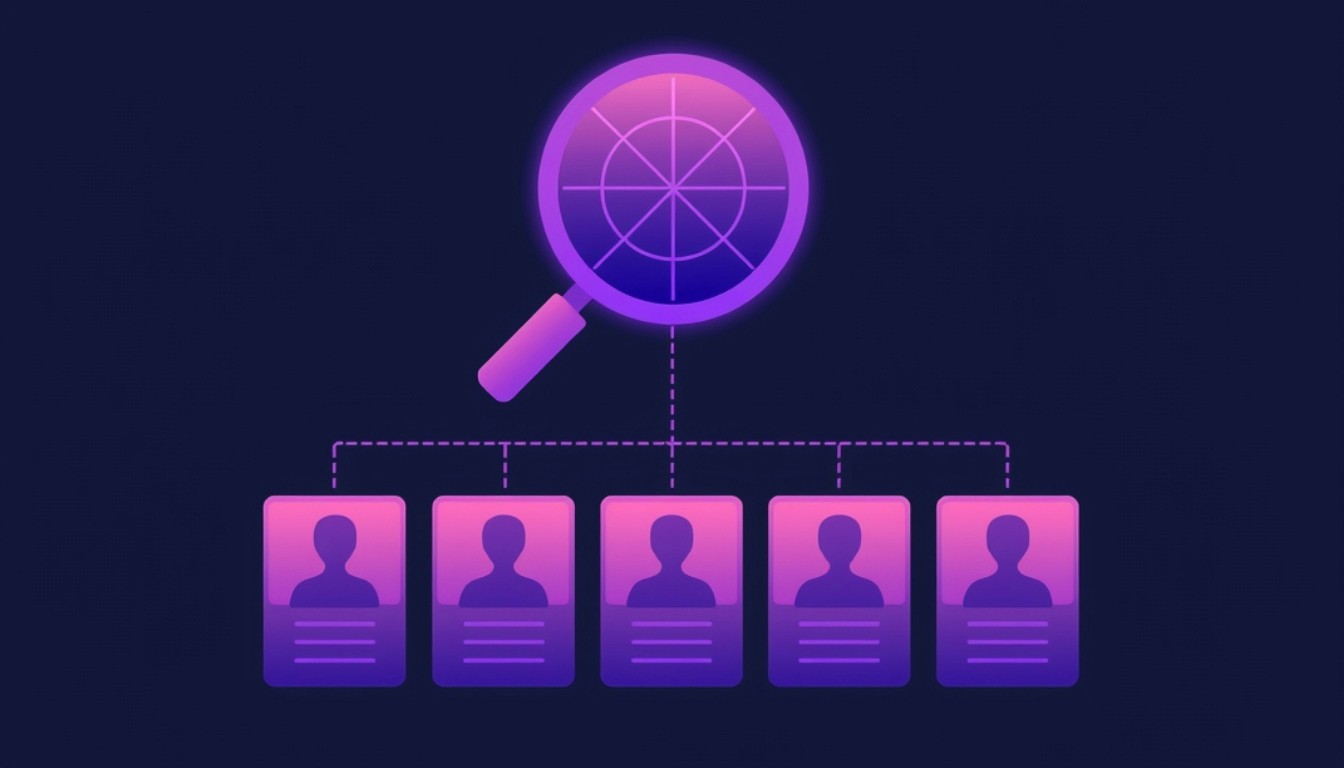
Most lists of AI lead generation software include the same tools: Apollo, ZoomInfo, Cognism, Seamless.AI. These are databases with millions of indexed contacts. They work, but the AI in them is mostly cosmetic, limited to predictive lead scoring, AI-written subject lines, and automated list suggestions. The actual lead finding is still a human building filter stacks on a static index.
A different class of tools has emerged where AI is the core mechanism. Agents that research accounts from scratch. SDRs that autonomously find, personalize, and contact prospects without a human in the loop. Discovery tools that search the live web for businesses no database has ever indexed.
This article covers that second category: AI lead generation software where the intelligence does the work, not decorates the interface.
What Does AI Lead Generation Software Actually Do?
AI lead generation software uses machine learning, natural language processing, and autonomous agents to find, research, qualify, and contact potential customers. That definition covers tools that do very different things, so it helps to break the category into three approaches.
AI-powered lead discovery sends agents to search the open web, Google Maps, business directories, and public sources in real time. You describe your ICP in plain language, and the AI finds matching businesses and contacts, many of which have never been indexed by a traditional B2B database. This is the newest category, and it exists because standard databases have a structural coverage gap.
AI sales research and intelligence automates the deep-dive work that reps do before outreach. Reading company websites, identifying decision-makers, mapping pain points to your product, building personalized messaging. What used to take an hour per account takes minutes.
AI SDRs and autonomous sales agents handle the full prospecting workflow from target identification through outreach and follow-ups, without a human rep in the loop. These tools replace headcount rather than augmenting it.
Most teams running AI-first prospecting use tools from at least two of these categories. Discovery finds the leads, research builds the context, and AI SDRs execute the outreach.
Why Standard Databases Leave Gaps That AI Discovery Tools Fill
Standard B2B databases scrape professional network profiles, index company records, and let users filter by firmographic criteria. For enterprise-to-enterprise sales with well-defined ICPs, that model works.
It breaks down for three types of targets:
Local and small businesses. A home services franchise prospecting discharge coordinators at regional hospitals. An MSP targeting founder-run IT shops with 10 to 50 employees. A SaaS company selling to HVAC contractors or landscapers. These businesses often have no professional network presence and don't appear in standard B2B databases. One prospecting team building lists for small traditional businesses found that Apollo "doesn't really have access to that" market.
Niche roles in specific geographies. Operations leads at regional manufacturers. Social workers at county hospitals. Practice managers at dental offices. These contacts exist, but enterprise databases don't prioritize them for indexing.
Recently formed companies. According to the US Bureau of Labor Statistics, median job tenure for workers aged 25 to 34 is 2.7 years. Contact lists cycle out within a single sales cycle. But contacts that databases never had in the first place are a coverage problem, not a freshness problem. A data refresh doesn't fix what was never there.
The workaround most teams use today is manual research: Google Maps searches, state licensing database lookups, web scraping with tools like Firecrawl, then stitching results together in spreadsheets. It works, but it doesn't scale, and output quality depends on who runs the search that day.
AI discovery tools exist to close that gap.
AI Lead Discovery Tools
Discovery tools don't filter a pre-indexed database. They send AI agents to search the live web, Google Maps, business directories, and other public sources for businesses and contacts that standard databases have never indexed.
Origami
Origami is an AI lead generation platform built for the coverage gap described above. You describe your target in plain language ("HVAC companies in Phoenix with 10-50 employees" or "social workers at hospitals in Dallas-Fort Worth") and an AI agent searches across 50+ real-time sources to build a matching list.
Those sources include Google Maps, company websites, job boards, business directories, public records, and social platforms, all searched simultaneously. The result is coverage of businesses that never appear in standard B2B databases: local service companies, contractors, small businesses without professional network profiles, and niche roles in specific geographies.
Contact enrichment runs through a waterfall of nine data providers for phone verification and five for email, stopping at the first verified match. Origami reports 95%+ email accuracy through this multi-source approach. Because every data point is cross-checked before it reaches the user's table, accuracy tends to be higher on the contact types that single-source databases miss most.
Origami also tracks buying signals (funding rounds, hiring activity, growth indicators), so discovery lists can be filtered by timing as well as firmographics.
Pricing starts with a free tier (1,000 credits), then $29/month for Starter (2,000 credits), $129/month for Pro (16,000 credits), up to $499/month for Max (40,000 credits). No per-seat pricing, cancel anytime.
Origami fits teams whose ICP includes local service businesses, niche geographic targets, or small companies below the standard database scrape threshold. Sales teams, agencies, and franchise operators who currently rely on manual Google Maps research or DIY scraping workflows will see the most immediate difference.
AI Sales Research and Intelligence Tools
Research tools don't find raw leads. They take an account or prospect and build deep context: what the company does, who the decision-makers are, what pain points map to your product, and what angle to use in outreach. A rep doing this manually spends 30 to 60 minutes per account, which is why most reps skip it entirely for all but their top targets.
Amplemarket
Amplemarket is an AI sales platform with a copilot called Duo that automates prospecting research and multichannel outreach. Duo monitors intent signals (competitor reviews, decision-maker website visits, social activity), analyzes company websites and CRM data to build account context, and generates personalized email, call, and social sequences, including AI-generated voice notes.
Amplemarket consolidates what previously required seven or more separate tools (data, sequencing, calling, research, deliverability) into a single interface. The company reports that users save 10+ hours per week and see a 50% reduction in bounce rates through better underlying data.
Amplemarket fits B2B sales teams that want research, sequencing, and multichannel execution in a single AI-native platform, particularly teams with mid-market to enterprise ICPs where account research quality directly affects conversion rates.
Aomni
Aomni focuses on AI-powered account research and strategic selling. You train an AI agent on your ICP and product, and it builds detailed account plans: company positioning, decision-maker profiles, pain point mapping, and personalized outreach materials. Aomni aggregates over 1,000 data points per account from 20+ sources with waterfall enrichment.
Aomni fits enterprise and mid-market AEs running complex, consultative sales cycles where generic outreach falls flat. The company reports saving 3 hours of research per prospect and improving close rates by 40%.
The difference between these tools and traditional databases is straightforward. Apollo gives you a contact's name, title, and email. Research tools like Amplemarket and Aomni give you the context to write an outreach message that shows you understand the prospect's business. That context is what determines whether the email gets a reply.
AI SDRs and Autonomous Sales Agents
AI SDRs take the full prospecting workflow, from target identification through outreach and follow-up, and hand it to an autonomous agent. These tools don't assist human reps. They replace the manual work entirely.
11x
11x offers Alice, an AI SDR that identifies prospects, researches them across social and engagement channels, personalizes messaging to match each prospect's communication style, and executes multichannel outreach. Alice operates 24/7 across time zones and languages.
11x also offers Julian, an AI phone agent that handles inbound qualification, meeting scheduling, and speed-to-lead response.
11x reports that customers generate 1.5x more qualified meetings and have built $1M+ in pipeline within three months. One customer attributed 35% of total pipeline to 11x within the first quarter.
Artisan
Artisan provides Ava, an AI BDR that automates outbound sales development. Ava accesses a B2B database of 300M+ contacts across 200+ countries, researches intent signals (funding events, hiring news, technology adoption), and writes personalized email sequences using what Artisan calls a "Personalization Waterfall," a system that selects the most effective personalization angle for each lead.
Artisan consolidates data sourcing, research, sequencing, and deliverability optimization into a single platform. It fits B2B teams that want to scale outbound without scaling headcount, particularly those running high-volume, repeatable prospecting motions.
RocketSDR
RocketSDR runs outbound as a single engine, covering signal monitoring, prospecting, personalization, and email deliverability. It watches 50+ real-time signals including funding rounds, hiring spikes, job changes, and website visits, then researches each prospect across sources like career history, press, and funding data before writing the email from scratch rather than filling in a template.
What separates it from most AI SDRs is that it treats outbound as experiments. It forms hypotheses about a market, launches different signal and audience combinations, attributes replies back to each one, then scales what works and pauses what does not. It also handles the email infrastructure itself, setting up SPF, DKIM, and DMARC with automated warmup, and captures anonymous website visitors into campaigns.
Multichannel Outreach Automation
Once leads are found and researched, someone has to actually reach them. Outreach automation tools run the connection requests, messages, and follow-ups at scale so teams can work every lead without doing it by hand.
HeyReach
HeyReach automates LinkedIn outreach across multiple sender accounts, running connection requests, messages, and follow-up sequences for teams doing social-first outbound. It rotates activity across a pool of LinkedIn accounts to lift sending volume safely, and syncs replies and lead status back to your CRM so nothing is missed.
It is built for teams running LinkedIn at scale rather than individual reps, so agencies and outbound teams can manage campaigns across dozens of sender accounts from one place. A unified inbox collects every reply across those accounts, and native integrations and an API push leads and conversations into the rest of the stack.
What Powers AI SDRs: The Data Layer
AI SDRs are only as good as the data feeding them. Alice and Ava need up-to-date company and contact information, and they need timing signals to know when an account is worth reaching out to. If the underlying data is out of date, autonomous outreach amplifies the problem. You send more messages faster, but to the wrong people at the wrong time.
This is where real-time data infrastructure matters. Tools like Crustdata provide the enrichment APIs and signal webhooks that AI SDR platforms consume. Crustdata covers 60M+ companies with 250+ live datapoints and 1B+ people profiles with 90+ datapoints. Its Watcher API pushes webhook notifications when tracked changes occur (funding events, headcount growth, job changes, social posts), so AI agents can trigger outreach when a timing signal fires rather than running on a static schedule.
If you're evaluating AI SDRs, ask what data sources they pull from and how frequently that data is refreshed. The agent's autonomy is a feature, but the accuracy of the data behind it determines whether that autonomy produces booked meetings or wasted sends.
What to Look For When Evaluating AI Lead Gen Software
Five criteria matter more than feature lists when choosing between these tools.
Coverage match. Does the tool actually reach your leads? A database with 200 million contacts means nothing if your ICP is local service businesses, niche healthcare roles, or companies that formed in the last 18 months. Discovery tools like Origami cover segments that standard databases miss, while research tools like Aomni go deeper on accounts that databases only cover at the surface level.
Data freshness. How are records kept up to date? Periodic batch refreshes (quarterly or monthly), real-time enrichment on demand, and live web search at query time are three different freshness models with very different accuracy outcomes. AI SDR platforms that pull from real-time enrichment APIs like Crustdata's produce more accurate outreach than agents running on quarterly data dumps. Ask about the refresh cycle, not the database size.
What "AI" actually does. Is the AI scoring records in an existing database? Writing email copy? Researching accounts from scratch? Autonomously running the full prospecting workflow? These are different capabilities solving different problems. A tool that writes great emails doesn't help if the contacts are wrong, and a tool that finds accurate contacts doesn't help if the messaging is generic.
Autonomy vs. control. AI SDRs like 11x and Artisan run autonomously. Research tools like Amplemarket and Aomni augment human reps. Discovery tools like Origami deliver lists for humans or downstream systems to work. Match the autonomy level to your team's comfort with fully automated outreach.
Delivery model. Some tools are built for reps to use through a browser. Others deliver data through APIs for programmatic workflows. Others run outreach autonomously with no UI interaction required. Match the delivery model to how your team actually operates.
Where This Leaves You
AI lead generation software is three markets under one label. Discovery tools find leads that no database has indexed, research tools build the context that makes outreach relevant, and AI SDRs run the prospecting motion autonomously from first touch through booked meeting.
For standard enterprise or mid-market accounts, an AI SDR like 11x or Artisan can run outbound without human intervention. If your targets include local businesses, niche roles, or companies too small or too new for standard databases, a discovery tool like Origami finds what database tools can't reach. For complex, high-value accounts where generic outreach falls flat, research tools like Amplemarket and Aomni build the context that earns replies.
The worst outcome is choosing a tool that automates the wrong step. A team prospecting HVAC contractors doesn't need a faster email writer. They need a tool that searches where those businesses actually exist.



Products
Popular Use Cases
Competitor Comparisons
95 Third Street, 2nd Floor, San Francisco,
California 94103, United States of America
© 2026 Crustdata Inc.
Products
Popular Use Cases
Competitor Comparisons
95 Third Street, 2nd Floor, San Francisco,
California 94103, United States of America
© 2026 CrustData Inc.
Products
Popular Use Cases
Competitor Comparisons
95 Third Street, 2nd Floor, San Francisco,
California 94103, United States of America
© 2026 Crustdata Inc.
🎉 We hit $10M ARR!
$600k to $10m in 1.5 years. Our entire GTM is powered by our own APIs.
🎉 We hit $10M ARR in 1.5 years!