8 Bright Data Alternatives To Consider [2026 Comparison]
Discover the best Bright Data alternatives to get reliable web data through simpler APIs that save you time and keep your workflows running smoothly.
Published
Written by
Chris P.
Reviewed by
Nithish A.
Read time
7
minutes
Bright Data built its reputation on proxy networks and large-scale web scraping, but the infrastructure comes with tradeoffs. Engineering teams spend time rotating proxies, solving CAPTCHAs, and normalizing raw HTML when they'd rather focus on the product features that differentiate their platforms.
Some teams need that level of control. Others want structured data delivered through APIs without maintaining scraping infrastructure at all.
This guide shares the top eight Bright Data alternatives, from managed scraping services to structured data providers that eliminate scraping entirely.
Why Look for Bright Data Alternatives
Bright Data handles large-scale scraping infrastructure well, but teams run into friction when costs spiral unpredictably or when setup complexity slows down product development. Here are the reasons teams look for Bright Data alternatives:
Complex setup requires technical expertise: Configuration demands understanding proxy types, rotation settings, and scraping browser APIs. Reviews consistently cite the steep learning curve, with non-technical users spending weeks on setup instead of days.
Billing for failed requests: When CAPTCHAs block requests or sites detect scrapers, Bright Data still charges for the attempt. Users report paying for error responses and degraded performance over time.
Raw data needs heavy processing: Scraped HTML requires parsing, normalization, and cleanup before it's usable. Engineering teams spend time transforming unstructured data instead of building product features.
Infrastructure maintenance overhead: Managing proxy pools, handling site layout changes, and updating selectors creates ongoing work. Teams looking for structured data often prefer APIs that skip scraping entirely.
Top 8 Bright Data Alternatives to Try in 2026
Bright Data alternatives fall into two categories: managed scraping services that handle proxy infrastructure for you, and structured data APIs that skip scraping entirely. Pricing models range from pay-per-request to usage-based credits, with API quality varying from basic REST endpoints to webhook-native architectures.
Here's how the eight alternatives compare:
Provider | Best For | Proxy Types | Key Differentiator | Starting Price |
Crustdata | AI agents, sales automation, recruiting platforms | N/A (Structured data APIs) | Real-time B2B intelligence with websearch API and webhooks for funding, hiring, and executive changes | Custom pricing |
ScraperAPI | Developers needing simple scraping without infrastructure | Residential, datacenter, mobile | Automatic proxy rotation and CAPTCHA solving through single API endpoint | $49/month (100K credits) |
Oxylabs | Enterprise teams with large-scale data collection needs | Residential, datacenter, mobile, ISP | OxyCopilot AI assistant generates scraping code from natural language prompts | $8/GB residential |
Decodo | Small to mid-sized teams needing affordable proxies | Residential, datacenter, mobile, ISP | Browser extensions for non-technical users with unlimited concurrent connections | $1.5/GB residential |
Apify | Teams building custom scrapers with cloud infrastructure | N/A (Scraping platform) | Marketplace with 1,500+ pre-built Actors and pay-as-you-go compute pricing | Free ($5 credits) |
Zyte | Organizations needing fully managed scraping with quality control | N/A (Managed service) | AI-powered extraction with human-in-the-loop validation and enterprise SLAs | $0.13/1K requests |
IPRoyal | SMBs and enterprise-level customers | Residential, datacenter, mobile, ISP | Non-expiring residential traffic with unlimited bandwidth on select plans | $1.75/GB residential |
NetNut | Businesses requiring high-speed, reliable proxy infrastructure | Residential, datacenter, mobile, ISP | Direct ISP partnerships (not P2P) with 0.6s response times and one-hop connectivity | $1.59/GB residential |
1. Crustdata
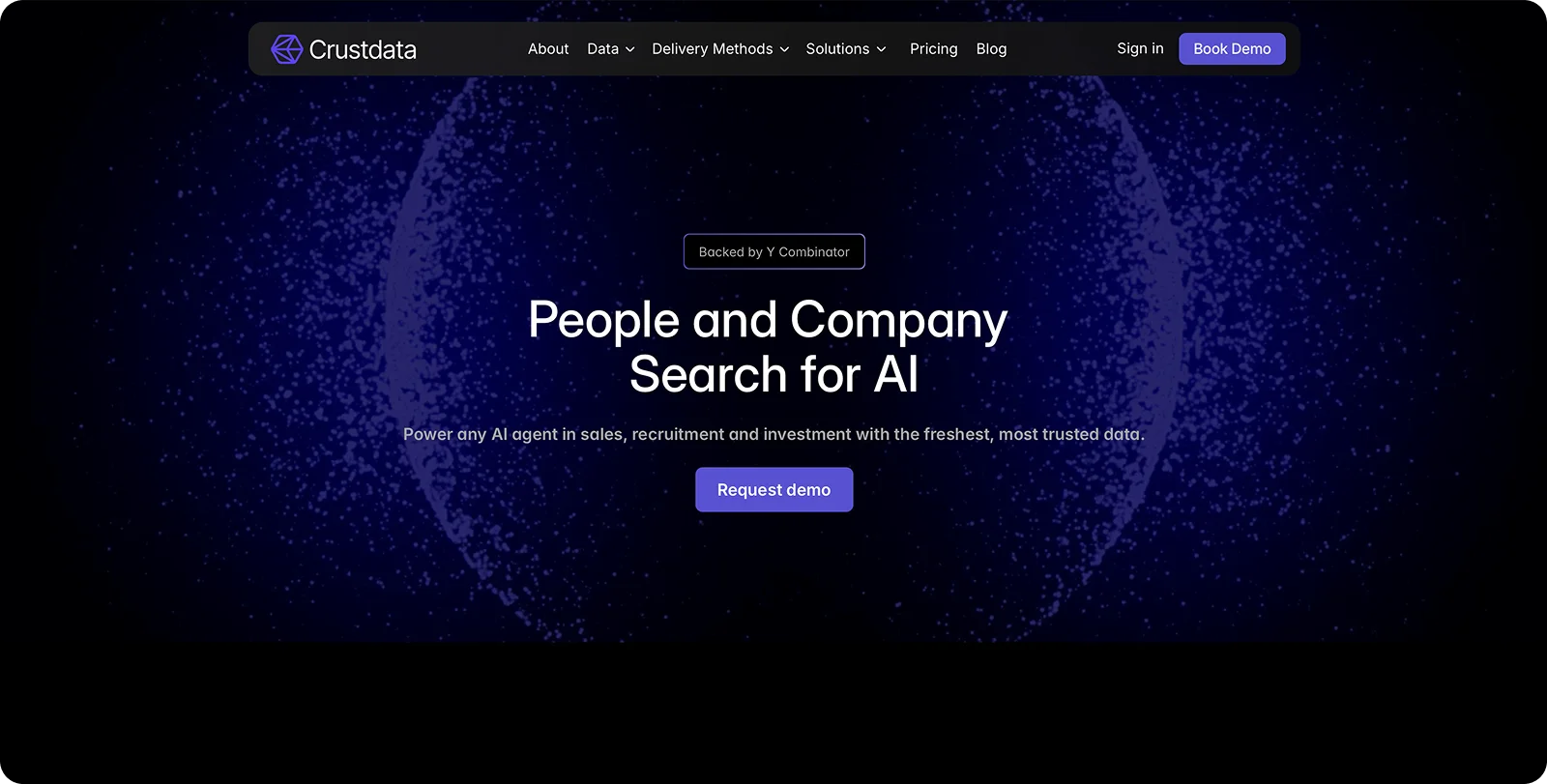
Crustdata serves teams building AI agents, sales automation, and recruiting platforms, where real-time signals determine whether you reach prospects before competitors do. Rather than requiring teams to scrape and parse raw HTML, it delivers structured company, people, and web data through APIs and webhooks.
Key Features
Live data crawling and real-time data enrichment: Crawls web sources at the moment of request instead of pulling from cached databases, then pushes webhook notifications when specific events occur, like executive movements or funding announcements
Multi-source intelligence aggregation: Combines 250+ company data points and 90+ people data points from 16 sources, including SEC filings, and web traffic metrics
Event-driven Watcher API: Subscribe to specific companies or people and receive instant alerts when job changes, promotions, funding rounds, or hiring patterns shift
Web Search API for structured data: Converts unstructured web content into clean JSON for researching founder backgrounds, tracking product launches, or monitoring company news without managing scrapers
API-first architecture: REST endpoints integrate directly with CRM systems, workflow tools, and AI agent platforms for automated list building and prospect scoring
Pros
Crawls data in real time instead of querying static databases, reducing data decay
Aggregates diverse signals beyond standard B2B data through web search and multi-source integration
Streams events through webhooks, eliminating polling delays for time-sensitive workflows
Optimizes specifically for AI agents and automated systems rather than manual prospecting
Cons
Needs development resources for API integration
Generates alert noise without a proper filtering setup
Pricing
Crustdata uses custom pricing based on usage credits, with a free trial available for testing workflows.
2. ScraperAPI
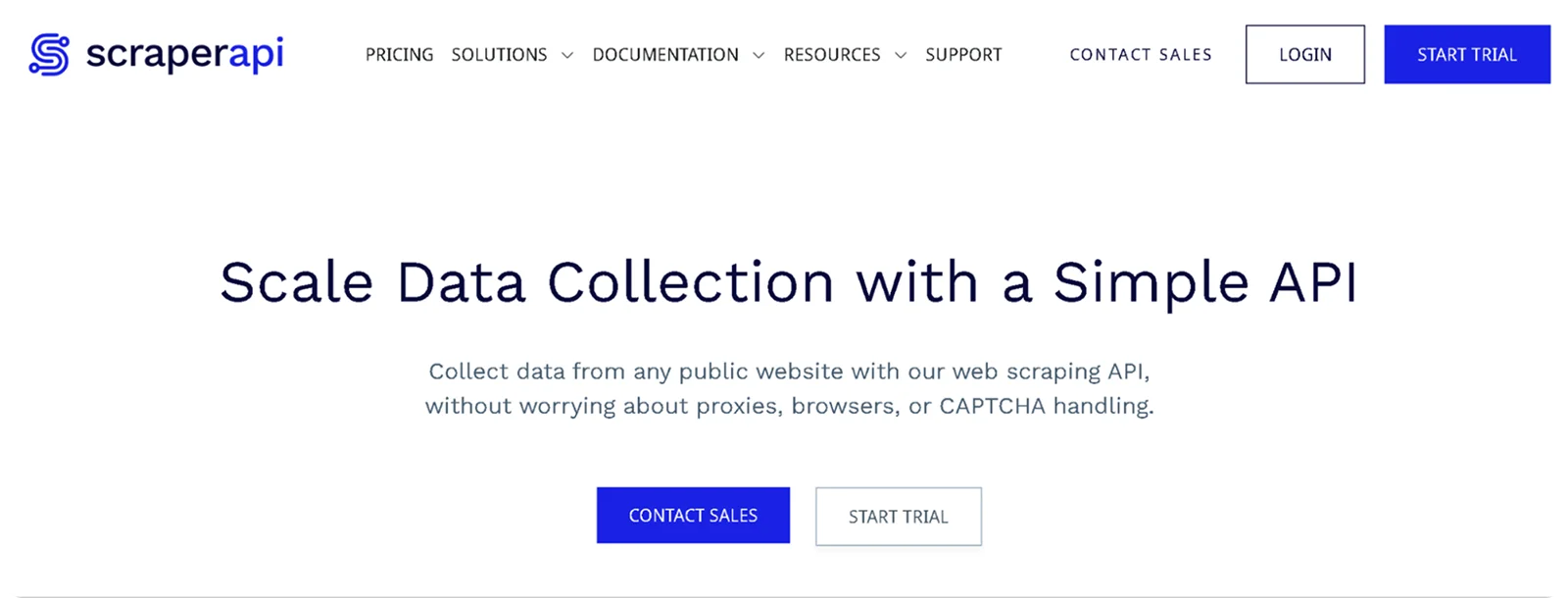
ScraperAPI targets developers who need simple scraping without managing proxy infrastructure. Through a single API endpoint, the service handles proxy rotation, CAPTCHA solving, and headless browsers, eliminating the need to build and maintain scraping infrastructure.
Key Features
Automatic proxy rotation and management: Rotates IP addresses with each request across residential, datacenter, and mobile proxies without requiring manual configuration
CAPTCHA and anti-bot bypass: Solves CAPTCHAs automatically and handles anti-bot detection mechanisms through machine learning algorithms
JavaScript rendering support: Renders dynamic JavaScript content using headless browsers when needed, charged at additional credits per request
Structured data parsing: Returns parsed JSON data for Amazon, Google Shopping, and Walmart without writing custom parsers
DataPipeline scheduling: Automates scraping jobs on recurring schedules and delivers results without writing deployment code
Pros
Handles proxy management automatically, eliminating the need to maintain proxy pools
Integrates with multiple programming languages, including Python, Node.js, PHP, Ruby, and Java
Provides an API playground for testing request costs before running actual scrapes
Cons
Costs escalate quickly when using premium proxies or JavaScript rendering at 10+ credits per request
Limits geotargeting to the US and EU regions on entry-level plans
Pricing
ScraperAPI offers a 7-day free trial with 5,000 credits, with paid plans starting at $49 monthly for 100,000 API credits.
3. Oxylabs
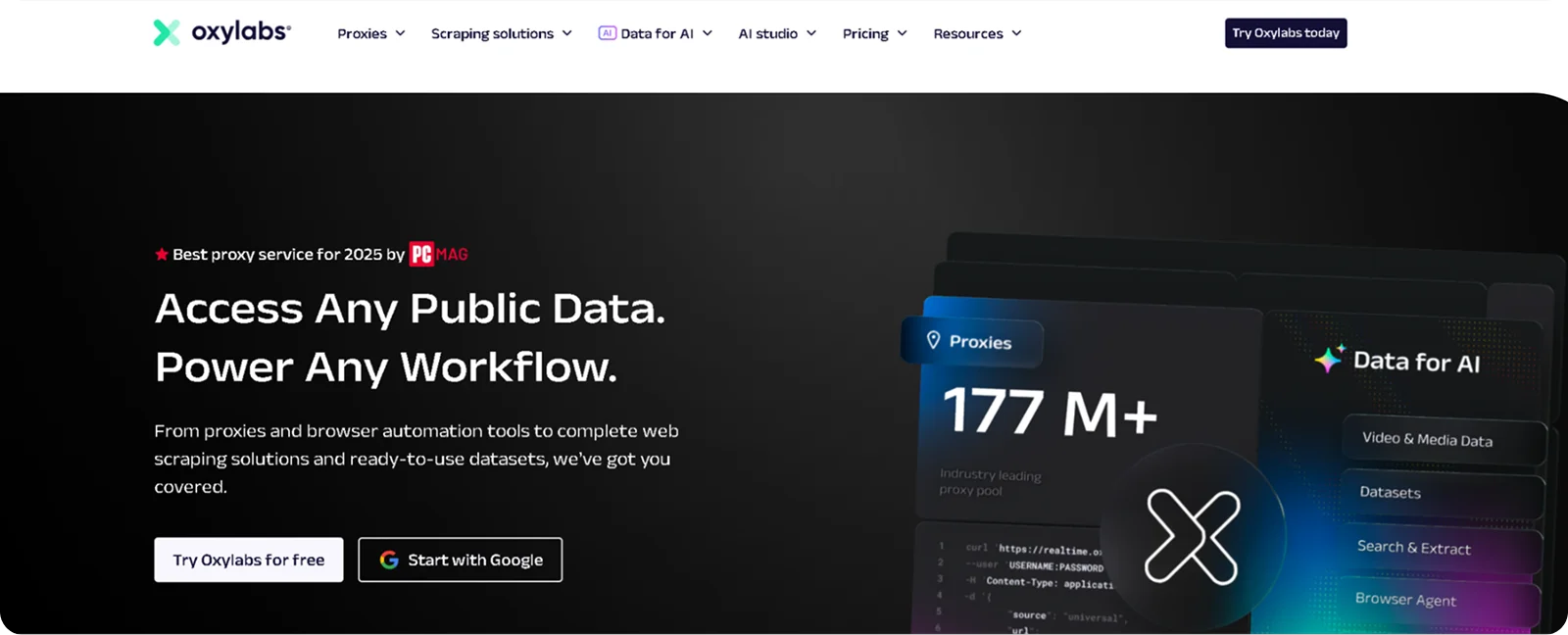
Oxylabs serves enterprise teams that require large-scale data-collection infrastructure, with dedicated account management and compliance support. Organizations running millions of requests monthly get access to residential proxies, datacenter proxies, mobile proxies, and managed Web Scraper APIs.
Key Features
Web Scraper API with automatic parsing: Handles proxy rotation, CAPTCHA solving, and JavaScript rendering while returning structured data for e-commerce, search engines, and real estate sites
Machine learning-driven proxy selection: Automatically selects optimal proxy types based on target complexity without manual configuration
OxyCopilot AI assistant: Generates scraping code and parsing instructions automatically through natural language prompts, eliminating manual coding
Custom browser instructions: Executes mouse clicks, text input, scrolling, and waiting for elements through simple parameters without building a headless browser automation
SOC 2 Type 1 certified infrastructure: Meets security, availability, and confidentiality standards with independent audit verification
Pros
Provides extensive geographic coverage with 195 countries for localized data collection
Supports multiple output formats, including JSON, HTML, PNG screenshots, and Markdown for LLM workflows
Offers dedicated account managers and technical support for enterprise customers
Cons
Runs significantly more expensive than competitors, particularly for residential proxies
Requires contacting sales for most pricing information without published rates
Pricing
Oxylabs residential proxies start at $8 per GB with pay-as-you-go available, while Web Scraper API starts at $49 monthly. Datacenter proxies offer a free trial, and dedicated datacenter proxies start at $2.25 per IP.
4. Decodo (Formerly Smartproxy)
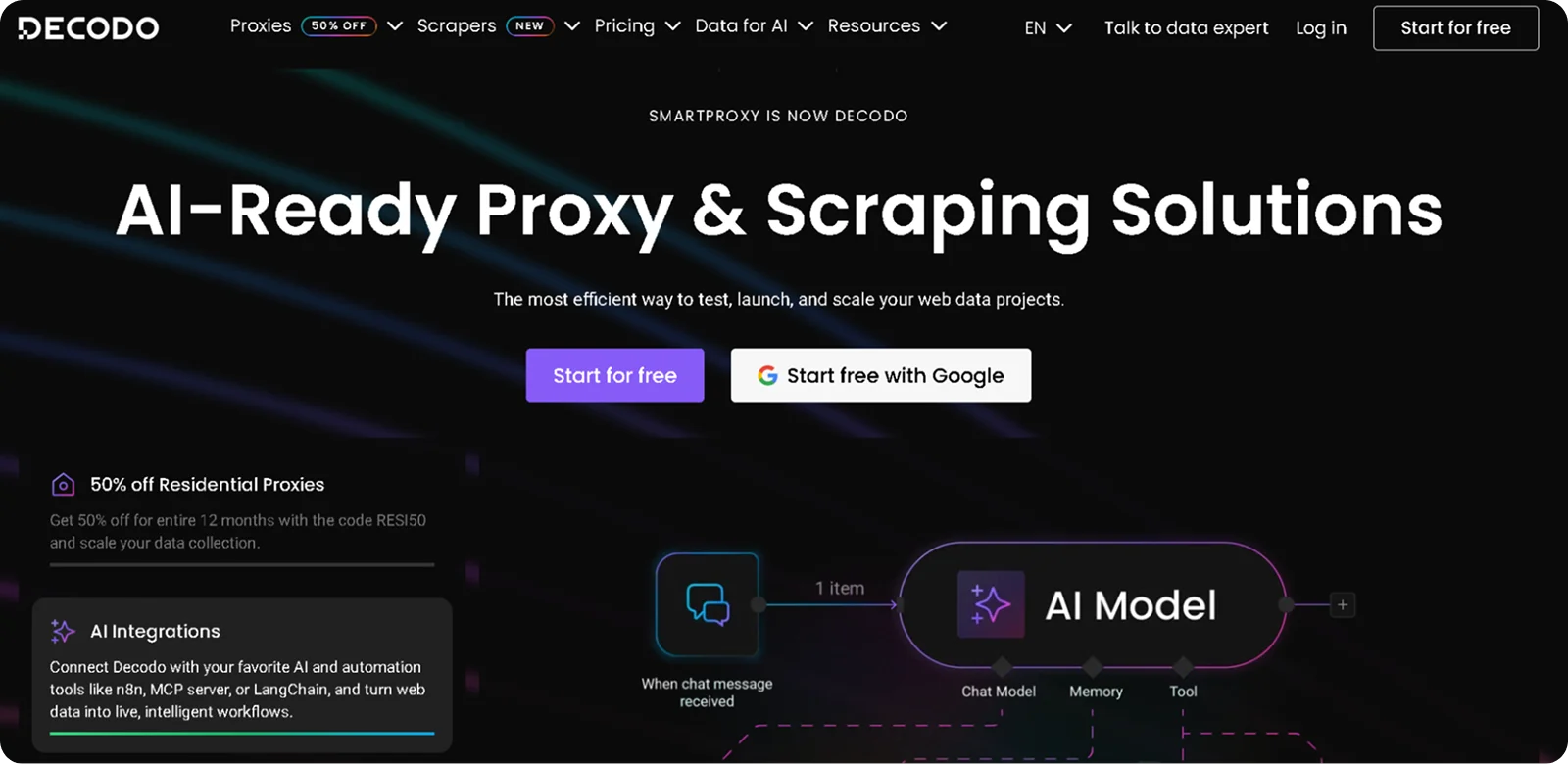
Decodo serves small- to mid-sized teams that need affordable residential proxies without enterprise-level commitments. The platform offers 115 million residential IPs across 195 locations with straightforward pricing and browser extensions that simplify proxy management for non-technical users.
Key Features
Rotating and sticky session options: Automatically rotates IPs with each request or maintains a single IP for 1-60 minutes using sticky sessions
Chrome and Firefox extensions: Toggle proxies on and off directly from the browser without manually entering settings each time
HTTP and SOCKS5 protocol support: Works with web scraping, automation tools, and applications requiring either protocol
Pay-as-you-go and subscription options: Choose between monthly plans or pay only for bandwidth used on one-off projects
No-code scraping tools: Includes Site Unblocker for bypassing CAPTCHAs and anti-bot measures without writing scraper code
Pros
Offers beginner-friendly setup with browser extensions and simple dashboard navigation
Includes free AI Parser and additional tools with plan subscriptions
Supports unlimited concurrent connections with full API access for advanced users
Cons
Runs more expensive for small users compared to bulk purchasers due to per-GB pricing structure
Changed fair usage policy on ISP proxies without user notification, adding 100GB per IP limits
Pricing
Decodo residential proxies start at $1.5 per GB, ISP proxies at $0.27 per IP, mobile proxies at $2.25 per GB, and datacenter proxies at $0.02 per IP. Scraping APIs start at $0.08 per 1,000 requests, while Site Unblocker costs $0.95 per 1,000 requests.
5. Apify
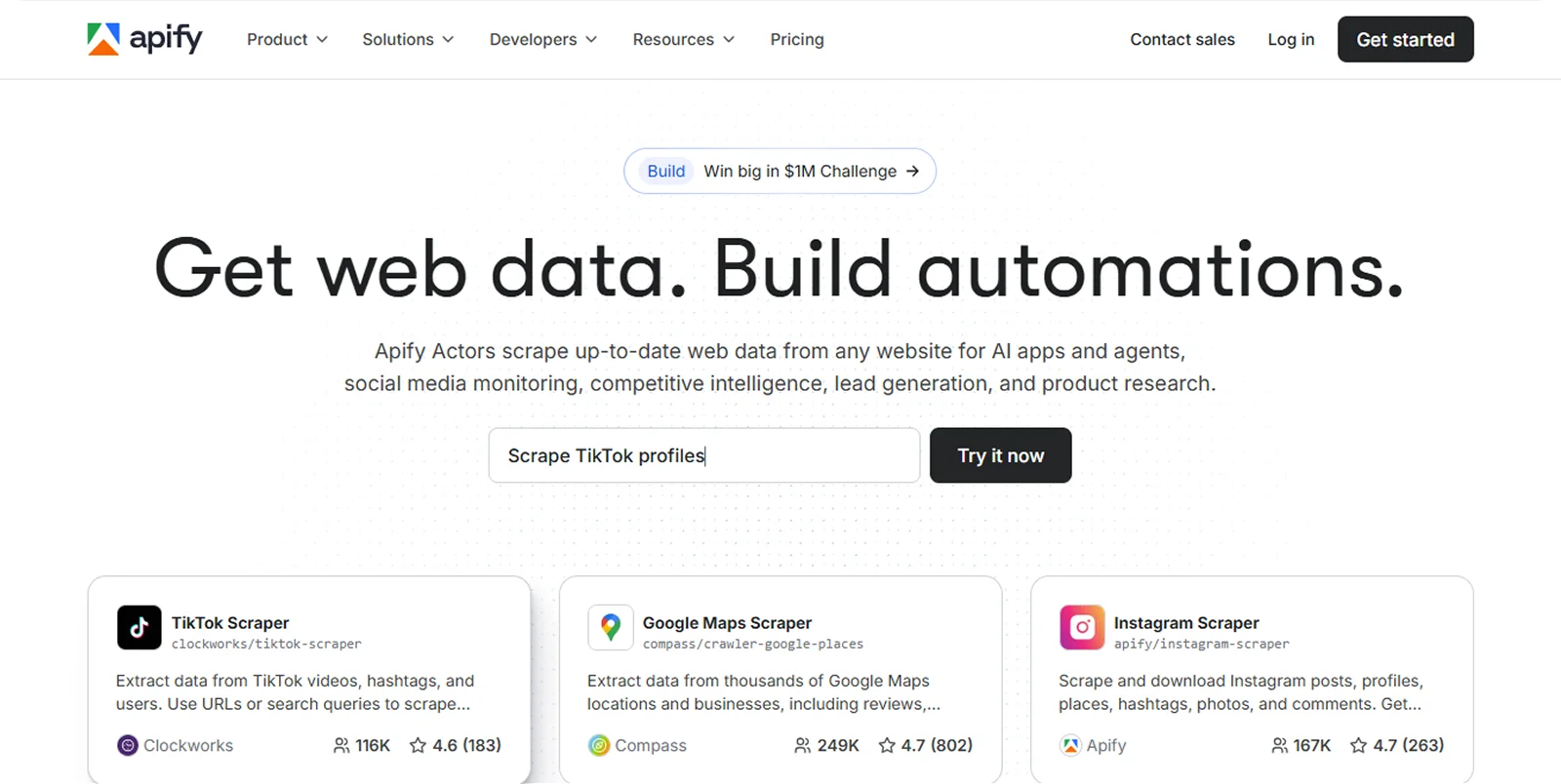
Apify targets teams building custom scrapers with pre-built templates and cloud infrastructure for deployment. As a marketplace where developers publish reusable scraping scripts called Actors, it provides over 1,500 ready-made options for scraping specific sites or creating custom automation workflows.
Key Features
Supports custom Actor development in JavaScript and Python: Enables building proprietary scrapers using Crawlee library, Puppeteer, Playwright, or Scrapy with full SDK support for complex requirements
Runs scrapers on cloud infrastructure with scheduling: Executes scrapers on Apify's servers with automated scheduling, monitoring, and 15+ export formats, including JSON, CSV, and Excel
Uses compute units pricing model: Charges pay-as-you-go based on CPU, memory, and proxy usage consumed during scraper runs
Integrates through webhooks and REST API: Connects multiple Actors together, triggers workflows automatically, and integrates with external systems
Chains Actors into multi-step workflows: Links multiple scrapers in sequence to build data extraction pipelines without separate orchestration tools
Pros
Charges only for actual compute resources used, avoiding fixed monthly fees
Provides production-grade infrastructure with monitoring, logging, and debugging tools
Supports local development and testing before deploying to the cloud
Cons
Requires technical knowledge to optimize configurations and understand proxy settings
Creates overwhelming choices in the marketplace for beginners unfamiliar with Actor quality differences
Pricing
Apify offers a free plan with $5 monthly platform credits, with paid plans starting at $29 monthly for the Starter tier.
6. Zyte
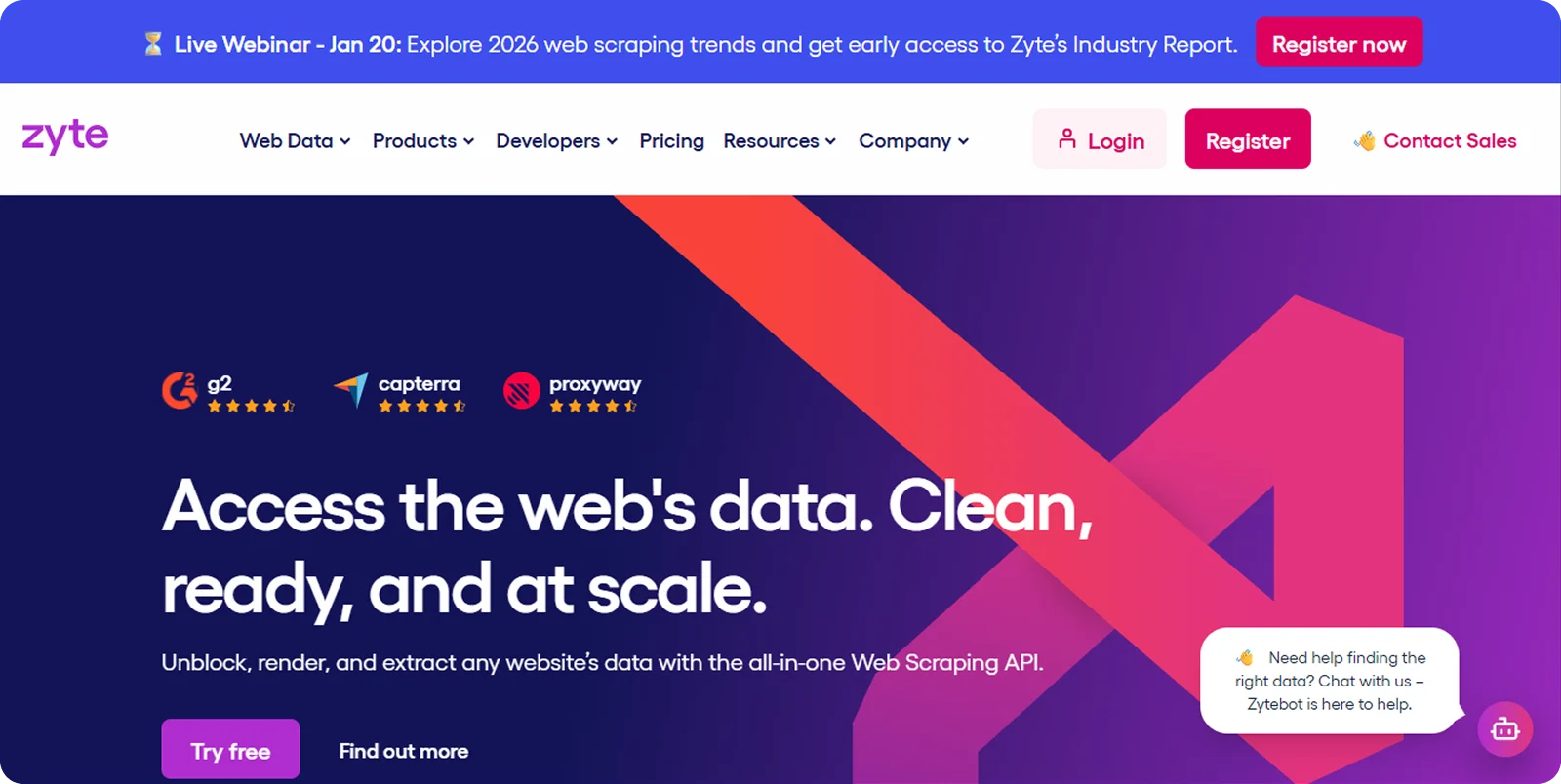
Zyte serves organizations needing fully managed scraping services with human-in-the-loop quality control and enterprise support. Combining automatic unblocking, AI-powered extraction, and managed data delivery services, it's designed for teams that prefer to outsource scraper development and maintenance entirely.
Key Features
Provides all-in-one Zyte API with automated unblocking: Combines proxy management, browser rendering, and anti-bot detection in a single API that automatically selects optimal techniques based on target complexity
Delivers AI-powered structured data extraction: Uses machine learning models to automatically parse pages and extract structured data across product listings, news articles, and job postings without writing custom parsers
Offers managed Data Services with quality control: Provides fully managed scraping where Zyte's team builds, maintains, and delivers validated data feeds aligned to customer schemas and schedules
Operates Scrapy Cloud for custom scraper deployment: Hosts and scales Scrapy-based crawlers in cloud infrastructure with monitoring, scheduling, and auto-scaling without maintaining servers
Includes enterprise-grade support and SLAs: Provides 24/7 premium support with service level agreements for enterprise customers, standard Monday-Friday support for others
Pros
Charges only for successful responses, making rate-limiting and failed requests free
Adapts automatically to website structure changes through AI, reducing scraper maintenance
Locks the enterprise pricing for the full year to prevent budget surprises from tier changes
Cons
Creates a learning curve for teams transitioning from simple proxy services to coded extraction
Requires spending limits that suspend accounts when reached until the next billing cycle
Pricing
Zyte API starts at $0.13 per 1,000 HTTP requests, with standard plans beginning at a $100 spending limit, while Scrapy Cloud costs $9 per unit monthly.
7. IPRoyal
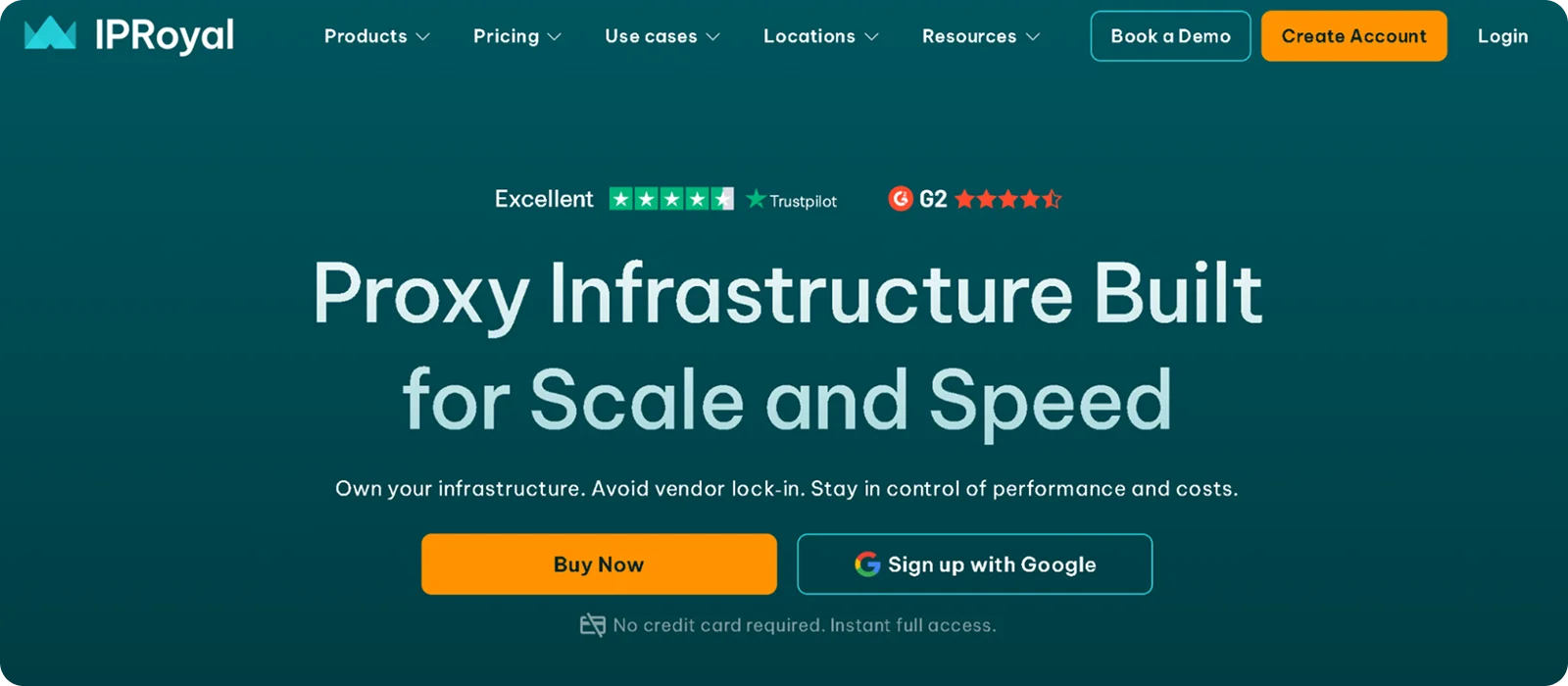
IPRoyal is a leading proxy infrastructure provider with a large pool, high uptime, and customer-first pricing. Their services target both SMBs and enterprise-level customers, supporting large-scale operations while offering competitive pricing for more budget-conscious customers. They have also released several tools (e.g., Web Unblocker) that make web data collection easier and more accessible.
Key Features
Offers more than 68M IPs across four proxy types: Provides 64M residential, dedicated datacenter, static ISP, and 4.5M mobile proxies across 195 countries with city-level targeting
Unlimited sessions on all proxies: Every proxy type includes unlimited sessions, allowing users to run many jobs at once
Features rotating and sticky session options: Rotates IPs automatically at 1, 10, or 30-minute intervals or maintains the same address for up to 7 days.
Supports non-expiring traffic select plans: Traffic-based subscriptions and pay-as-you-go plans roll over unused bandwidth to the following month, allowing users to be more flexible in proxy usage
Supports SOCKS5 and HTTP/HTTPS protocols: Handles various traffic types, including web browsing, FTP, and SMTP
Pros
Offers flexible pricing with pay-as-you-go and subscription models for variable usage patterns
Quick onboarding and purchase process for most plans and proxies, with integration guides available for most popular tools
Features long-lasting sticky sessions (up to 7 days) for residential and mobile proxies
Cons
Complicated refund terms and short refund opportunity window
Reports occasional blocks on platforms like Instagram and Google
Pricing
IPRoyal residential proxies start at $1.75 per GB, ISP proxies at $2.40 per proxy, datacenter proxies at $1.39 per proxy, and mobile proxies at $10.11 per day or $5.20 per GB.
8. NetNut
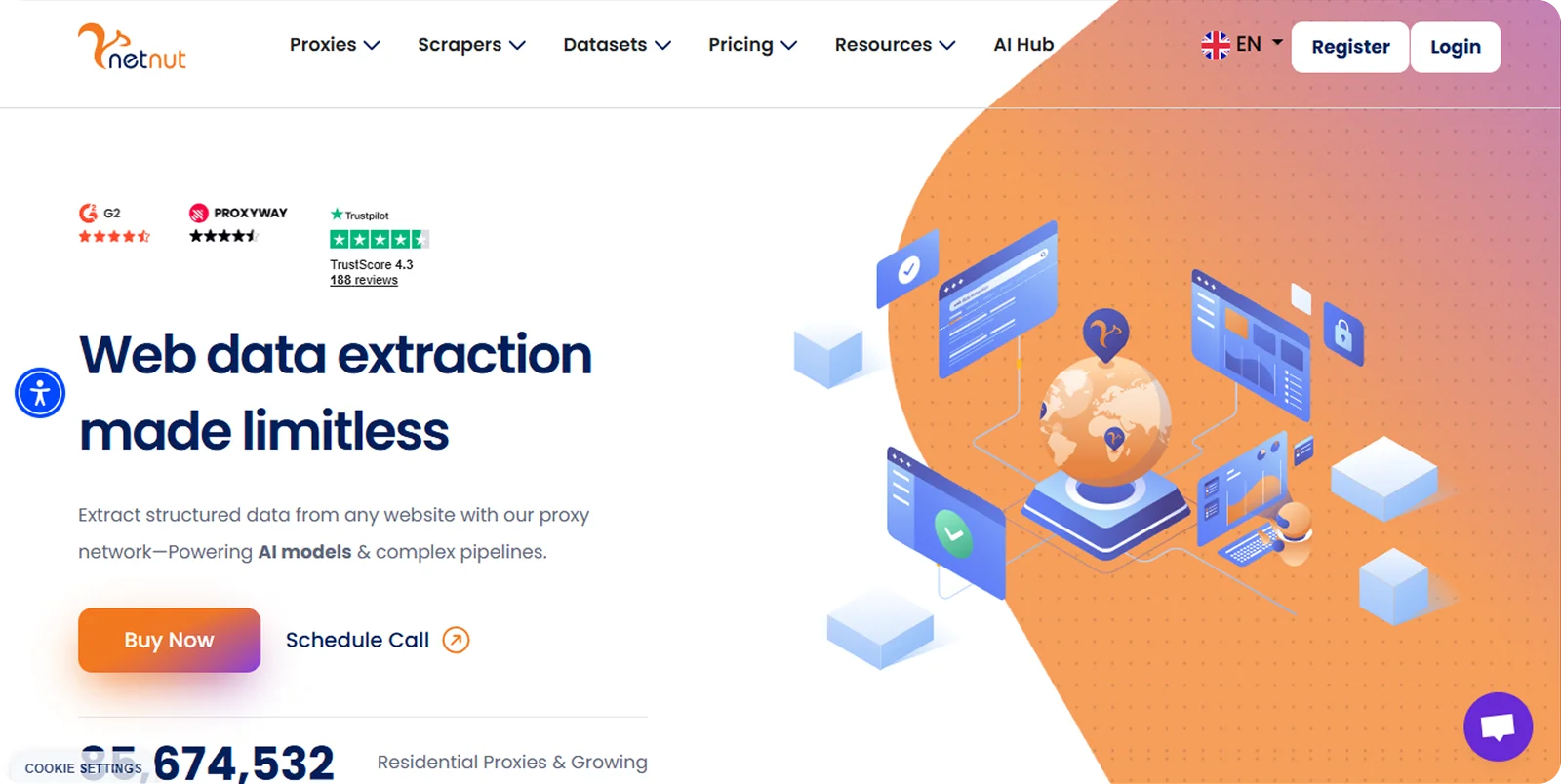
NetNut operates premium proxy infrastructure sourced directly from ISPs rather than peer-to-peer networks, delivering static residential proxies with 24/7 availability and one-hop connectivity. Businesses requiring high-speed, reliable proxy access for web scraping, market research, and ad verification get infrastructure that doesn't rely on consumer devices.
Key Features
Sources residential IPs directly from 100+ ISPs globally: Acquires proxies through DiviNetworks partnerships with internet service providers rather than peer-to-peer networks, eliminating reliance on end-user devices
Provides 85M+ rotating residential and 1M+ static ISP proxies: Offers rotating residential proxies across 195 countries, plus static residential proxies with guaranteed 24/7 uptime and real browsing history
Delivers fast response times with direct connectivity: Achieves 0.6-second average response times through one-hop ISP connections, outperforming competitors using multi-hop peer-to-peer routing
Supports unlimited concurrent requests at scale: Handles high-volume operations with customers sending 30M+ daily requests without concurrency limits or performance degradation
Includes Website Unblocker and SERP Scraper APIs: Provides dedicated APIs for bypassing anti-bot systems and extracting search engine results beyond core proxy infrastructure
Pros
Sources IPs B2B from ISPs, alleviating consent and personal data compliance concerns
Provides responsive dedicated account managers for production-tier plans
Maintains stable connections with minimal disconnections
Cons
Lacks an intuitive management dashboard and requires technical knowledge for setup
Struggles integrating with automation tools like Postman or Selenium for complex workflows
Pricing
NetNut residential proxies start at $1.59 per GB, static residential at $3.82 per GB, mobile at $3.82 per GB, and datacenter at $0.45 per GB. A 7-day free trial is available.
Factors to Consider When Choosing Bright Data Alternatives for Web Data and Proxy
Selecting the right alternative depends on your data collection needs and technical setup. Focus on these key areas when evaluating options:
Project scale: Per-request pricing works best for under 100K monthly requests, while bandwidth models work best for higher volumes. Pay-per-GB costs can spike unexpectedly when sites serve heavier pages.
Team resources: Managed data APIs deliver structured information without coding, ideal for non-technical teams. Engineering teams can save costs using proxy infrastructure and building custom solutions.
Data freshness: Real-time APIs provide on-demand data for time-sensitive workflows, such as sales prospecting. Pre-collected datasets work fine for research projects that can tolerate daily updates.
Geographic needs: Verify actual IP density in your target markets. Many providers advertise global coverage but concentrate quality proxies in the US and Western Europe.
Why Crustdata Ranks Among Top Bright Data Alternatives
Bright Data excels at general web scraping across any website, leveraging its proxy infrastructure and custom scrapers. Crustdata takes a different approach by specializing in structured B2B intelligence delivered through APIs.
This distinction matters for teams building sales automation, AI agents, or recruiting platforms. Instead of managing proxies and building scrapers for company data, you call an API and receive pre-structured B2B intelligence.
Crustdata specializes in B2B data through specific features:
Real-time crawling at the moment of request: Each API call triggers live data collection from current sources, not pre-compiled databases updated monthly
Unified API combining 10+ sources: Merges data from work history, job postings, funding announcements, and employee reviews into single clean records with unique identifiers
Social media integration for AI platforms: Provides access to social posts from people and companies for personalization and signal detection in AI SDR workflows
Advanced webhook functionality beyond job changes: Watcher API sends alerts for funding rounds, executive hires, social media activity, and hiring patterns for triggered workflows
Web Search API for combining structured and qualitative data: Pulls live search results, including press releases, podcasts, interviews, and announcements that traditional B2B databases don't capture, giving AI agents a fuller context for personalization
Crustdata eliminates the need to build and maintain scrapers when your focus is specifically on B2B intelligence for sales, recruiting, or AI platforms.
Need real-time B2B data for your platform?
Request a demo to see Crustdata's live enrichment in action.


Products
Popular Use Cases
Competitor Comparisons
95 Third Street, 2nd Floor, San Francisco,
California 94103, United States of America
© 2026 Crustdata Inc.
Products
Popular Use Cases
Competitor Comparisons
95 Third Street, 2nd Floor, San Francisco,
California 94103, United States of America
© 2026 CrustData Inc.
Products
Popular Use Cases
Competitor Comparisons
95 Third Street, 2nd Floor, San Francisco,
California 94103, United States of America
© 2026 Crustdata Inc.
🎉 We hit $10M ARR!
$600k to $10m in 1.5 years. Our entire GTM is powered by our own APIs.
🎉 We hit $10M ARR in 1.5 years!