How to Build a Warm-Intro Workflow for Investment Firms
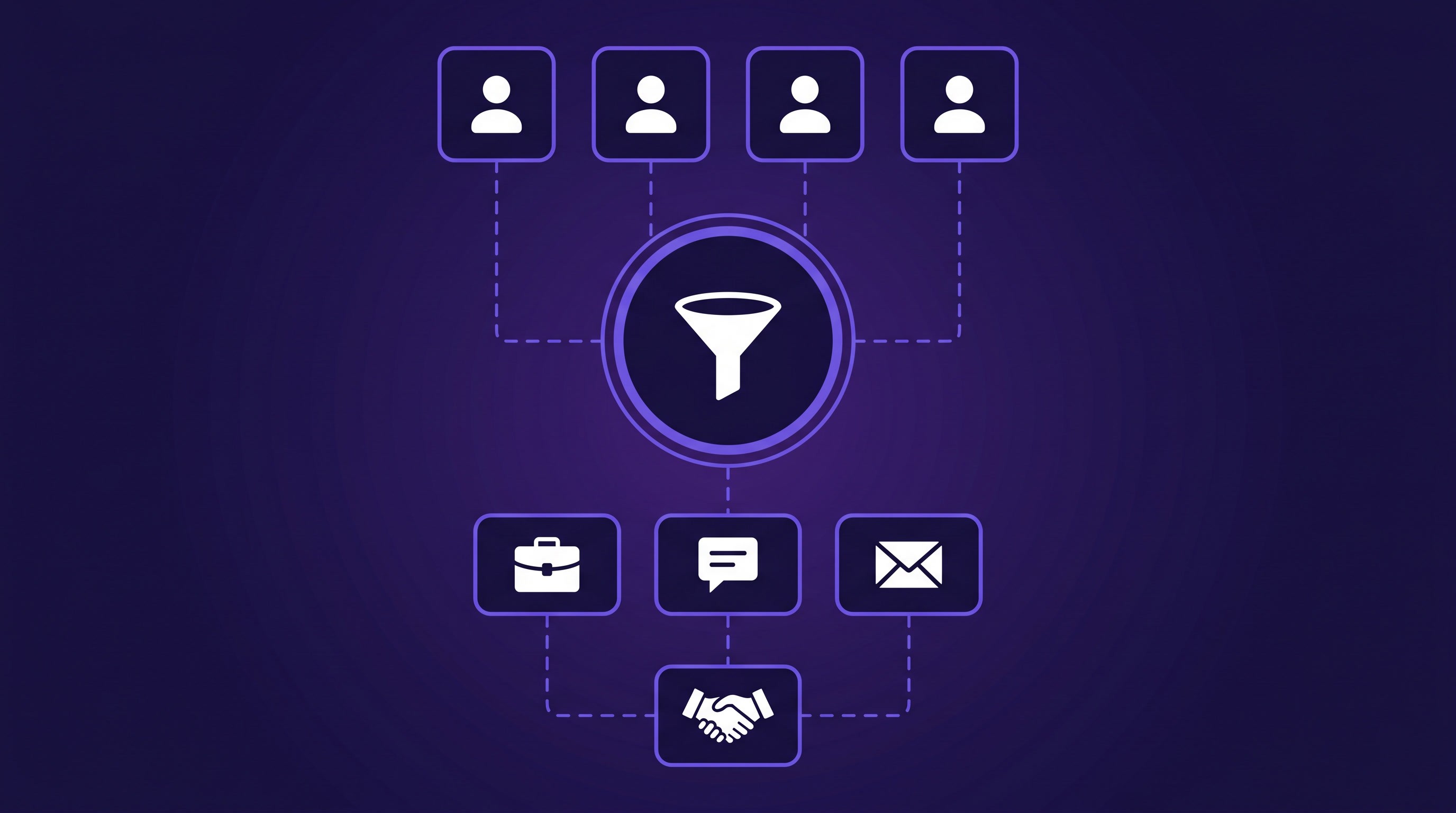
How investment firms build a data-driven warm-intro workflow: export and enrich your network, enrich targets, compute career and education overlaps, layer in social engagement signals, score and rank all inputs together and monitor for new paths over time.
Published
Written by
Manmohit Grewal
Reviewed by
Nithish
Read time
16
minutes
How to Build a Warm-Intro Workflow for Investment Firms
I'm sure every VC or investment team would have faced this problem. You have a list of target companies and high confidence that warm introductions convert better than cold outreach, but no systematic way to find who in the partner network can actually make an intro.
When a partner asks "who in our network can get us in front of this CEO," the answer takes days of manual digging through connections, CRM records, and internal threads.
One head of deal sourcing at a PE firm told us the process of finding the right connection is very challenging, very manual, and unfortunately where the firm's most senior leaders spend a disproportionate amount of their time.
The problem is not that connections don't exist. Most partners have hundreds or thousands of them. The problem is that most of those connections are people they don't actually know well enough to ask for an introduction. The data needed to separate real relationships from noise is scattered across systems that don't talk to each other, and most of it isn't structured in a way that lets you query it.
This article walks through how to build a warm-intro workflow that actually works, covering what signals help you separate genuine relationships from superficial connections, how to get that data into a queryable format, and how to turn it into a ranked list of intro paths your deal team can act on.
Why Your Connections Don't Tell You Who to Ask for an Intro
The typical investment firm has partners and associates with hundreds or thousands of professional connections each. That number is meaningless for warm intros because a connection tells you nothing about whether two people actually know each other well enough for one to make an introduction to the other.
A portfolio services lead we spoke with said people will claim they're connected to someone, but they really have no idea who that person is. The connection exists on paper, but the relationship behind it may not.
This is why warm intros is done manually at most firms. You have a large pool of connections and no structured way to determine which of those connections represent real, active relationships with the people you want to reach. The data you need to answer that question lives in three different places.
CRM and email history tells you who your team has actually communicated with, how recently, and how often. This is valuable but narrow. It only covers people your firm has directly contacted, not the broader network of who-knows-who through shared work history, education, or ongoing professional engagement.
Career and education data tells you whether two people could plausibly know each other. Did they work at the same company during the same years? Did they attend the same university in the same window? This is useful for identifying plausible relationships, but on its own it only tells you that two people could know each other. It does not tell you that they still do.
Social engagement data tells you who is actually interacting with whom right now, through comments, reactions, and post replies. This is the strongest signal of an active relationship, and it's the one almost no firm captures at all.
Until you can combine all three, your warm-intro workflow is really just a partner asking around and hoping someone remembers a connection. (If you're still building the deal sourcing layer upstream of warm intros, see how AI investment platforms use real-time data for deal sourcing.)
What Signals Help You Separate Real Relationships from Noise
Most relationship intelligence tools describe warmth as a single score, but they rarely explain what goes into it. Relationship warmth comes from multiple signal types, and each one adds a different dimension to the picture. One warm-intro product builder we spoke with described the scoring inputs they use and what they plan to add. Their approach combines three signal layers, each weighted differently.
Career and Education Overlap
Career and education data tells you whether two people have shared professional history. People who worked together or studied together are more likely to have a real relationship than two people with no overlap.
The signals that carry the most weight:
Work overlap: Did they work at the same company during the same time period? Two people who overlapped at a company for three years are far more likely to have a real relationship than two people who were at the same large organization five years apart.
Tenure recency: Was the overlap recent? A shared employer from two years ago carries more weight than one from a decade ago. Relationships decay without reinforcement.
School overlap: Same university, same graduation window. This is weaker than work overlap on its own but compounds with other signals.
Title and seniority proximity: Were they at similar levels? Two VPs who overlapped are more likely to have worked together directly than a VP and a junior analyst at the same company.
Board and advisor overlap: Shared board seats or advisory roles at the same company or portfolio company. Board-level relationships tend to be maintained deliberately, which makes this a strong signal.
These signals help you identify which of your connections could plausibly know a target executive. But they don't confirm that the relationship is still active, and not every real relationship has a career or education overlap behind it. Someone you met through a conference, a mutual friend, or an investor network won't show up in structural data at all. This is why career overlap is one input to a score, not a filter that gates the rest of the process.
Social Engagement Between Two People
Social engagement signals come from public interaction data: who comments on whose posts, how often, and how recently. They tell you whether a relationship is actually alive, regardless of whether a structural overlap exists.
Four engagement signals carry the most weight:
Comment frequency: Two people who regularly comment on each other's posts have an active, visible relationship. Commenting takes effort and implies genuine attention.
Comment recency: A comment exchange last week is worth far more than one from eighteen months ago. Recency is the best proxy for whether a relationship is still alive.
Reaction patterns: Likes and reactions are weaker than comments but still signal that someone is paying attention to another person's content.
Mutual engagement: One-directional engagement (person A always comments on person B's posts, but never the reverse) is weaker than bidirectional engagement where both parties interact.
One firm we spoke with described how engagement data changes the quality of intro requests. Knowing that two people worked together or went to the same school is useful, but what actually changes the conversation is knowing whether they've been engaging with each other's content recently. The difference between "they worked together five years ago" and "they were in a comment thread together last Tuesday" is the difference between a cold email with a biographical justification and a genuinely warm introduction.
Most firms only have career overlap data, which is why their intro requests often feel like cold outreach with a shared-employer reference attached. Adding engagement data gives you evidence that the relationship is current, not just historical.
CRM and Email History
Your CRM and email systems tell you whether anyone at your firm has directly communicated with the target or with a potential introducer. This is the most concrete signal because it comes from actual conversations, not inferred overlap.
One PE firm we spoke with checks their deal management platform to see if colleagues have emailed people at target companies. This is valuable but limited to your firm's direct contacts. It won't tell you about relationships that exist in your broader network but outside your firm's communication trail.
How to Get This Data in a Queryable Format
The number one blocker for investment firms building warm-intro workflows is getting all of this data into a format you can actually work with. The signals described above require structured people data (career histories, education, current roles) and social activity data (post interactions, comment histories).
Most professional profile data is not accessible at the API level, and most firms' legal teams won't approve scraping to get it. One PE firm building AI agents for deal sourcing found that the biggest blocker is the inability of their agents to access professional profile data programmatically.
Three data sources feed a warm-intro workflow.
Your own connections, exported and enriched. This is the starting point. You export your own professional connections, then enrich each profile with structured career and education data. One network intelligence platform we spoke with processes roughly 1,000 connections per user, enriching each with employment history, education, titles, and skills so they become queryable. Without this step, your connections are just a list of names with no data to match against. A people enrichment API returns structured career timelines for any professional profile, turning an unstructured connection list into a dataset you can compute overlaps against.
Target company leadership, enriched the same way. For each target company, you need the current leadership team with the same structured data: work history with dates, education, titles, seniority. Use a people search filtered by company and seniority level to find decision-makers, then enrich each profile. Now you have two enriched datasets, your network and your targets, that you can cross-reference.
Social engagement data for both sides. A posts API that returns commenters and reactors with timestamps lets you score engagement frequency and recency between any two people. This is the data layer that most firms are missing entirely because there was previously no programmatic way to capture who is interacting with whom across social platforms.
The combination of enriched connection data and engagement data gives you all three signal layers in structured, queryable form. Investment firms with strict compliance requirements, whether running VC deal sourcing or growth equity workflows, can build a complete warm-intro workflow without scraping.
How to Build the Workflow from Connections to Ranked Intro Paths
Once you have the data, the workflow for identifying and ranking intro paths follows a consistent pattern. The steps below are grounded in what firms and warm-intro product builders we spoke with described.
Step 1 - Export and enrich your own network: Get your connections into structured form. Export your partners' and associates' professional connections, then enrich each one with full career and education history using a people enrichment API. This gives you queryable data on everyone in your network - where they worked, when, at what level, where they went to school.
Step 2 - Build your target list and enrich it: Export the companies or people you want introductions to from your deal pipeline or CRM. For most PE and VC firms, this is a list of 20 to 100 target companies at any given time. For each target company, pull the current leadership team using a people search filtered by company and seniority level. Enrich each person's profile to get their full career and education history.
Step 3 - Cross-reference to find overlaps: For each person in your enriched network, compute overlap scores against the target company's leadership. The overlap score combines career and education signals: work overlap duration and recency, school overlap, seniority proximity, and board overlap. One warm-intro product builder we spoke with scores these inputs together, weighting work overlap and recency most heavily.
Step 4 - Check social engagement: For connections that show structural overlap, and for connections that don't, pull social engagement data. Check whether your connection and the target executive have commented on each other's posts, how recently, and how often. Engagement data catches relationships that structural data misses entirely, like two people who met through an industry event and stayed connected through regular social interaction.
Step 5 - Check CRM and email history: Cross-reference against your CRM to see if anyone at your firm has directly communicated with the target or with a potential introducer. One PE firm we spoke with uses their deal management platform for this, checking whether colleagues have emailed people at target companies. This adds a concrete signal on top of the inferred overlap and engagement scores.
Step 6 - Score and rank all inputs together: Combine all signal inputs into a single relationship warmth score. Career overlap, engagement recency and frequency, CRM communication history, and seniority proximity all feed into the score as weighted factors, not as sequential filters. The highest-ranked connections are your strongest intro paths. Surface them to the partner or deal team lead with context - here's who in your network has the warmest relationship with the target, and here's the evidence. This level of specificity is what makes the intro request feel genuinely warm.
Step 7: Close the loop. Track which intro requests were made, which resulted in meetings, and which converted to deal conversations. Feed these outcomes back into the scoring weights so they improve over time. Intro paths that consistently convert tell you which signals matter most for your specific firm and deal type.
Why Relationship Warmth Should Be Ranked, Not Sprayed
The anti-pattern in warm intros is what one firm we spoke with called spraying and praying - asking everyone in your network for intros without knowing whether they actually have a relationship with the target. This damages your network because people who get asked for introductions they can't meaningfully make learn to ignore the next request. The target receives an introduction from someone who clearly doesn't know them well, which starts the relationship on the wrong footing.
Scored, selective intro requests work because the person being asked actually has a real, recent relationship with the target. They're willing to make the introduction because they genuinely know the person, and the target takes the meeting because the introduction came from someone they trust.
The second shift that matters is moving from one-time scoring to continuous monitoring. A warm-intro workflow becomes significantly more valuable when it runs in the background, surfacing new intro paths as relationships and roles change.
Three events should trigger an automatic re-score.
Job changes. When someone in your network moves to a target company, or when someone at a target company moves into a decision-making role, the intro path landscape changes. A real-time alert on job changes for people in your network surfaces these windows automatically.
Engagement spikes. When someone in your network starts commenting on a target executive's posts, or vice versa, that's a signal that a relationship is warming up. Monitoring engagement patterns over time lets you surface intro paths that didn't exist a month ago.
New targets entering the pipeline. When a new company enters your deal pipeline, it should be automatically cross-referenced against your firm's enriched network and scored. The deal team should see ranked intro paths within hours of adding a target, not after days of manual research.
Running the workflow continuously means you catch intro windows you would have missed with a one-time pass, because people change jobs, reconnect with old colleagues, and engage with new networks in ways that create new intro paths over time.
How to Evaluate Whether Your Workflow Is Working
Three metrics tell you whether your warm-intro workflow is producing results.
Intro-to-meeting conversion rate. What percentage of intro requests made through the workflow result in a first meeting? If you're scoring relationship warmth accurately, this should be 40% or higher. If it's below 15%, your scoring is letting through connections that aren't genuinely warm, and you're effectively running cold outreach through a warm channel.
Time from target identification to first meeting. How many days pass between adding a company to your pipeline and getting a meeting with a decision-maker? Firms running manual "who knows who" processes typically measure this in weeks or months. A data-driven workflow should compress it to days.
Network utilization rate. What percentage of your firm's total network has been enriched, scored, and is queryable in your workflow? Most firms use a fraction of their actual network for intros because the rest hasn't been structured. If you have six partners with hundreds of connections each and your workflow has only enriched a small subset, you're missing intro paths that already exist in your network.
Track these monthly and feed the outcomes back into your scoring weights. The intro paths that convert at the highest rates tell you which signals matter most for your specific firm and deal type.
What Comes Next
The firms that consistently win warm introductions have turned "who knows who" from a question someone asks in a meeting into a queryable data workflow. Export and enrich your connections, enrich your targets, compute overlaps, layer in engagement and CRM signals, score everything together, and monitor for changes over time.
Whether you build this internally or assemble it from APIs and your existing CRM, the starting point is the same. Get your network into structured data, get the career and engagement signals that tell you which connections represent real relationships, and make it all queryable.
If your firm is building a warm-intro workflow and needs the people enrichment, social engagement, and monitoring data to power it, book a demo with Crustdata to see how the data layer fits into your stack.



Products
Popular Use Cases
Competitor Comparisons
95 Third Street, 2nd Floor, San Francisco,
California 94103, United States of America
© 2026 Crustdata Inc.
Products
Popular Use Cases
Competitor Comparisons
95 Third Street, 2nd Floor, San Francisco,
California 94103, United States of America
© 2026 Crustdata Inc.
Products
Popular Use Cases
Competitor Comparisons
95 Third Street, 2nd Floor, San Francisco,
California 94103, United States of America
© 2026 CrustData Inc.
🎉 We hit $10M ARR!
$600k to $10m in 1.5 years. Our entire GTM is powered by our own APIs.
🎉 We hit $10M ARR in 1.5 years!