Top B2B Data Providers Ranked and Reviewed
Compare top B2B data providers: ZoomInfo, Apollo, Cognism, Crustdata. Real evaluation framework for coverage, accuracy, real-time vs batch, APIs, and pricing.
Published
Written by
Chris P.
Reviewed by
Nithish A.
Read time
7
minutes
B2B data is now a part of the foundational infrastructure for go-to-market teams. The quality of the data you rely on directly affects pipeline efficiency, conversion rates, and the overall effectiveness of sales and marketing efforts. Accurate, timely information enables relevant outreach and helps you make informed decisions. Poor data, by contrast, slows execution and introduces friction at every stage of the funnel.
However, the real question today is not deciding whether to use a B2B data provider, but understanding which type of provider fits your operating model.
The market has evolved into two distinct categories.
B2B data platforms: Destination tools designed for human users, offering interfaces, filters, and built-in workflows for prospecting and account research.
API-first infrastructure: Designed for software, enabling programmatic access to products, automations, and AI-driven systems.
Understanding this distinction matters. Platforms constrain teams building systems, while APIs impose unnecessary complexity on teams that simply need a reliable interface.
In this guide, we focus on B2B data platforms, which remain the best fit for most sales and revenue teams. We’ll rank the leading options, compare them on pricing and accuracy, and clarify when an API-first provider like Crustdata is the better choice for teams building automated or AI-powered workflows.
What is a B2B data provider?
B2B data providers are companies that collect, process, and sell firmographic, contact, and intent data to businesses. Their role is to turn fragmented public and proprietary signals into structured records that sales, marketing, and strategy teams can actually use.
In layman’s terms, B2B is business-to-business. In data, this shifts the focus away from individual consumers and toward organizations. The company is the primary unit of analysis, and people are mapped to that company as roles, decision-makers, or influencers. This is a key difference from B2C data, which centers on personal behavior such as shopping habits, household attributes, or lifestyle preferences.
B2B data solutions typically combine multiple layers of intelligence into a single system. Each layer serves a different purpose in go-to-market workflows:
Contact intelligence includes work emails, phone numbers, job titles, and social profiles used for outreach.
Firmographic data describes the company, such as industry, employee count, revenue range, and headquarters location.
Technographic data identifies the software and tools a company uses, helping teams qualify fit and tailor messaging.
Intent data captures buying signals based on content consumption, search behavior, or technology research.
Chronographic data tracks time-based events like funding rounds, leadership changes, promotions, or rapid hiring.
Together, these layers help teams move from guessing to deciding who to contact, when to reach out, and why the timing matters.
The four types of B2B buyers are producers, resellers, governments, and institutions. Producers use data to find customers and partners, resellers rely on it to source and distribute offerings, governments apply it for procurement and policy programs, and institutions use it for fundraising, partnerships, and vendor evaluation.
At a practical level, B2B data providers exist to replace manual research. Instead of checking websites, social profiles, and press releases one by one, teams outsource that work to systems designed to collect, verify, and refresh information at scale. The result is faster prospecting, better targeting, and decisions based on evidence rather than assumptions.
Top B2B data platforms compared
The B2B data market is crowded, and many providers appear similar at first glance. Most promise large databases, accurate contact details, and seamless integrations. The differences become clear only when you look at how the data is collected, how often it is refreshed, how pricing works, and which teams the platform is actually built for.
1. ZoomInfo
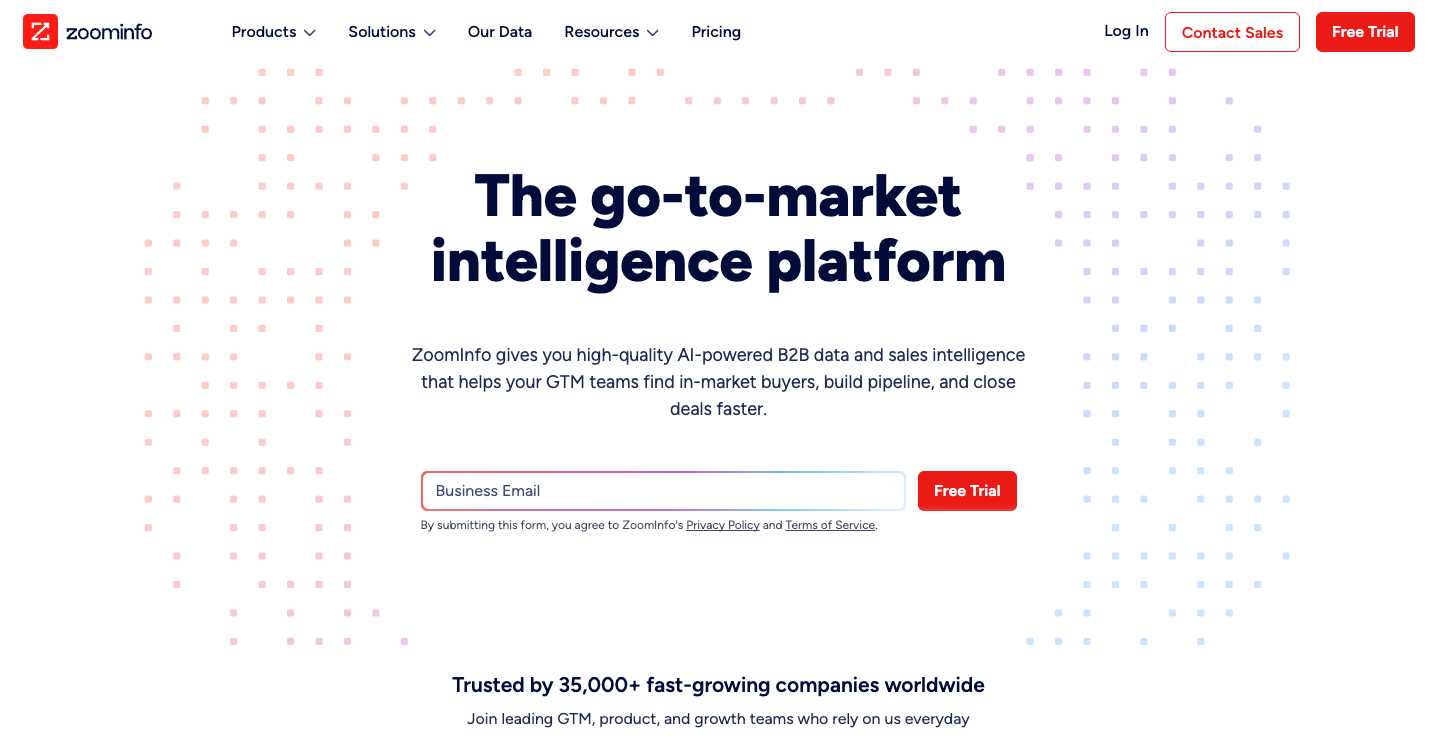
ZoomInfo is a comprehensive Go-To-Market (GTM) intelligence platform that provides verified B2B data and sales automation tools. It serves mid-market and enterprise-level sales, marketing, and recruitment teams by centralizing firmographic, technographic, and intent-based insights. As of 2026, the platform has transitioned toward an AI-first ecosystem, integrating generative capabilities to streamline prospecting workflows.
Key platform characteristics
ZoomInfo Copilot: A generative AI assistant that prioritizes accounts based on "fit" and "intent," drafting personalized outreach and suggesting next best actions for sales reps.
Scoops & Intent Signals: Real-time intelligence on company triggers such as leadership changes, funding rounds, and pain points, paired with third-party intent data to identify active buyers.
WebSights: A de-anonymization tool that identifies companies visiting a user’s website, providing a bridge between inbound traffic and outbound prospecting.
Chorus integration: Native conversational intelligence that records, transcribes, and analyzes sales calls to improve coaching and closing rates.
Pricing
ZoomInfo utilizes a credit-based, annual-only contract model. Pricing is tiered based on feature access rather than just seat count:
Professional: Includes core contact and company profiles, basic search filters, and CRM integrations.
Advanced: Adds access to mobile phone numbers, buyer intent signals, technographics, and departmental org charts.
Elite: The most comprehensive tier, including the Copilot AI suite, advanced GTM workflows, and premium support.
Limitations
Global data gap: While dominant in North America, data freshness and coverage in EMEA and APAC regions often trail behind localized competitors.
Usage constraints: The rigid annual credit system does not support rollover, forcing teams to purchase expensive top-up credits if they exceed their annual allocation.
Platform complexity: The breadth of features creates a steep learning curve, often requiring dedicated sales operations personnel to manage workflows effectively.
2. Apollo.io
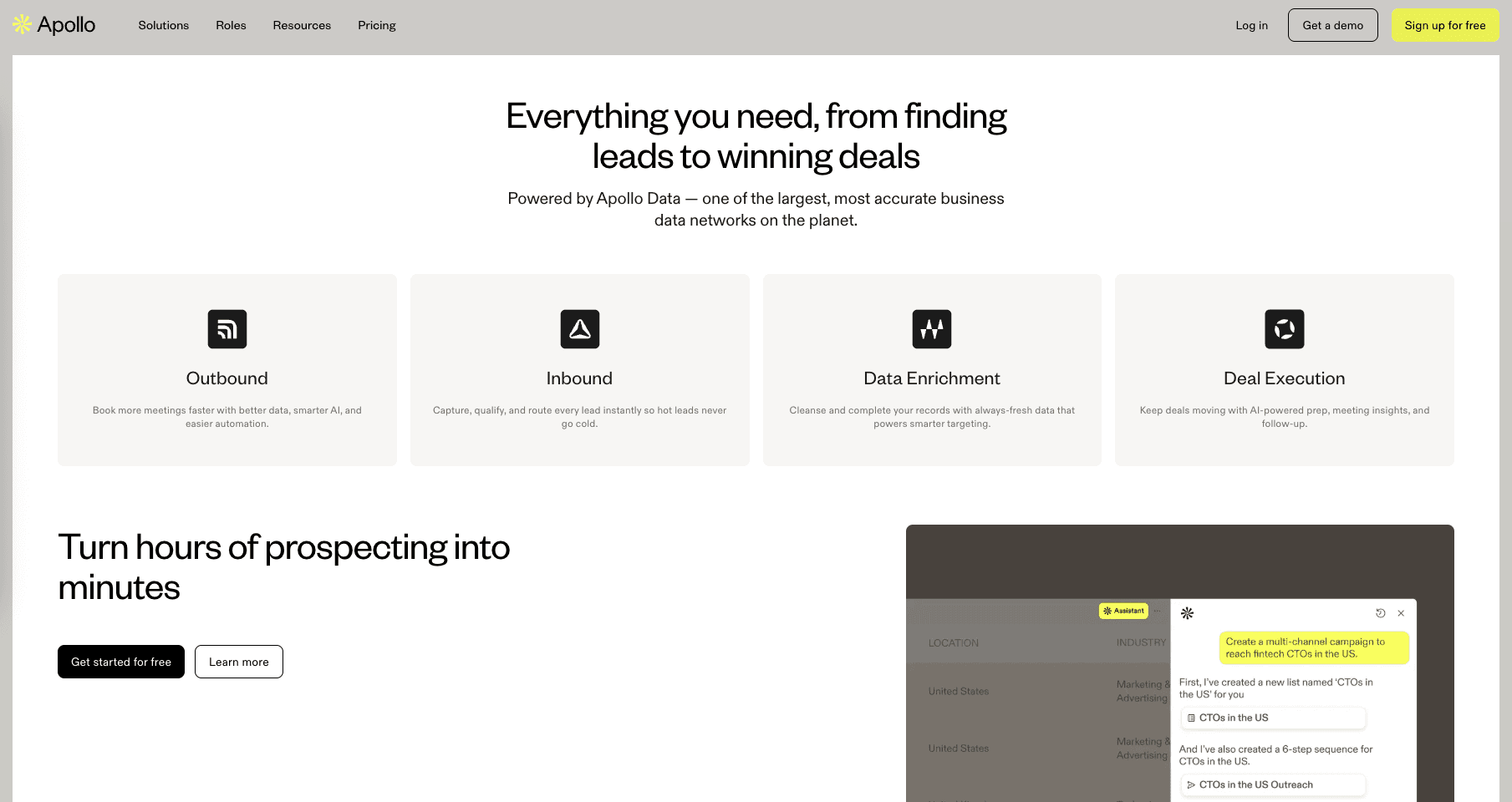
Apollo.io is a unified sales intelligence and engagement platform designed to centralize prospecting, outreach, and workflow automation. It differentiates itself from legacy providers by combining a massive B2B database with a native sales engagement suite (sequencer), making it an all-in-one solution for SMBs and mid-market sales teams. As of writing this article, Apollo has expanded its database to over 275 million contacts across 73 million companies.
Key platform characteristics
Integrated sales engagement: Unlike data-only providers, Apollo includes built-in email sequencing, a VoIP dialer, and LinkedIn automation, allowing reps to execute campaigns without leaving the platform.
Apollo Chrome Extension: A highly rated tool that overlays data directly onto LinkedIn, Gmail, and company websites for immediate prospecting and CRM enrichment.
AI-powered workflows: Features such as an AI Persona Builder and generative email writing assistance automate lead scoring and initial outreach personalization.
Self-service enrichment: Tools that allow users to upload CSVs or sync CRM records to automatically fill missing data points (emails, direct dials, technographics).
Pricing
Apollo operates on a per-user, credit-based model with four primary tiers:
Free: Provides limited monthly credits for basic searching and testing sequences.
Basic: Unlocks unlimited email sequences and full CRM integrations (Salesforce/HubSpot).
Professional: Adds the power dialer, call recording, and advanced A/B testing capabilities.
Organization: The enterprise tier featuring international dialing, Single Sign-On (SSO), and advanced API access.
Limitations
Data freshness: Apollo utilizes a cached database model; independent reviews suggest a higher data decay rate, particularly in fast-moving tech sectors, requiring periodic double-checking.
International accuracy: While its US data is robust, accuracy for EMEA and APAC regions is significantly lower than that of specialized regional providers.
Credit constraints: The credit system is rigid, with monthly limits that do not typically roll over, requiring careful management of export quotas.
3. Clearbit
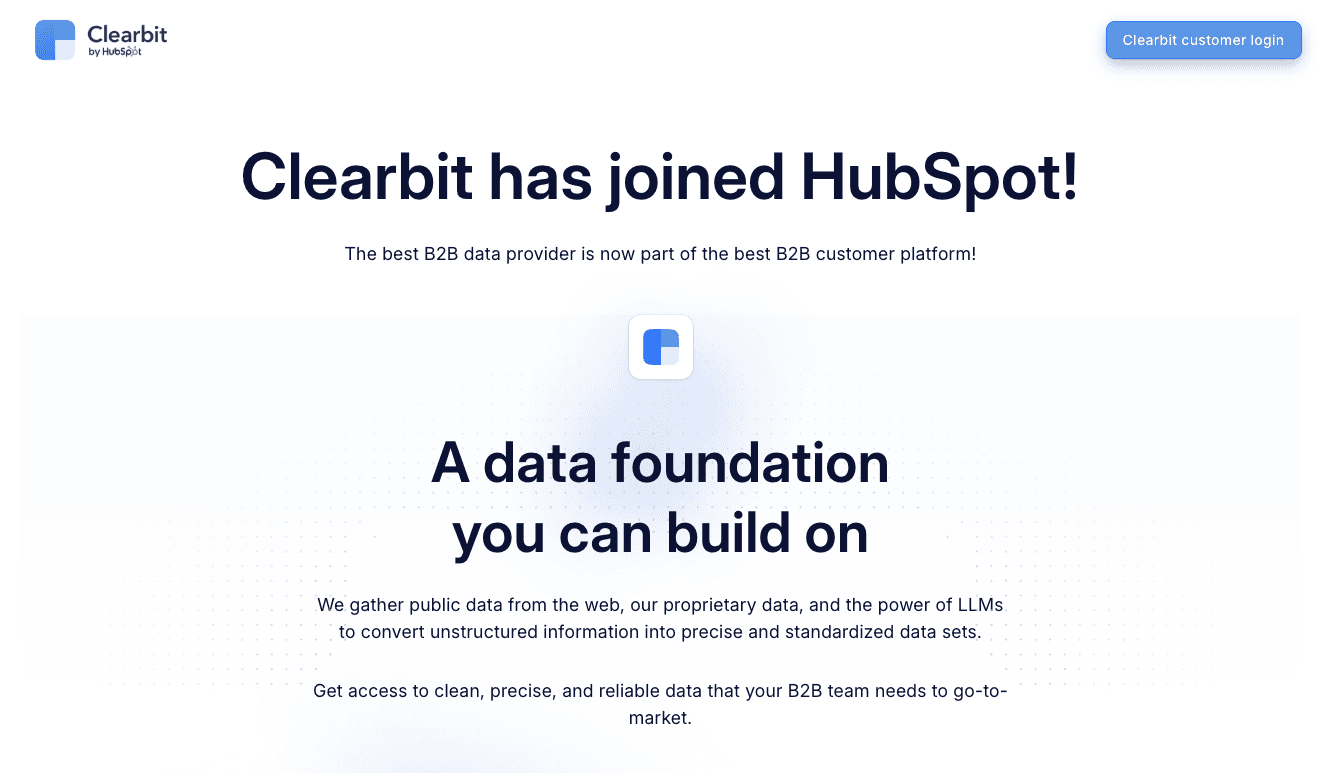
Clearbit is an AI-native B2B intelligence provider that focuses on real-time data enrichment and visitor de-anonymization. Following its acquisition by HubSpot, the platform has been integrated into the Breeze Intelligence suite, serving as a foundational data layer for marketing and sales operations. It specializes in converting unstructured web data into standardized firmographic and technographic insights to power automated go-to-market workflows.
Key platform characteristics
Breeze Intelligence integration: As a native HubSpot feature, it provides automated enrichment for CRM records, removing the need for manual API management for HubSpot users.
Real-time data enrichment: The platform appends over 100 attributes, including revenue, tech stack, and employee count, to records instantly, with a refresh cycle that targets high-accuracy maintenance.
Dynamic form shortening: By identifying users via email addresses in real-time, Clearbit reduces form fields to increase conversion rates while maintaining data integrity.
Website visitor reveal: It identifies anonymous company traffic on a user’s website, providing intent signals that allow sales teams to prioritize high-fit accounts.
AI-driven accuracy: Clearbit utilizes large language models (LLMs) to verify public data, maintaining high deliverability for professional contact information and firmographic details.
Pricing
Clearbit operates on a usage-based, credit-weighted model integrated with HubSpot subscription tiers:
Starter: Low-cost entry point for basic enrichment credits (e.g., 100 credits/month) bundled with the HubSpot Starter suite.
Professional/Enterprise: High-volume annual contracts designed for mid-market and enterprise teams, including advanced intent signals and full API access.
A la carte credits: Additional credit packs can be purchased as add-ons to accommodate seasonal scaling or bulk enrichment projects.
Limitations
Platform lock-in. While it still supports Salesforce and Segment, the most seamless features are increasingly exclusive to the HubSpot ecosystem.
Opaque credit consumption. Credits are consumed for every successful enrichment, which can lead to unpredictable costs for high-traffic websites using form shortening.
Regional data variance. While global coverage has improved via AI, its accuracy for small-to-medium businesses in non-English speaking markets remains lower than in North America.
4. Cognism
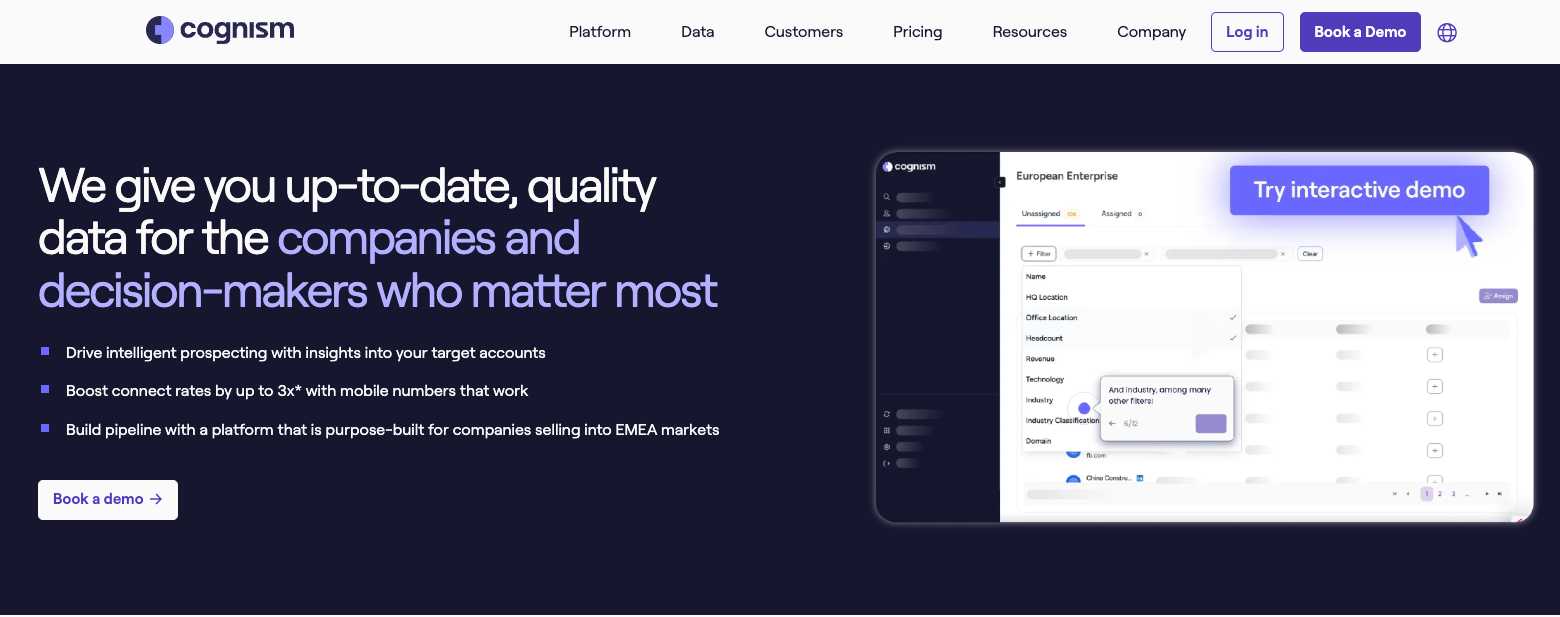
Cognism is a B2B sales intelligence platform that prioritizes data quality and regulatory compliance, particularly within the European market. It serves as a primary alternative to US-centric providers by offering high-density coverage in the UK, EMEA, and North America. As of 2026, the platform has integrated advanced AI prospecting features to maintain its Diamond Data standard, a human-and-AI-verified contact layer designed to eliminate "wrong number" dial fatigue.
Key platform characteristics
Diamond Data phone verification. Unlike standard scraped data, Cognism offers a subset of mobile numbers that are manually and AI-verified by calling them to ensure the recipient is the correct decision-maker.
Global compliance and DNC scrubbing. The platform is GDPR-compliant by design, automatically scrubbing contacts against Do-Not-Call (DNC) registries in over 14 countries, including the US, UK, and much of Europe.
Unrestricted data access. Cognism typically operates on a non-credit-based model for its web application, allowing users to view and export contact data without the scarcity mindset of individual record costs.
Sales Companion AI. This generative assistant provides real-time account summaries and suggests personalized outreach with precision segmentation.
Thirty-day refresh cycle. Senior-level records (Director and above) are refreshed every 30 days to mitigate data decay, maintaining an average reported accuracy of 85–90%.
Pricing
Cognism does not publicly list its pricing. It offers two pricing packages, based on licenses and add-on fees:
Grow: Provides core access to the global database, Diamond Data mobile numbers, and basic CRM integrations.
Elevate: Includes all Grow features plus advanced intent signals, technographics, sales triggers, and enhanced AI-driven list segmentation.
Add-ons: Specialized modules for API access and Diamonds on Demand (custom verification requests) are available for enterprise-scale requirements.
Limitations
Market positioning. The obscure entry price makes it inaccessible for most startups and small businesses compared to pay-as-you-go competitors.
Integration rigidity. While it supports major CRMs like Salesforce and HubSpot, users report less flexibility when attempting to map custom fields compared to more modular enrichment tools.
Not built for AI-first use. Cognism excels at compliant, human-led prospecting, but like most platforms, it is not designed for programmatic or real-time use in AI-driven systems.
5. Lusha
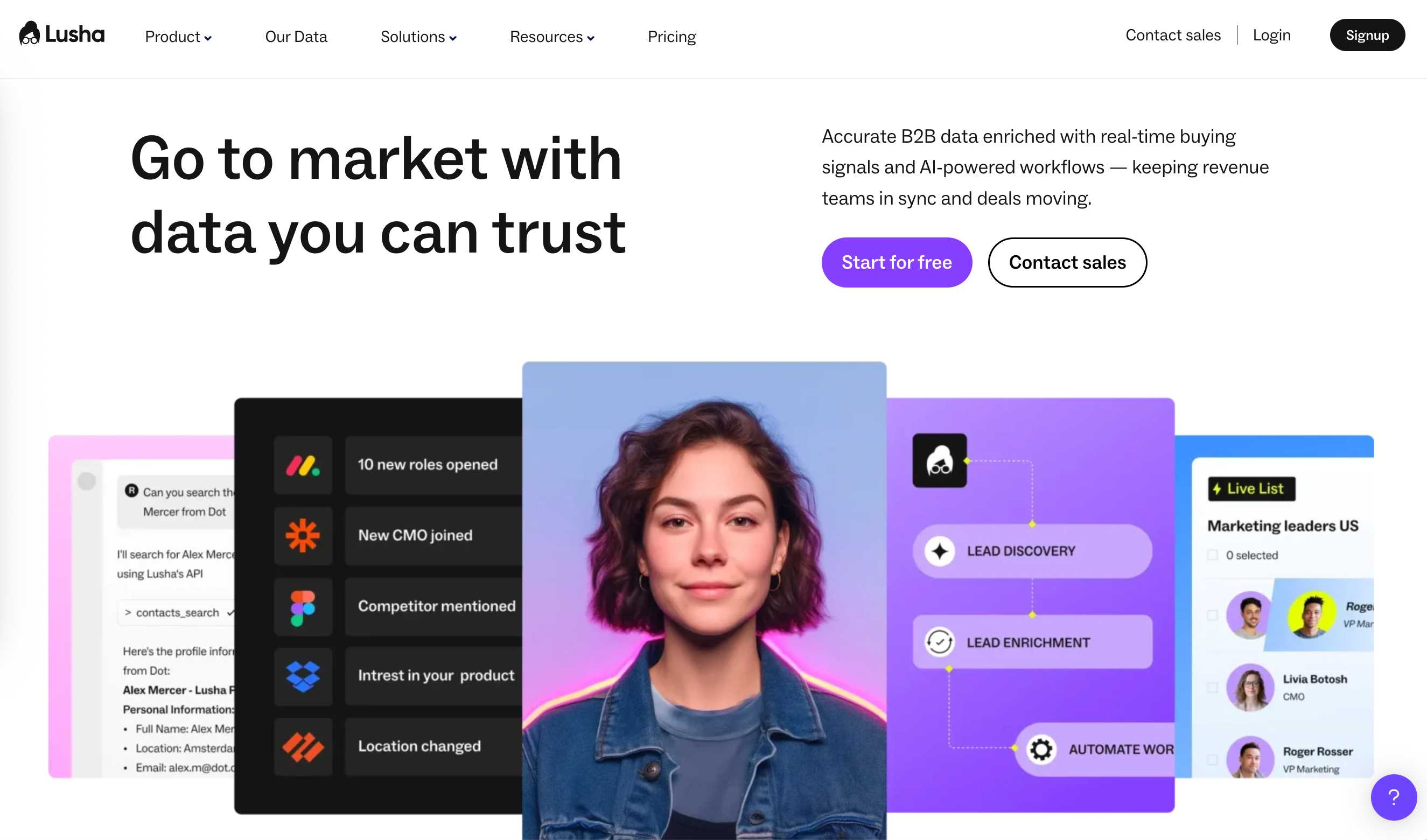
Lusha is a B2B contact data platform designed for high-velocity prospecting and recruitment. It distinguishes itself through its browser-first approach, offering an intuitive Chrome extension that allows users to reveal contact data directly on LinkedIn, Salesforce, and company websites.
At the time of writing this article, Lusha serves over one million users and maintains a database of more than 90 million professional profiles, emphasizing speed and immediate data accessibility for SMB and mid-market teams. However, while Lusha works well for straightforward outbound prospecting, it is not built for advanced analytics, automation, or real-time data workflows.
Key platform characteristics
Browser-centric prospecting: Their Chrome extension is the platform’s core, enabling one-click reveals of direct mobile numbers and verified business emails without disrupting the user's workflow.
Community-sourced data model: Lusha utilizes a unique crowdsourced Community Edition to expand its direct-dial database, supplemented by AI-driven verification cycles.
Contact data verification: High-priority contacts undergo a multi-stage verification process.
Lusha engages automation: A built-in sales engagement suite that allows users to launch automated email sequences and track engagement directly within the platform.
AI lead recommendations. The platform uses machine learning to suggest "lookalike" prospects based on a user’s previous successful reveals and CRM data patterns.
Pricing
Lusha operates on a credit-based, per-user subscription model with tiered functionality:
Free: Provides a limited monthly credit allowance for basic search and extension use.
Pro: A self-service tier designed for individual contributors, featuring list management and basic CRM integrations.
Premium: Targeted at growing teams, adding bulk enrichment capabilities and advanced usage analytics.
Scale: An enterprise-grade plan offering unlimited credits (subject to fair use), full API access, and advanced intent data signals.
Limitations
Credit depletion anxiety: The credit-based system can be restrictive, as revealing a single phone number typically consumes multiple credits compared to emails.
Self-reported accuracy: Despite high internal benchmarks, the platform lacks a real-time verification guarantee at the point of export, occasionally leading to credits being spent on outdated records.
6. Kaspr
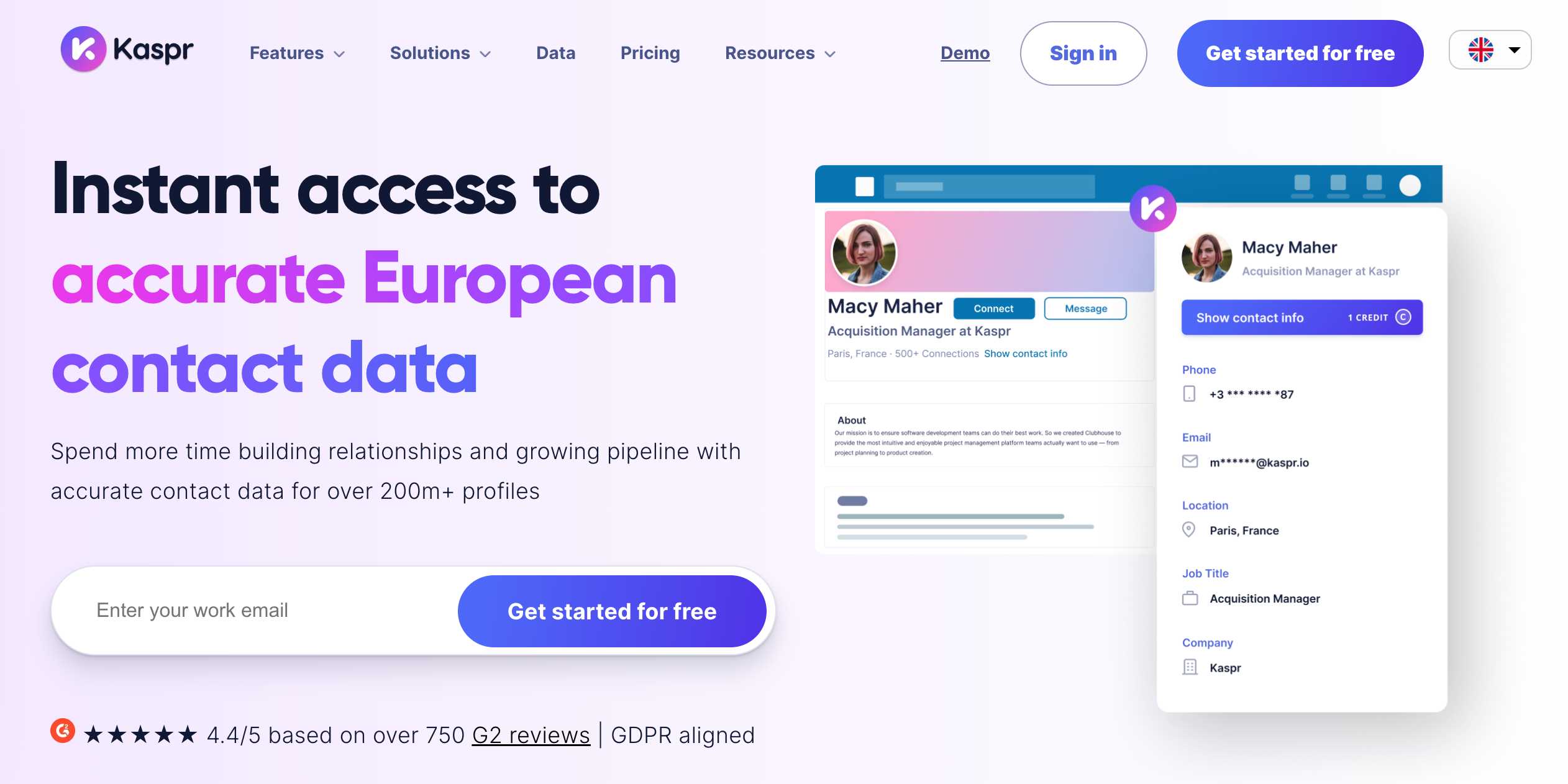
Kaspr is a lightweight B2B sales intelligence and lead enrichment tool designed specifically for social-first prospecting. Now integrated within the Cognism group, it serves as a plug-and-play alternative to enterprise-grade platforms, primarily targeting individual contributors, recruiters, and SMB sales teams. It specializes in extracting contact data directly from LinkedIn, Sales Navigator, and Recruiter Lite, positioning itself as a leader for European market data.
Key platform characteristics
LinkedIn-first workflow. The core product is a Chrome extension that overlays LinkedIn profiles to provide instant access to direct mobile numbers and business emails.
Unlimited B2B email access. Unique among credit-based competitors, all paid tiers offer unlimited business email reveals (subject to a fair use policy), reserving credits primarily for phone numbers.
Automated enrichment workflows. Users can automate the extraction of contact details from LinkedIn Groups, Events, and search lists, syncing them directly to CRMs like HubSpot and Salesforce.
GDPR and CCPA alignment. Following regulatory scrutiny, Kaspr has implemented strict compliance protocols, including real-time scrubbing against European Do-Not-Call (DNC) lists.
Real-time verification. Data is validated against over 150 sources at the moment of capture, maintaining high accuracy for European professional contacts.
Pricing
Kaspr utilizes a subscription model with monthly and annual options, featuring tiered access to credit types:
Free: Provides limited monthly phone and direct email credits for individual testing.
Starter: Designed for small teams; includes unlimited B2B emails and a set monthly allocation of phone credits with Sales Navigator compatibility.
Business: Adds access to Recruiter Lite, administrative permissions, and higher monthly credit limits for phone and direct email reveals.
Enterprise: A custom tier offering unlimited credits, dedicated support, and advanced API access for high-volume organizational needs.
Limitations
Phone credit scarcity. While emails are unlimited, phone credits are consumed quickly, often requiring expensive top-up packs for active cold-calling teams.
Regional coverage variance. Although global, its database density and accuracy for North American and APAC markets trail behind its European coverage.
Platform dependency. Its high reliance on the LinkedIn ecosystem makes it vulnerable to changes in LinkedIn’s terms of service and technical interface.
Crustdata: an API-first alternative
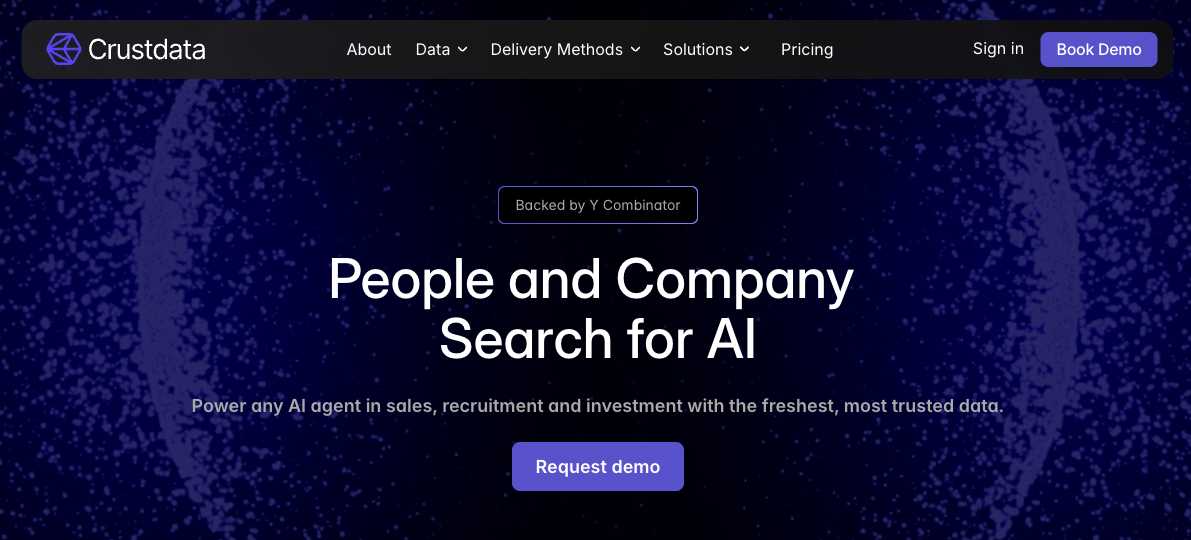
Crustdata is an API-first B2B data infrastructure provider designed for engineering and product teams that require programmatic access to real-time company and professional data. Unlike traditional sales intelligence platforms that prioritize a user interface (UI) for manual searches, Crustdata operates as a headless data layer.
It provides structured JSON via endpoints and webhooks, serving as the foundational data source for AI SDRs, automated prospecting systems, and investment research tools. Beyond standard firmographics, it tracks unstructured data signals including app store reviews, product ratings, and headcount growth trends across 10+ unified sources.
The defining difference is genuine real-time data. Most providers rely on pre-collected databases refreshed monthly or quarterly and label them “real-time.” Crustdata operates as a live indexer that fetches data at request time. This allows it to detect job changes, promotions, funding rounds, and hiring activity within hours rather than weeks.
Crustdata is organized around four core APIs:
Enrichment API returns 250+ company and people data points when you already know the target.
Discovery API builds live lists of companies or people based on any criteria (firmographic filters, growth signals, etc.) using 95+ filters across industries, roles, locations, and growth signals.
Watcher API monitors changes and sends updates through webhooks, enabling event-based workflows.
Websearch API provides structured, real-time web data that AI agents can act on to find webpages, research founders, and monitor product launches.
Support is delivered through high-availability Slack channels staffed by technical engineers, ensuring rapid integration and troubleshooting for enterprise-scale deployments.
Pricing
Crustdata utilizes a transparent, credit-based pricing model without hidden platform fees. offering:
Real-time API access: Monthly and annual tiers where credits scale based on the volume of enrichment, search, and watcher requests.
Flat-file datasets: Bulk data sets delivered via S3 buckets for teams requiring baseline records for internal modeling alongside live API access.
Free trial: Available for developers to test endpoint latency and data schema compatibility before committing to a contract.
Benefits of an API-first approach
Elimination of UI overhead. By removing the graphical interface, Crustdata allows teams to build custom workflows without paying for unused seat licenses or navigation features.
Superior data freshness. Most B2B data providers refresh records every 30–90 days; Crustdata's on-demand indexing eliminates the "stale data" problem common in legacy databases.
Scalable automation. It is purpose-built for programmatic scale, making it the preferred choice for companies building proprietary software rather than simply using a third-party tool.
When an API provider is the better choice
B2B data platforms are designed for human workflows. A sales or marketing user logs in, applies filters, reviews records on screen, and exports selected results into a CRM or outreach tool. This approach works well when people are doing the work manually. It becomes limiting when data needs to move automatically.
If you are building software, such as an AI SDR, a prospecting product, or an internal enrichment system, platforms introduce friction. Data is locked behind a UI, refresh cycles are fixed, and automation depends on exports rather than events. These constraints are architectural, not feature gaps, and they are difficult to work around.
API-first providers solve this by delivering structured data directly to your systems. Instead of pulling lists, your application requests data programmatically and receives consistent JSON responses. This enables workflows that platforms cannot support, such as:
Real-time enrichment when a user submits a form or signs up.
Automated actions triggered by job changes, promotions, or funding events.
Scheduled bulk feeds that keep internal databases in sync without manual effort.
Unified data schemas across products, models, and pipelines.
The trade-off is implementation effort. APIs require engineering resources to handle authentication, rate limits, error handling, and data mapping. Platforms, by contrast, are ready to use immediately. Teams without developers often choose platforms for speed, even if the data is less flexible or less current.
Clear signs that an API provider is the right choice include building AI-driven products, relying on time-sensitive signals instead of database snapshots, integrating data into custom workflows, or managing multiple platforms with inconsistent formats. In these cases, API-first infrastructure such as Crustdata aligns better with how modern systems are built.
Choosing your pathway
For most sales and revenue teams, the platforms covered in this guide provide everything needed to run effective go-to-market motions. These tools are built for human-led workflows. The decision usually comes down to practical factors such as budget, geographic coverage, data depth, and whether you value built-in engagement tools alongside contact and company data. When the goal is prospecting, list building, and CRM-driven outreach, a platform is often the fastest and most practical path.
A different pathway emerges when the requirement shifts from usage to infrastructure. If you are building software, powering AI agents, or embedding data into automated systems, platform-based tools become a constraint. In these cases, an API-first model is a better fit.
The two pathways are clear:
Platform-first: Choose from the providers above based on your team size, budget, regions, and workflow needs.
API-first: Invest in data infrastructure that delivers programmatic access, real-time signals, and consistent schemas for automation.
If your roadmap includes AI-driven products, event-based workflows, or systems that depend on fresh signals, Crustdata is designed specifically for that use case.
Ready to see how real-time data infrastructure works in practice? Book a demo with Crustdata to explore the APIs and discuss how they fit your product or workflow.


Products
Popular Use Cases
Competitor Comparisons
95 Third Street, 2nd Floor, San Francisco,
California 94103, United States of America
© 2026 Crustdata Inc.
Products
Popular Use Cases
Competitor Comparisons
95 Third Street, 2nd Floor, San Francisco,
California 94103, United States of America
© 2026 CrustData Inc.
Products
Popular Use Cases
Competitor Comparisons
95 Third Street, 2nd Floor, San Francisco,
California 94103, United States of America
© 2026 Crustdata Inc.
🎉 We hit $10M ARR!
$600k to $10m in 1.5 years. Our entire GTM is powered by our own APIs.
🎉 We hit $10M ARR in 1.5 years!