Clearbit Alternatives for Form and CRM Enrichment
Clearbit's free tools ended in April 2025. Find the right replacement by use case: contact data, company intelligence, or ABM intent. No vendor lock-in required.
Published
Written by
Chris P.
Reviewed by
Nithish A.
Read time
7
minutes

When HubSpot acquired Clearbit in December 2023, it folded the product into Breeze Intelligence (HubSpot’s collection of AI tools integrated into its CRM platform), and many teams on other CRMs lost their standalone enrichment API.
This included real-time form enrichment, which let you shorten lead-capture forms to just an email field while Clearbit filled in the company name, headcount, and industry behind the scenes.
Now, the replacement market has split into three distinct categories:
All-in-one platforms bundling contact data with outreach tools.
Compliance-focused providers built for GDPR and verified phone numbers.
API-first enrichment infrastructure for developers and AI-driven workflows.
This guide compares Clearbit alternatives across all these categories, evaluating each on data freshness, pricing transparency, integration flexibility, and compliance posture.
What happened to Clearbit (and why teams are leaving Breeze)
Alright, let’s talk about HubSpot’s acquisition of Clearbit in a bit more detail.
HubSpot acquired Clearbit in December 2023. Within a year, the product was rebranded as Breeze Intelligence at HubSpot's INBOUND 2024 conference and absorbed into the HubSpot ecosystem. All Clearbit’s standalone free tools were sunsetted on April 30, 2025. The Logo API followed on December 1, 2025.
Ergo, Clearbit as a standalone enrichment product no longer exists.
For teams that have built workflows around Clearbit's API, such as form enrichment on signup pages, automated CRM updates, or lead scoring models fed by firmographic data, this transition is essentially a forced migration into HubSpot's platform or a search for something new.
Here's what's actually pushing teams to look elsewhere.
Platform lock-in
You can no longer use Clearbit as a standalone tool without a HubSpot subscription. If your CRM is Salesforce, Pipedrive, or something custom-built, you're locked out. Teams that previously called Clearbit's API from any stack now have to either migrate their entire CRM to HubSpot or find another enrichment provider. For most, that's not really a choice at all.
Data quality concerns
Even before the acquisition, Clearbit had been criticized for gaps in its person and contact data. User reports suggest this hasn't improved under HubSpot, and some indicate the general experience has actually declined. For teams that depend on accurate, up-to-date enrichment to power outbound campaigns or AI-driven workflows, stale or incomplete records create real downstream problems. Emails bounce, outreach references outdated job titles, and lead scores drift from reality.
Unpredictable credit costs
Breeze Intelligence runs on a credit-based pricing model, and the default settings can be expensive. For instance, one team discovered that auto-enrichment was enabled by default, resulting in $11,000 in unexpected charges in a single billing cycle. This is an extreme case, but not an isolated one.
HubSpot's settings make it difficult to monitor how quickly you're burning through credits until the next invoice arrives. For budget-conscious teams, especially startups, that lack of visibility creates real financial risk.
Breeze falls short as a complete platform
HubSpot positioned Breeze as more than just data enrichment, adding AI agents for prospecting, outreach, and operational workflows. But the all-in-one promise hasn't landed cleanly. For ops use cases, users getting real value tend to be layering custom middleware and API work on top of HubSpot, not relying on Breeze natively. If unlocking Breeze's potential requires that level of investment on top of what you're already paying, the all-in-one pricing looks less like convenience and more like overhead.
The net result: teams that were happy Clearbit customers are now actively evaluating replacements – not because they wanted to switch, but because the product they relied on changed around them.
Clearbit alternatives compared by use case
The Clearbit replacement market has split into three distinct categories, and picking the right one upfront saves you from evaluating tools that were built for a different problem entirely.
All-in-one platforms bundle enrichment with email sequences, dialers, and CRM sync. If you want prospecting and outreach in a single tool, start here.
Compliance and phone-verified providers specialize in GDPR-certified data and verified mobile numbers. If you sell into Europe or run phone-heavy outreach, these are your options.
API-first enrichment infrastructure provides raw data via API with no built-in engagement layer. If you're building custom workflows, AI agents, or internal tools, this is the category you need to consider.
The table below breaks down each provider by what it does best, how it charges, and where it falls short.
Tool | Best for | Pricing model | Starting price | Key limitation |
Apollo.io | All-in-one prospecting on a budget. | Per-user + credits. | Free / $49/user/mo. | ~80% email accuracy; credits expire monthly. |
ZoomInfo | Enterprise sales orgs. | Annual contract. | Custom | Weak for SMBs and international data. |
Cognism | GDPR-compliant European outreach + phone numbers. | Per-seat, no credit cap. | Custom | Weaker US database. |
Lusha | Quick contact lookups for individual reps. | Credits | Custom | Shallow firmographics. |
Crustdata | Real-time company and person enrichment by API, including at the moment a form is submitted. | Credit-based API | Custom | No GUI, no phone data, no outreach tools. |
People Data Labs | API-first enrichment for developers and data teams. | Credit-based API | Free tier. $98 per month for full APIs. Custom pricing for bulk data. | Static database; no outreach tools, no phone data, no real-time crawling. |
Dropcontact | Maximum GDPR compliance (zero database). | Per-enrichment | Custom | Email-only, no firmographics. |
Crustdata is the Clearbit alternative for teams that enrich by API. It returns real-time company and person data from 15+ sources, with webhooks when a record changes.
All-in-one platforms for prospecting and outreach
These tools combine enrichment, contact databases, and outreach features in a single platform. If your team needs to find prospects, get their contact details, and run email sequences without stitching together multiple vendors, this is the category to evaluate.
Apollo.io
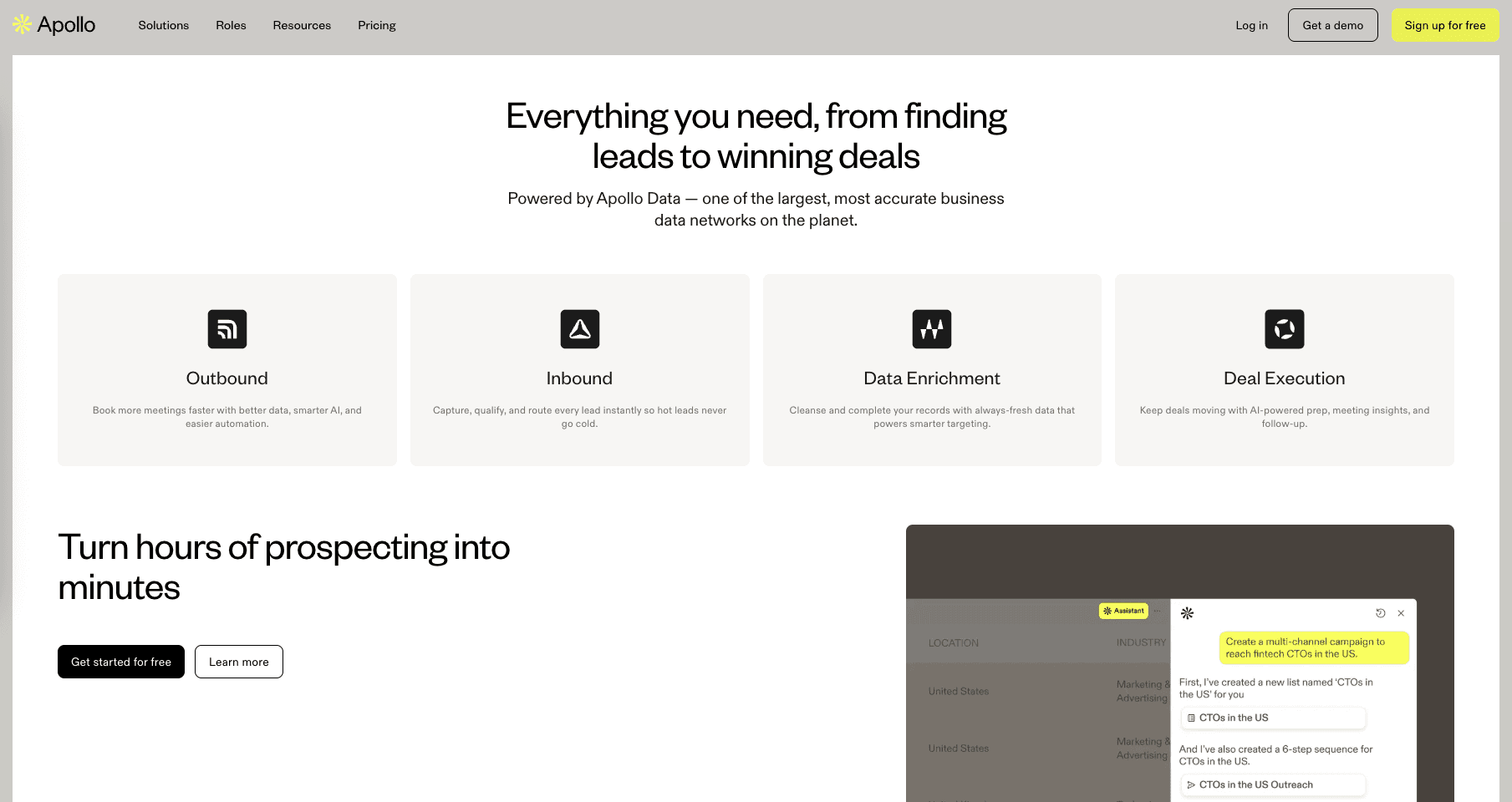
Apollo.io is a strong fit for budget-conscious teams looking for prospecting and outreach in a single tool. The platform offers 275M+ contacts, built-in email sequences, a dialer, and CRM integrations with Salesforce, HubSpot, Outreach, and SalesLoft. A free plan gives you 100 credits per month to get started, and paid plans range from $49 to $119 per user per month.
The pricing gets more complicated at scale, though. One credit reveals an email address, while a mobile number costs eight credits. Apollo's Basic plan allocates 5,000 credits per year, which is roughly 416 per month. Overages run $0.20 per credit with a $50 minimum purchase. If your team is running 5,000 enrichments per month with CRM export, the actual cost can climb to around $979 per month once overages kick in. Worth modeling out before you commit.
ZoomInfo
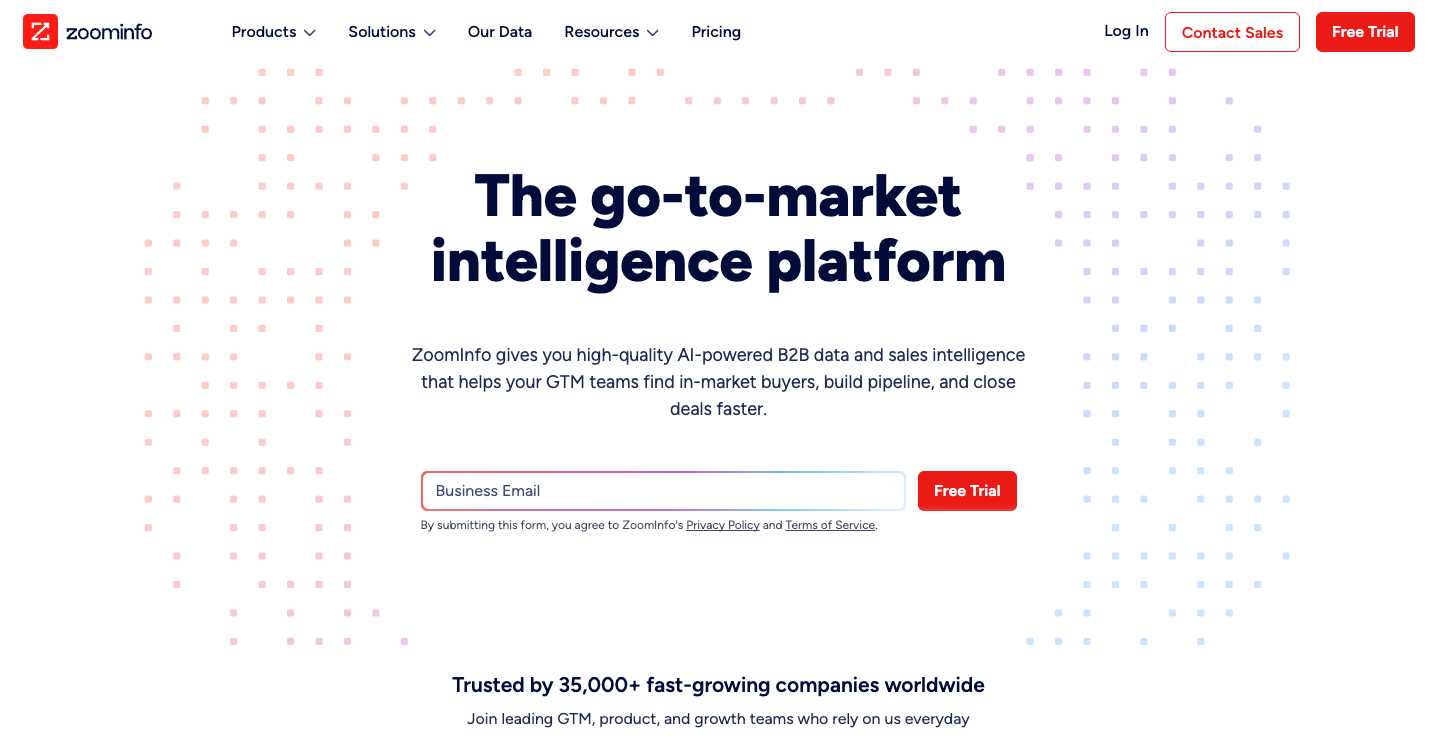
ZoomInfo is the enterprise incumbent, with 300M+ contacts and a deep feature set that includes firmographics, intent data, conversation intelligence, and website visitor tracking. It's built for large sales organizations with the budget to match.
The trade-offs are worth noting. ZoomInfo's data is weaker for smaller companies and international markets. Some users also report email bounce rates in the 15–20% range, which can eat into campaign performance quickly.
A shared limitation
Both Apollo.io and ZoomInfo rely on static databases with monthly or quarterly refreshes. Both offer APIs, but as secondary features rather than their primary interface. For teams that need enrichment data updated more frequently than once a month, or that want to build directly on top of an API, the next two categories are a better starting point.
Compliance and phone-verified data providers
If your team sells into Europe or relies heavily on phone outreach, data compliance is a dealbreaker. These providers lead with GDPR certification, verified mobile numbers, or both.
Cognism
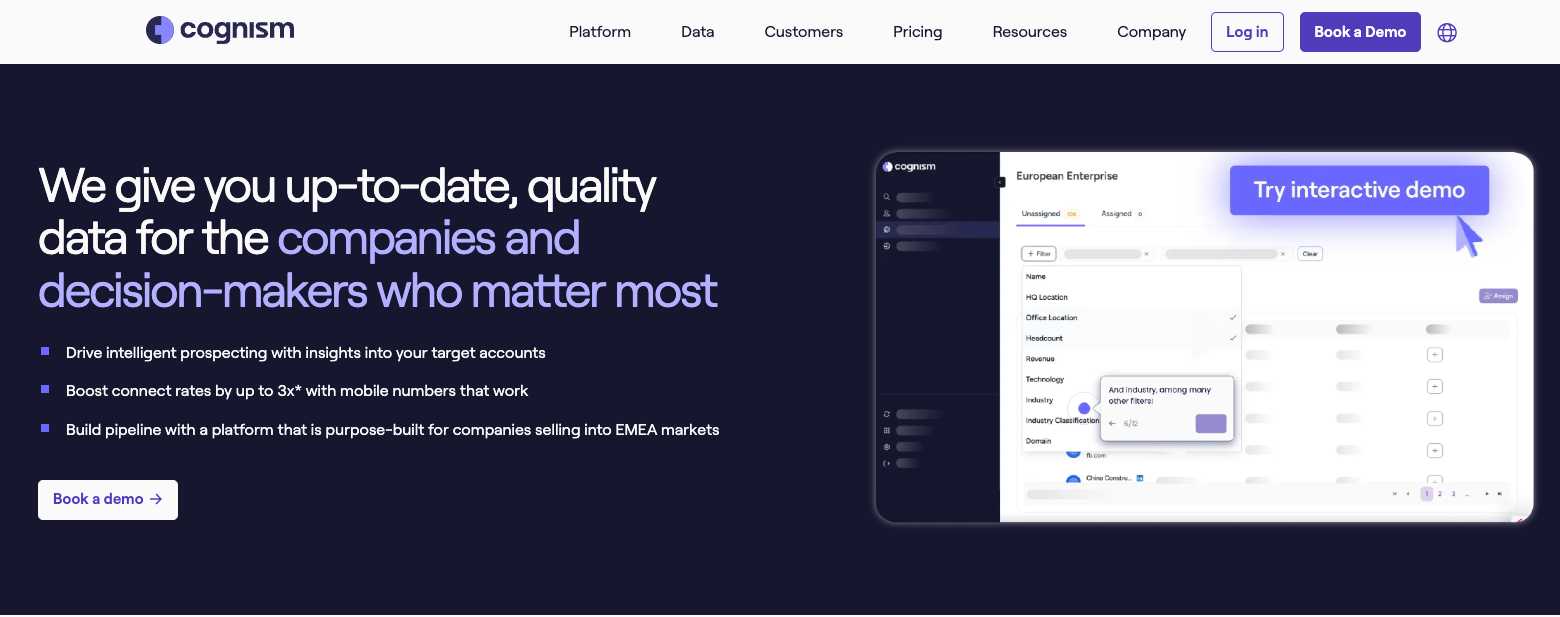
Cognism is the strongest option for EMEA-focused teams that need verified phone numbers. The platform holds ISO 27001 and SOC 2 Type 2 certifications, and its "Diamond Data" mobile numbers are phone-verified by a human research team. Pricing is seat-based and varies depending on team size and features. Cognism also partners with Bombora for intent data, so you can layer buying signals on top of your contact lists.
The main gap is US coverage. Cognism's American database is thinner than what you'd get from ZoomInfo or Apollo, so teams selling primarily in North America may need to supplement with a second provider.
Lusha
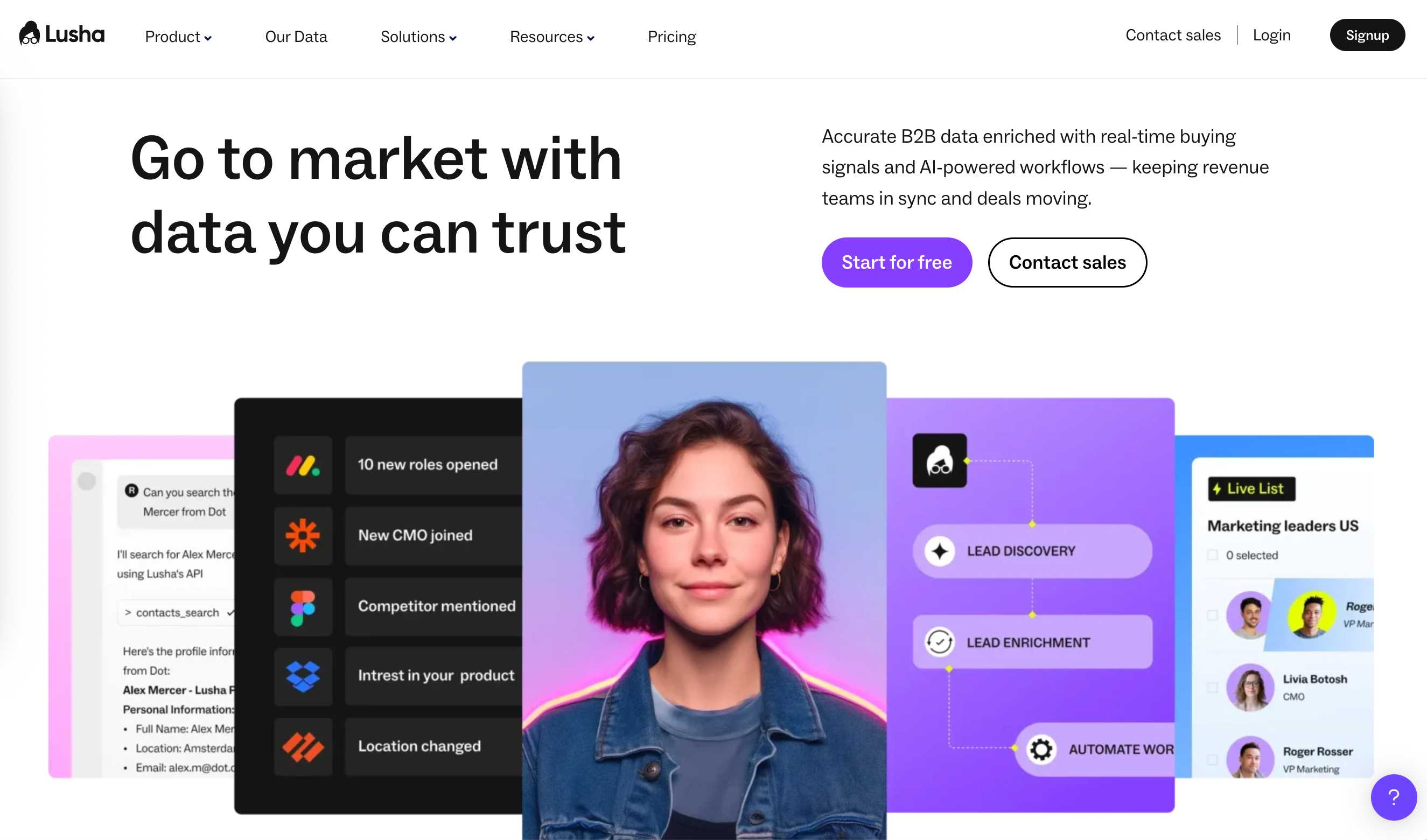
Lusha works well for individual reps and small teams that need fast, accurate contact lookups without a large platform commitment. The free plan offers 40 credits per month with no credit card required – one credit per email, five per phone number. For paid plans, you'll need to contact sales for pricing. Lusha holds SOC 2 and ISO 27701 certifications, which cover both security and privacy management.
However, Lusha's firmographic data is not as extensive as that of full platforms, so it's better suited for quick contact grabs than for building detailed account profiles.
Dropcontact
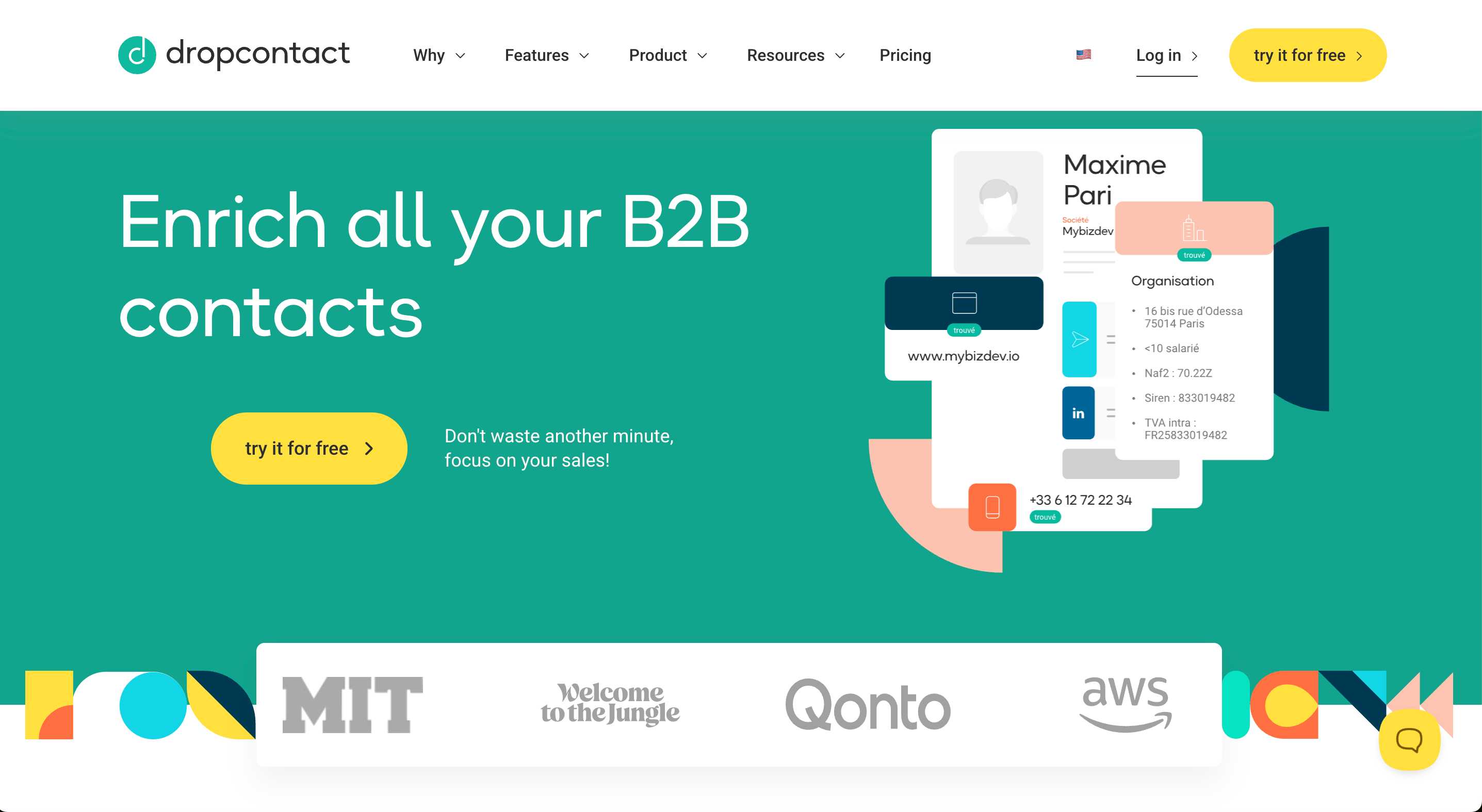
Dropcontact takes a fundamentally different approach. Instead of maintaining a contact database, it generates email addresses algorithmically at the moment of request. No personal data is stored, which means no GDPR storage obligations. This can be a meaningful distinction for teams where legal compliance drives vendor selection. Pricing is per-enrichment, and the scope is email-only. You won't get phone numbers or firmographic data here, but that narrow focus is the whole point.
API-first enrichment for technical teams
These providers don't come with dashboards, Chrome extensions, or built-in email tools. They deliver structured JSON via API, and you decide what to build with it. If your team is writing code against enrichment endpoints, whether for CRM automation, AI agent workflows, or internal tooling, this is where former Clearbit API users will feel most at home.
Crustdata
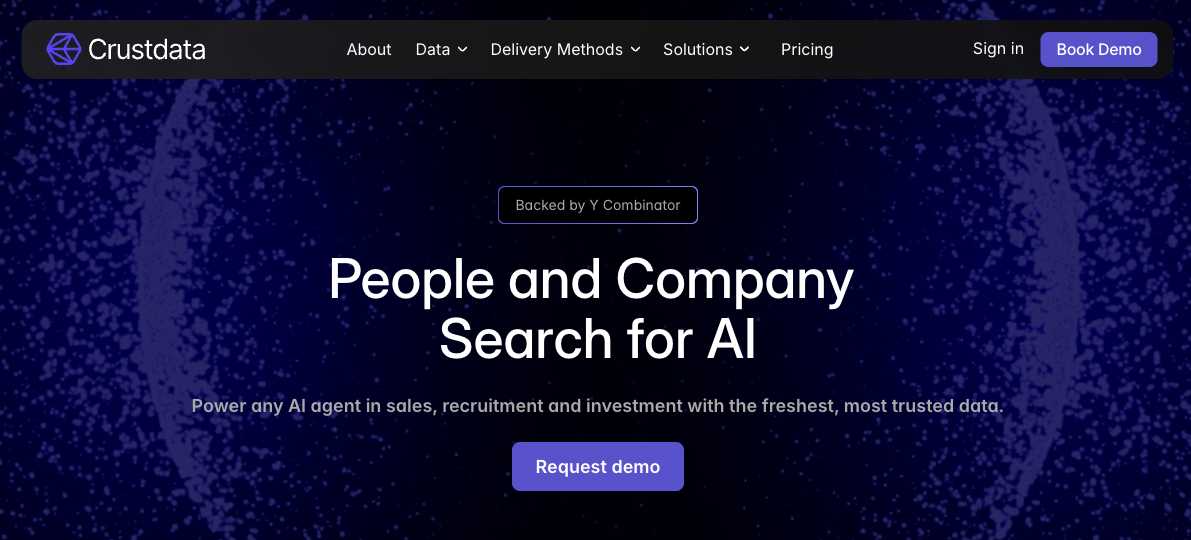
Crustdata is an API-first real-time enrichment infrastructure built for technical teams and AI agent platforms. The Company Enrichment API returns 250+ data points pulled from 15+ sources, including G2, Glassdoor, Gartner ratings, Product Hunt, web traffic, SEO metrics, social followers, and hiring signals. It works for both CRM enrichment and real-time form enrichment, meaning you can enrich a lead at the exact moment of form submission to shorten signup forms without losing data, much like Clearbit's original form endpoint.
What sets Crustdata apart is its dual-mode architecture. Real-time enrichment spawns live crawlers the moment you make a request, returning the freshest available data with up to roughly 10 minutes of latency. Database enrichment pulls from a monthly-cached dataset of 460 million people profiles and 20 million company profiles for cost-sensitive bulk jobs. You choose the mode per request based on whether freshness or cost matters more.
Crustdata also offers a Watcher API that pushes webhook notifications when specific events occur, such as job changes, funding rounds, and hiring surges. These are event-driven signals that Clearbit never provided. Pricing is credit-based.
Crustdata does not have a Chrome extension, though, and it does not offer the outreach tools that Clearbit has. As Crustdata is designed to support your agentic infrastructure, it does not have a graphical user interface like a platform. Teams that need contact data for outbound sequences should pair it with a provider like Apollo or Cognism.
People Data Labs
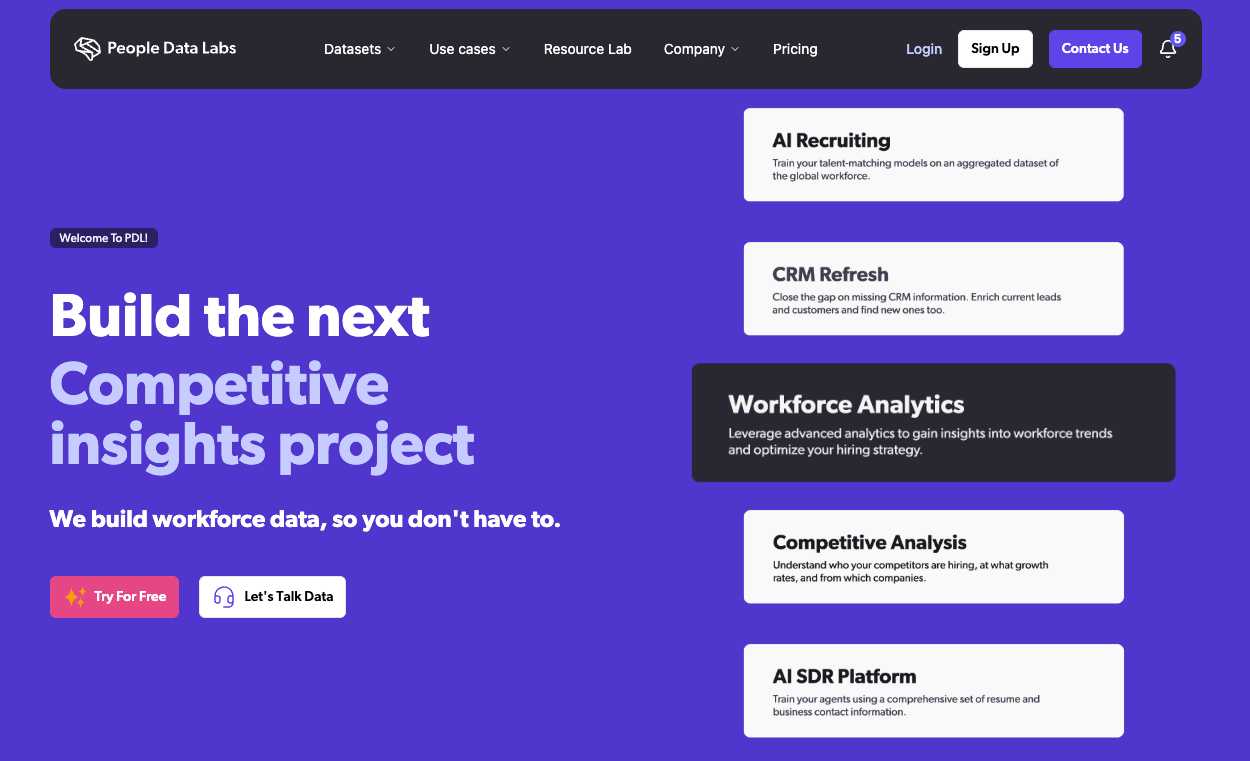
People Data Labs (PDL) delivers 800M+ person profiles and 100M+ company records exclusively via API. Like Crustdata, it has just raw structured JSON designed for developers building custom workflows. Documentation is strong, with real implementation examples, and a free tier is available for evaluation. PDL is a good fit for technical teams that need a large, stable dataset for bulk enrichment, internal tooling, or training data pipelines.
The key consideration at scale is freshness. PDL uses a static database with periodic refreshes rather than real-time crawling. That means contact details and job titles can lag actual changes by weeks or months between update cycles. There are no event-driven signals or webhook monitoring, and no phone number data. Pricing scales with volume and can become significant at enterprise enrichment levels, so it's worth requesting a volume quote early.
Frequently asked questions about replacing Clearbit
Are there AI-agent alternatives that handle both outreach and data?
Yes, but most tools specialize in one or the other. Apollo.io combines enrichment with email sequences and a built-in dialer, making it the closest to a single-tool solution for outreach plus data. Landbase offers an agentic AI platform designed for autonomous go-to-market workflows, handling both prospecting and engagement.
Crustdata takes a different approach. It's the data layer that AI SDR platforms build on, not an agent itself. If your team is building its own AI agents or integrating with an existing AI sales platform, you need a reliable data API underneath, and that's the problem Crustdata's Company Enrichment API solves. Most teams building custom AI workflows pair an infrastructure provider like Crustdata with a separate outreach tool.
Which alternatives offer GDPR-compliant European contact data?
Two providers stand out here. Cognism holds ISO 27001 and SOC 2 Type 2 certifications, offers phone-verified mobile numbers across EMEA markets, and partners with Bombora for intent data. It's the most complete option for teams selling into Europe that also need verified direct dials.
Dropcontact takes a zero-database approach as it generates email addresses algorithmically at request time and stores no personal data. No stored data means no GDPR storage obligations, which makes it a good fit for teams where legal compliance is the primary buying criterion.
What replaces Clearbit Reveal for website visitor identification?
RB2B identifies anonymous website visitors at the company level on its free plan, which includes 150 credits per month (US-only). If you need person-level identification, i.e., seeing the actual individual, not just the company, that requires RB2B's Starter plan at $79 per month.
Which providers offer human-verified data for higher accuracy?
Crustdata takes the accuracy problem from the other direction. Its live crawling returns data as it exists at the moment of the request. A record is never three months stale the way a human-verified database can be.
SalesIntel's Research on Demand team manually verifies contacts, claiming up to 95% accuracy with data refreshed every 90 days. Cognism's Diamond Data takes a narrower approach, phone-verifying mobile numbers specifically.
Try Crustdata's Company Enrichment API
If you've read this far, you're likely the reader this article was written for: a technical buyer who had Clearbit's API running in production and needs a CRM-agnostic replacement that actually keeps up with how fast your data goes stale.
Crustdata's Company Enrichment API returns 250+ data points from 15+ sources with two enrichment modes.
Real-time crawling gives you the freshest possible data when accuracy matters, for form enrichment at the moment of submission, pre-call research, or feeding AI agent workflows.
Cached database enrichment keeps costs down when you're backfilling a CRM or running bulk jobs where monthly freshness is fine. The Watcher API pushes webhook alerts for job changes, funding rounds, and hiring surges the moment they happen, so your team acts on signals instead of discovering them weeks later.
The best part about working with Crustdata is that you’ve got no platform lock-in, no monthly credit expiry traps, and no unnecessary GUI that you'll never open. Just structured JSON that you can integrate however your stack requires.
Interested in seeing the API in action with your own target accounts? Book a demo, bring a list of companies, and we'll enrich them live on the call.


Products
Popular Use Cases
Competitor Comparisons
95 Third Street, 2nd Floor, San Francisco,
California 94103, United States of America
© 2026 Crustdata Inc.
Products
Popular Use Cases
Competitor Comparisons
95 Third Street, 2nd Floor, San Francisco,
California 94103, United States of America
© 2026 CrustData Inc.
Products
Popular Use Cases
Competitor Comparisons
95 Third Street, 2nd Floor, San Francisco,
California 94103, United States of America
© 2026 Crustdata Inc.
🎉 We hit $10M ARR!
$600k to $10m in 1.5 years. Our entire GTM is powered by our own APIs.
🎉 We hit $10M ARR in 1.5 years!