What Is an AI Sales Agent? How It Works and What the Best Ones Get Right
Published
Written by
Chris Pisarski
Reviewed by
Nithish
Read time
14
minutes
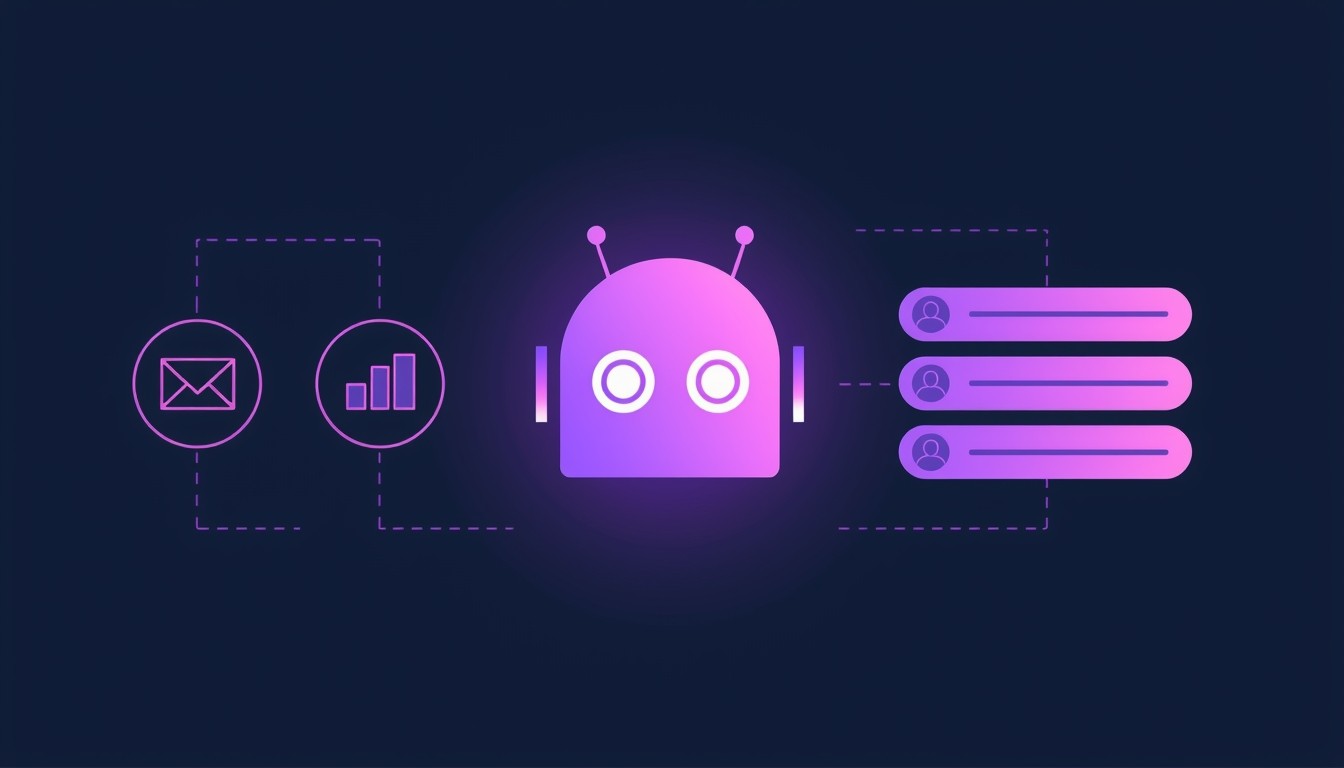
89% of revenue organizations now use AI somewhere in their sales process, up from 34% in 2023. Among those teams, a growing share are deploying AI sales agents to handle prospecting, personalizing outreach, and booking meetings. Some teams report 3x more meetings per month. Others churn off the tool within 90 days after burning through email domains and CRM data quality.
The difference between those outcomes is rarely the AI model. It is almost always the data feeding it.
This guide covers what an AI sales agent actually is, how it works under the hood, why most implementations fail, and what the best ones share in common. If you are evaluating AI SDR tools or building your own, the goal is to help you ask the right questions before you commit budget.
What is an AI sales agent?
An AI sales agent is software that autonomously handles one or more steps of the sales development process: identifying prospects, researching their context, writing personalized outreach, sending messages across email and social channels, and responding to replies.
The term overlaps with "AI SDR" (AI sales development representative), and you will also see it called a sales ai agent or ai powered sales agent depending on the vendor. Most use these labels interchangeably. Some reserve "AI sales agent" for broader autonomous systems that handle inbound qualification, lead routing, and follow-up sequences alongside outbound prospecting. Others use it specifically for the outbound motion.
What separates an AI sales agent from a standard sales intelligence tool is autonomy. A traditional sequencing platform like Outreach or Salesloft executes steps you define. An ai agent for sales makes decisions: which prospects to prioritize, what angle to lead with, when to follow up, and how to handle a reply that says "not now, but maybe next quarter."
The AI SDR market reached $4.27 billion in 2025 and is projected to hit $24.3 billion by 2034, according to Fortune Business Insights. That growth tracks with a real problem. Only 17% of reps consistently hit quota, according to Apollo's SDR research. The average SDR spends less than 30% of their time actually selling; the rest goes to list building, research, and email drafting.
An AI sales agent is designed to eliminate the non-selling time: the list building, the research, the first-draft emails, the follow-up scheduling. Whether it delivers depends entirely on what you feed it.
How does an AI sales agent work?
Under the hood, an AI sales agent runs a multi-step pipeline that mirrors what a human SDR does, compressed into seconds rather than hours.
Data ingestion: Pull prospect and company records from CRM, lead lists, and enrichment APIs
Research: Gather recent news, social posts, job postings, and funding events for each prospect
Message generation: Use an LLM to write personalized outreach based on the research
Multi-channel sequencing: Coordinate emails, social touches, and follow-ups on a timed cadence
Reply classification: Categorize responses (interested, objection, out-of-office) and route accordingly
Learning loop: Feed engagement metrics back into targeting and messaging decisions
Data ingestion and prospect identification
The agent pulls from your CRM, lead lists, and external data sources to build a target list. Most of the architecture's value (or failure) starts here. The agent needs company firmographics, technographics, recent funding events, hiring signals, and people-level context like titles, tenure, and work history.
Most AI SDR platforms use a waterfall enrichment approach, pulling from 3-5 data providers and filling gaps as each layer returns partial results. The quality of those providers directly determines how relevant the outreach will be.
Research and context gathering
Once a prospect is identified, the agent researches them: recent company news, social posts, job postings, product launches, funding announcements. You want 5-6 data points per prospect. Enough for real personalization, not so much that you burn credits researching someone who was never going to reply.
Real-time data matters here more than anywhere else in the pipeline. An agent that researches a prospect using data that is 60 days out of date will reference a role they no longer hold, congratulate them on funding they announced two months ago, or miss a hiring signal entirely.
One head of GTM data described the lag: "I get the data somewhere between 30 to probably 45 days later in terms of when someone changes a job. Sometimes it's sooner depending on the coverage. If they're in SF, it's usually within a few days. But if someone in the Midwest switched from Epic Systems to some hospital, I get the data 30 days or 60 days later."
Message generation
The LLM core (typically GPT-4 or Claude) generates personalized messages based on the research. Good implementations constrain the model with proven templates and messaging frameworks rather than letting it write from scratch every time. The output spans email, social touches, and sometimes SMS.
Multi-channel sequencing
The sequence engine coordinates outreach across channels and manages timing. A typical cadence: personalized email on day 1, a social touch on day 3, a follow-up email on day 5, a final email on day 10. The agent adjusts based on engagement signals like opens, clicks, and replies.
Reply classification and routing
When a prospect responds, the agent classifies the reply: interested, objection, out-of-office, unsubscribe request, or "not now." Interested replies get routed to a human rep or auto-scheduled for a meeting. Objections may trigger a follow-up sequence. Most tools fall apart here. A misclassified "not interested" reply that triggers another follow-up can burn a relationship permanently.
Learning loop
The agent tracks open rates, reply rates, meetings booked, and meetings held. Those metrics feed back into targeting and messaging. In theory, the system gets better over time at identifying which prospects convert and which angles land. In practice, this depends heavily on having enough volume and clean attribution.
Why most AI sales agents produce bad results
22% of sales teams are already replacing traditional SDR roles with AI agents, according to Autobound's 2026 State of AI Sales Prospecting report. At the same time, AI SDR platforms see 50-70% annual churn rates, roughly double the turnover of human SDRs.
That gap tells you something. Teams buy these tools, and then most of them leave.
The data layer is the bottleneck
Every AI sales agent depends on its data sources for who to contact, what to say, and when to reach out. When that data is out of date, incomplete, or wrong, the AI does what AI does: it confidently sends bad outreach at scale.
One buyer building an AI SDR pipeline put it directly: "We have Apollo for like low quality, lots of data. We don't really trust it." Another, running enrichment across multiple providers, found that "job changes from six months ago were not taken into account. So that was an issue."
A controlled test comparing AI and human SDRs over six months found a clear performance split:
Metric | AI SDR | Human SDR |
|---|---|---|
Meetings booked per month | 31 | 18 |
Meeting-to-opportunity conversion | 11% | 25% |
Revenue generated (6-month test) | $56K | $147K |
Cost per meeting | ~$140 | ~$420 |
Follow-up completion rate | 98% | 61% |
The AI booked more meetings, while fewer converted to pipeline. The meetings that did not convert shared a pattern: the prospect had been contacted at the wrong time, with the wrong context, or for the wrong reason.
Volume without precision destroys deliverability
AI sales agents can send 500-2,000 personalized emails per day compared to 50-100 for a human SDR. That volume becomes a liability when the underlying data is wrong.
Unverified emails bounce, prospects who changed roles six months ago get irrelevant pitches, and ISPs flag the sending domain. Within weeks, the entire outbound infrastructure is compromised.
One AI SDR user reported sending roughly 1,400 emails through an AI platform with zero responses. Not low responses. Zero. The tool hadn't checked whether the contacts still worked at those companies, whether the emails were deliverable, or whether any of the personalization was accurate.
Set-and-forget does not work
Good AI SDR implementations require 15-20 hours per week of human oversight: quality control, reply handling, and course correction. Teams that deploy an AI sales agent expecting it to run autonomously from day one consistently churn within 90 days.
What the best AI sales agents have in common
The AI sales agents that actually produce pipeline share five traits.
They run on live data, not monthly database refreshes
They pull prospect and company data from sources that update continuously: real-time enrichment APIs, webhook-based signal detection, and live social activity feeds. Not static databases that refresh quarterly.
When a prospect changes jobs, the agent should know within days, not months. When a company announces a funding round, the agent should incorporate that context into the next outreach within hours. Teams building their own AI sales agents increasingly use real-time data APIs and webhooks to time outreach rather than relying on batch-refreshed contact lists.
They verify before they send
An ai powered sales agent that performs well validates email deliverability, confirms the prospect still holds the role being targeted, and checks that the company context (funding, hiring, product launches) is up to date before generating a message. The difference between a 3% reply rate and a 0.1% reply rate usually comes down to this step.
They use signal-based triggers, not just list-based outreach
Rather than blasting a static list, the best AI sales agents fire outreach based on real-time buying signals: a target company posts a new job opening in your category, a champion from a closed-lost deal moves to a new company, a prospect engages with content related to your solution. Those signals tell the agent both why to reach out and when.
One sales/growth lead described what the alternative looks like without signal triggers: "Rather than me getting a notification on Slack, like, hey, turn this sequence on for this person, you're going to have to actually go and manually add them." That manual step is where most outbound pipelines lose speed.
They measure on revenue, not meetings booked
AI sales agents that optimize for meeting volume produce a predictable outcome: more meetings with lower conversion rates. A study across 800+ teams found that AI-only implementations converted 11% of meetings to opportunities, while AI-plus-human hybrid models converted 38%.
The best teams track cost per qualified opportunity and pipeline generated per dollar spent, not raw meeting counts.
They use humans for high-judgment moments
The hybrid model consistently outperforms AI-only deployments. A sales ai agent handles prospect identification, research, initial outreach, and follow-up cadence. Humans handle discovery calls, objection responses that require nuance, and relationship-building with senior buyers. This division produces 2.3x more revenue than AI-only, according to Leads at Scale's research on hybrid SDR models.
How to evaluate an AI sales agent before you buy
Most comparison articles focus on features: number of channels, CRM integrations, message templates. Those matter, but they are table stakes. The evaluation criteria that actually predict success are different.
What to ask before you buy:
Where does the contact and company data come from, and how often does it refresh?
Can the tool trigger outreach from real-time events, or only from static lists?
What is the false-positive rate on reply classification?
Does the tool manage email warming and domain rotation natively?
How easily can your team inspect and override the agent's decisions?
Data freshness
Ask the vendor where their contact and company data comes from, how often it refreshes, and what happens when a prospect changes roles. If the answer involves quarterly or monthly batch updates, the tool will send outdated outreach at scale. Real-time enrichment that updates as records change is what separates tools that maintain deliverability from ones that burn domains.
Signal infrastructure
Can the tool trigger outreach based on real-time events (job changes, funding rounds, hiring spikes, social engagement), or does it only work from static lists? The best AI sales agents combine list-based prospecting with event-driven triggers.
Reply classification accuracy
Ask for the false-positive rate on reply classification. A misclassified "interested" reply that gets auto-scheduled wastes your closer's time. A misclassified "not now" that gets a generic follow-up burns a relationship. Request a sample of classified replies from an existing customer if possible.
Deliverability management
Does the tool manage email warming, domain rotation, and bounce monitoring natively? Or does it assume you handle that separately? An AI sales agent that sends 1,000 emails per day through a cold domain will get your infrastructure blacklisted within weeks.
Human-in-the-loop design
How easily can your team review, override, and improve the agent's decisions? Tools that make it difficult to inspect what the AI is doing, which prospects it chose, why it wrote a specific message, how it classified a reply, make it impossible to improve performance over time.
When to build your own AI sales agent
Buying an AI SDR platform makes sense when you need speed and have a proven outbound playbook. Building your own makes sense when you need control over the data layer, custom signal logic, or vertical-specific personalization that off-the-shelf tools cannot support.
The build path is more accessible than it was a year ago. Whether you use an AI agent builder platform or wire up orchestration frameworks like n8n, LangChain, or direct API integrations, the components remain the same: real-time enrichment APIs for prospect data, LLMs for message generation, and CRM APIs for delivery. The hard part is not the orchestration. It is the data infrastructure: where you get your prospect and company data, how fresh it is, and whether it returns structured output your agents can act on.
One B2B SaaS platform built their internal AI SDR using Crustdata's APIs for exactly this reason. They needed real-time company and people enrichment that returned structured JSON their agents could parse, webhook-based signals that triggered outreach automatically, and the flexibility to customize every step of the pipeline.
The bottom line
AI sales agents can automate the parts of sales development that eat your team's time: list building, research, outreach, follow-up, reply handling. The technology works. Whether it works for you depends on the data feeding it.
The tools that produce real pipeline run on live data, verify contact accuracy before sending, trigger outreach from signals instead of static lists, and keep humans involved for the conversations that require judgment. The tools that don't? They blast outdated contact lists at scale and call it automation.
If you are evaluating or building an AI sales agent, start with the data layer. The LLM, the sequencing engine, the reply classification, all of it depends on what goes in.
Book a demo to see how Crustdata powers AI sales agents with real-time company and people data.



Products
Popular Use Cases
Competitor Comparisons
95 Third Street, 2nd Floor, San Francisco,
California 94103, United States of America
© 2026 Crustdata Inc.
Products
Popular Use Cases
Competitor Comparisons
95 Third Street, 2nd Floor, San Francisco,
California 94103, United States of America
© 2026 CrustData Inc.
Products
Popular Use Cases
Competitor Comparisons
95 Third Street, 2nd Floor, San Francisco,
California 94103, United States of America
© 2026 Crustdata Inc.
🎉 We hit $10M ARR!
$600k to $10m in 1.5 years. Our entire GTM is powered by our own APIs.
🎉 We hit $10M ARR in 1.5 years!